Panduan Lengkap Mengaktifkan Kembali BPJS Kesehatan PBI yang Nonaktif Beserta Penyebab dan Ketentuannya

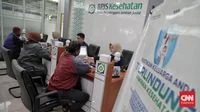
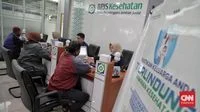
The Social Security Administrator for Health, widely known as BPJS Kesehatan, remains a cornerstone of Indonesia’s national healthcare strategy, striving to bridge the gap in medical accessibility across diverse socioeconomic strata. Among its various membership categories, the Contribution Assistance Recipient program, officially designated as BPJS Kesehatan Penerima Bantuan Iuran (PBI), holds a critical mandate. Funded entirely by the state budget, this specialized scheme is meticulously designed to shoulder the financial burden of healthcare services for impoverished and economically vulnerable citizens. By removing financial barriers to medical treatment, the PBI program ensures that marginalized populations can access essential health facilities, ranging from routine outpatient consultations to complex inpatient procedures, without catastrophic out-of-pocket expenses.
Despite its noble objective and widespread utilization, beneficiaries occasionally encounter an unexpected hurdle: the sudden deactivation of their PBI membership status. For families struggling to make ends meet, discovering that their health coverage has lapsed can trigger immense anxiety, particularly when a medical emergency arises. However, administrative deactivation does not permanently strip a qualified citizen of their right to state-sponsored healthcare. Regulatory frameworks established by the Indonesian government provide a clear, albeit time-sensitive, pathway for citizens to reinstate their dormant policies. Understanding the root causes of deactivation, navigating the procedural requirements for reactivation, and maintaining vigilance over membership statuses are vital steps for beneficiaries seeking to secure uninterrupted access to the national healthcare grid.
Deactivation Triggers: Why BPJS PBI Status Lapses
To comprehend how to reactive a lapsed policy, beneficiaries and public advocates must first understand why the Ministry of Social Affairs (Kemensos) routinely deactivates PBI accounts. The national social security database is not static; it undergoes continuous refinement, cross-referencing, and auditing to ensure that state subsidies reach the most deserving demographic segments. Administrative adjustments and data updates often lead to the revocation of PBI status based on specific regulatory criteria outlined by the government.
The primary catalyst for deactivation is the periodic overhaul and updating of the National Socio-Economic Single Data system, commonly referred to as the Data Tunggal Sosial Ekonomi Nasional (DTSEN). Through comprehensive household surveys and localized verifications, the government assesses shifts in household income, asset ownership, and overall living standards. If a registered PBI participant is reassessed and determined to have crossed the threshold out of the officially defined impoverished or vulnerable category, their subsidized health status is systematically removed. This mechanism ensures fiscal responsibility, allowing finite state resources to be reallocated to newly identified impoverished families.
A second common cause involves significant milestones in employment status. When an individual previously classified as indigent secures formal employment within the private or public sector, their employer is legally mandated to register them under the Salaried Workers program, known officially as Pekerja Penerima Upah (PPU). As the individual transitions into the PPU tier—where monthly contributions are shared between the employer and the employee—their previous PBI status is automatically superseded and deactivated to prevent duplicate governmental assistance.
Jurisdictional shifts and administrative streamlining by regional authorities also contribute to deactivation. In various instances, local governments decide to absorb specific demographic groups into regional health insurance schemes, known as Jamkesda, or restructure how regional quotas for national health assistance are distributed. When a regional government (Pemda) takes over the administration of a citizen’s healthcare coverage, the central BPJS PBI status may be adjusted or temporarily frozen to align with regional database integration.
Finally, technical discrepancies, clerical errors, and data invalidities frequently trigger automatic account suspension. The Ministry of Social Affairs constantly purges the national registry of erroneous entries, duplicate National Identification Numbers (NIK), deceased individuals, and unverified profiles. If a participant’s data fails to match the civil registration database managed by the Directorate General of Population and Civil Registration (Dukcapil), the system flags the anomaly, resulting in the immediate suspension of healthcare benefits until the data is formally corrected.
The Regulatory Timeline and Legal Framework for Reactivation
For individuals whose PBI status has been deactivated yet firmly believe they still meet the criteria for economic hardship, the law provides a safety net. The reactivation process is strictly governed by institutional regulations, most notably governed by the Ministry of Social Affairs Regulation (Permensos) No. 21 of 2019. This legal framework outlines the precise conditions and timelines under which a lapsed PBI account can be brought back to life without requiring the citizen to reapply from scratch through long-term bureaucratic channels.
Crucially, the regulatory framework imposes a strict temporal limit on administrative rectifications. Under Permensos No. 21 Tahun 2019, a deactivated BPJS PBI participant must initiate the reactivation process within a maximum window of six months from the official date of deactivation. This six-month statute of limitations is a critical detail that catches many beneficiaries off guard. If a citizen fails to appeal or process their reactivation within this designated timeframe, their historical PBI status is permanently dropped, requiring them to undergo a complete re-evaluation and re-registration process through local social welfare channels to re-enter the social security safety net.
This time-sensitive requirement underscores the importance of proactive status monitoring. Vulnerable populations often lack digital literacy or regular access to information channels, making them susceptible to missing the crucial six-month window. Consequently, community leaders, local social workers, and healthcare advocates play an indispensable role in notifying affected families immediately upon discovering a membership lapse, ensuring that administrative remedies are pursued well before the regulatory deadline expires.
Step-by-Step Procedure to Reinstate Dormant PBI Accounts
Navigating the bureaucratic landscape to reactivate a suspended BPJS PBI account requires adherence to a structured sequence of administrative steps. While the procedure demands patience, following the exact protocol established by health and social authorities ensures a smooth and successful restoration of benefits.
The reactivation pathway generally diverges into two scenarios: standard administrative renewal and emergency medical reactivation. For routine administrative updates, participants must first verify the exact status of their identification data through local administrative offices, ensuring that their NIK and family card (Kartu Keluarga) match official Dukcapil records without discrepancies. Once identity verification is secured, the applicant must visit the local Social Affairs Office (Dinas Sosial) in their respective district or municipality.
When visiting the Dinas Sosial office, applicants must present comprehensive supporting documentation. This typically includes the original and photocopies of the National Identity Card (KTP), the Family Card (Kartu Keluarga), and the physical BPJS card or digital proof of previous membership. Officials at the Dinas Sosial will cross-check the applicant’s socioeconomic standing against current database metrics to ascertain whether the individual still qualifies as an impoverished or vulnerable citizen eligible for state-funded premium assistance.
In scenarios where the participant requires immediate, urgent medical attention while their PBI status remains inactive, a specialized emergency protocol applies. The patient or their family must first visit their designated First-Level Health Facility, known as the Fasilitas Kesehatan Tingkat Pertama (FKTP), such as a local community health center (Puskesmas) or partnered clinic. Upon evaluating the medical urgency, the attending medical personnel at the FKTP will issue an official Letter Stating the Need for Healthcare Services (Surat Keterangan Membutuhkan Layanan Kesehatan).
Armed with this critical medical recommendation letter and standard personal identification documents, the applicant then proceeds directly to the local Dinas Sosial office. The presence of the medical urgency letter accelerates the administrative handling, prompting social officers to expedite the recommendation for reactivating the BPJS PBI status. Once the Dinas Sosial endorses the reactivation request, the data is forwarded to the central BPJS Kesehatan branch office for system-level updating, effectively restoring the patient’s active status within the national database.
Leveraging Technology: Monitoring Membership Status via Mobile JKN
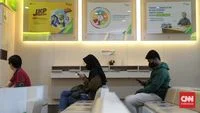
In the digital era, ensuring transparency and administrative efficiency is paramount. BPJS Kesehatan has heavily invested in digital infrastructure to empower participants to independently monitor, verify, and manage their health insurance profiles without needing to physically queue at branch offices. The cornerstone of this digital accessibility is the official Mobile JKN application, a comprehensive smartphone tool available for download across major mobile operating systems.
To verify whether a deactivated BPJS PBI account has been successfully reactivated—or to routinely check whether a policy remains active—participants can utilize the Mobile JKN application through a straightforward digital workflow. First, the user must download and install the application from a certified app store, followed by a simple registration or login process using their NIK or BPJS card number and registered password.
Once successfully logged into the main dashboard, users can navigate to the participant menu, which displays detailed profile information, including the current membership tier, family member rosters, and real-time status indicators. A distinct color code or explicit status label will indicate whether the policy is currently active, frozen, or permanently deactivated. By utilizing this digital portal, beneficiaries can instantly confirm the success of their administrative submissions at the Dinas Sosial, eliminating the uncertainty of whether their healthcare coverage has been fully restored in the central system.
Socioeconomic Implications and Institutional Responsibilities
The mechanisms governing the deactivation and reactivation of BPJS PBI highlight the delicate balance between fiscal prudence and social welfare obligations in Indonesia’s healthcare ecosystem. On one hand, rigorous data cleansing and periodic status evaluations are economically necessary to prevent leakage of state funds, ensuring that limited national subsidies are strictly channeled to citizens who genuinely suffer from financial destitution. Without such database audits, fiscal inefficiencies could compromise the long-term sustainability of the entire national social security fund.
On the other hand, the human cost of administrative errors or rigid bureaucratic timelines can be severe. For a family living at the edge of subsistence, an unexpected medical crisis coinciding with a deactivated PBI status can lead to catastrophic debt or delayed medical intervention. Therefore, institutional stakeholders—including the Ministry of Social Affairs, BPJS Kesehatan, regional governments, and local healthcare facilities—bear a shared responsibility to streamline communication channels and simplify bureaucratic hurdles.
Strengthening inter-agency coordination between Dukcapil, Kemensos, and BPJS Kesehatan is essential to minimize false deactivations caused by technical data mismatches. Furthermore, proactive dissemination of information regarding the six-month reactivation window under Permensos No. 21 Tahun 2019 must be intensified at the grassroots level. By empowering village administrators, neighborhood chiefs, and local social workers with accurate procedural knowledge, vulnerable populations can be better protected against administrative oversights. Ultimately, ensuring seamless access to reinstated healthcare coverage reaffirms the state’s fundamental commitment to universal health coverage and social justice for all Indonesian citizens.
Related posts: