Reflecting on the Dark History of G30S PKI: Remembering the National Heroes and Preserving Indonesian Unity

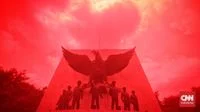
The 30th of September Movement, orchestrated by the Indonesian Communist Party, widely known as G30S/PKI, remains one of the most profound and darkest chapters in the modern history of the Republic of Indonesia. This tragic national event, which unfolded across the transition from late September to the early hours of October 1, 1965, resulted in the ultimate sacrifice of several high-ranking Indonesian National Armed Forces (TNI) officers. Commemorating this solemn milestone involves not only traditional observances, such as flying the national flag at half-mast, but also collective reflection across digital platforms where citizens share poignant messages, historical reminders, and tributes to reinforce national resilience. As generations evolve, keeping the memory of this historical turning point alive serves as an essential reminder of the fragility of national stability and the enduring value of ideological vigilance.
Historical Context and Background of the 1965 Tragedy
To fully comprehend the gravity of the G30S/PKI incident, one must examine the socio-political climate of Indonesia during the mid-1960s. The era was characterized by intense political polarization, economic instability, and a fierce ideological rivalry between the military, nationalist groups, and the Indonesian Communist Party (PKI), which had grown exponentially in influence under the Guided Democracy framework of President Sukarno.
According to historical records documented in educational curricula by the Ministry of Education and Culture, the movement was spearheaded by key figures within the communist apparatus. Dipa Nusantara Aidit, commonly known as DN Aidit, who served as the final leader of the PKI, along with Syam Kamaruzaman—the head of the PKI’s clandestine Bureau—are widely regarded by historical consensus as the primary masterminds behind the attempted coup d’état and subsequent assassinations.
Concurrently, Lieutenant Colonel Untung Syamsuri acted as the crucial operational anchor on the ground. As the commander of Company I of the Cakrabirawa Battalion, an elite security unit tasked with protecting President Sukarno, Untung leveraged his position and proximity to military leadership to execute the nocturnal operations. The rebel faction systematically targeted high-ranking officers of the Indonesian Army (TNI AD), viewing them as the primary obstacle to a fundamental restructuring of the state’s ideological foundation.
Chronology of the Events: From Midnight to the Lubang Buaya Tragedy
The operation commenced late on the night of September 30, 1965, and extended into the predawn hours of October 1. Armed factions under the command of the movement mobilized in Jakarta, moving swiftly to capture strategic locations, including the national radio station (RRI) and the telecommunications center, while simultaneously dispatching abduction squads to the residences of prominent military generals.
The operation was marked by extreme violence. Three of the primary targets were shot dead directly in their homes during the initial incursions, while the remaining officers were abducted alive and transported to a remote area in Pondok Gede, South Jakarta, known as Lubang Buaya. At this site, the captives were subjected to severe torture before being executed and discarded into an abandoned well.
The six high-ranking army generals who lost their lives in this brutal purge included Lieutenant General Posthumous Ahmad Yani, Minister/Commander of the Army; Major General Raden Soeprapto; and Major General Mas Tirtodarmo Haryono. The list of fallen officers also featured Major General Siswondo Parman, Brigadier General Donald Isaac Panjaitan, and Brigadier General Sutoyo Siswomiharjo. In addition to these primary targets, several others, including First Lieutenant Pierre Tendean and young police officer Karel Satsuit Tubun, were also killed in the crossfire or while defending their posts.
The Aftermath and Sociopolitical Implications
The failure of the G30S/PKI coup triggered a massive sociopolitical upheaval that fundamentally altered the course of Indonesian politics, culminating in the transition from the Old Order to the New Order administration under General Suharto. The event accelerated the systematic eradication of the PKI and its affiliated organizations, leading to a period of widespread political violence, mass detentions, and deep societal trauma that would take decades to process.
From a geopolitical and analytical perspective, the legacy of G30S/PKI serves as a stark warning regarding the dangers of violent extremism, polarization, and ideological subversion. Analysts and historians emphasize that the tragedy underscores the absolute necessity of maintaining national unity amidst ideological diversity. Pancasila, the state ideology, was reaffirmed as the non-negotiable philosophical foundation of the Indonesian nation, designed to bridge diverse ethnic, religious, and social factions under a singular umbrella of Bhinneka Tunggal Ika (Unity in Diversity).
Commemorating the Heroes and Preserving National Vigilance
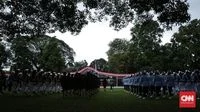
Every year, as the nation approaches the end of September, state institutions, educational facilities, and civil society groups engage in remembrance activities. Government buildings and schools routinely fly the Indonesian flag, the Red and White, at half-mast on September 30 as a sign of national mourning, followed by full-staff hoisting on October 1 to celebrate Pancasila Sanctity Day (Hari Kesaktian Pancasila).
In the contemporary era, commemoration has extended into the digital sphere. Citizens utilize social media networks to disseminate reflections, historical awareness, and tributes to the fallen heroes. These messages emphasize the importance of safeguarding democracy, rejecting radicalism, and honoring the ultimate sacrifice made by the military personnel who died defending the nation’s integrity.
Reflective Tributes and Public Messages for National Unity
To guide the public in expressing their respect and historical awareness, various educational and cultural campaigns compile reflective statements and quotes dedicated to the heroes of the revolution. These expressions serve as a collective voice for a nation striving to remember its past while looking forward to a stable future:
- Let us observe a moment of silence to remember and pray for the heroes who fell as victims of the G30S/PKI tragedy.
- May the heroes who sacrificed their lives during the dark days of G30S/PKI rest in eternal peace.
- Let us stand tall in utmost respect for the revolutionary heroes who gave their lives for the sovereignty of our nation.
- The sacrifices of our heroes are priceless. Let us rise together to build a stronger and more prosperous Indonesia.
- The dark events of G30S/PKI serve as a vital reminder of the critical importance of preserving national unity and cohesion.
- Let us offer our highest prayers for the fallen heroes of G30S/PKI and commit to carrying forward their dreams and struggles for this nation.
- The dedication of our heroes will never be forgotten. Eternal gratitude to the heroes of the revolution!
- A great nation is a nation that respects, honors, and never forgets the sacrifices of its founders and defenders.
- The G30S/PKI tragedy reminds us to remain deeply committed to safeguarding national integrity and respecting diverse perspectives within the law.
- Let us continue to fight tirelessly for the preservation of democracy, human rights, and social justice.
- It is our collective duty to honestly remember the dark history of the G30S/PKI incident so that history never repeats itself.
- Never allow division and discord to weaken our resolve. Remember that our heroes willingly surrendered their lives for a unified Indonesia.
- Pancasila remains our ultimate state ideology. Any existential threats from communism or other prohibited ideologies must be steadfastly rejected.
- History has permanently recorded the brutality of the night of September 30, 1965—a tragedy that claimed the lives of the nation’s finest military minds.
- Reject all forms of propaganda and political maneuvers designed to divide the nation. Learn profound lessons from the dark history of G30S/PKI.
Ultimately, reflecting on the events of G30S/PKI is not merely an exercise in mourning the past, but an active commitment to national resilience. By keeping the historical memory alive through factual education, respectful commemoration, and unwavering dedication to Pancasila, Indonesia continues to fortify its democratic institutions against the threats of division, ensuring that the sacrifices of the fallen heroes were not made in vain.