Indonesia Moves to Establish National Peatland and Mangrove Management Agency Following Presidential Directive and Scientific Consultation

The Indonesian government, under the leadership of President Prabowo Subianto, is accelerating plans to establish the National Peatland and Mangrove Management Agency, known locally as the Badan Pengelola Gambut dan Mangrove Nasional (BPGMN). This strategic institutional development stems directly from extensive consultations with leading scientists, environmental academics, and forestry experts who presented comprehensive data highlighting the urgent need for centralized, specialized governance of the country’s vast and ecologically sensitive wetland ecosystems.
Minister of Forestry Raja Juli Antoni recently confirmed that President Prabowo listened intently to academic appeals regarding the vulnerability of national carbon sinks. Peatlands and mangroves serve as critical pillars in Indonesia’s broader climate change mitigation strategy, acting as immense natural carbon reservoirs while simultaneously functioning as natural barriers against coastal erosion and extreme weather events. Furthermore, the systematic and scientific management of these ecosystems is viewed by the administration as a fundamental prerequisite for long-term disaster risk reduction, specifically targeting the perennial challenge of forest and land fires that plague several provinces across the archipelago.
To transition this high-level political commitment into operational reality, the Ministry of Forestry is orchestrating a specialized workshop. This collaborative forum brings together twenty-two eminent scholars, researchers, mangrove specialists, and high-ranking policy-makers from various ministries, government agencies, and regional administrations. The primary objective of these intensive sessions is to meticulously design the institutional framework of the BPGMN, ensuring that the newly formed body operates with maximum administrative efficiency, structural clarity, and scientific precision.
Comprehensive Institutional Design and Strategic Mandates
The upcoming workshop sessions are tasked with defining several critical operational components for the BPGMN. Experts will formulate the core statutory mandate of the agency, draft exhaustive standard operating procedures, and establish a robust organizational structure. By anchoring the agency’s foundation in empirical research and peer-reviewed scientific data, the government aims to avoid bureaucratic redundancies and ensure that field-level interventions yield measurable ecological and socio-economic outcomes.
According to Ministry of Forestry outlines, the outcomes of these multi-stakeholder discussions will directly inform the drafting process of a Presidential Regulation, legally establishing the BPGMN and granting it the necessary jurisdictional authority. Unlike previous environmental governance frameworks, the BPGMN is conceptualized as an agile, professionalized entity designed to bridge the gap between academic research and practical policy implementation.
The inclusion of regional policy-makers in these preparatory discussions underscores the administration’s commitment to decentralized execution. National environmental policies must align seamlessly with regional administrative realities, particularly in provinces where local communities interact daily with peatland and mangrove ecosystems. By fostering early consensus among national ministries, regional governments, and scientific advisors, the administration hopes to create a unified front for wetland conservation and fire prevention.
Bridging Past Lessons with Future Governance: The Riau Living Laboratory
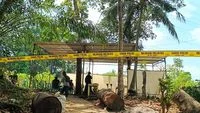
A cornerstone of the BPGMN’s operational strategy involves scaling successful grassroots conservation models to high-risk regions. The Ministry of Forestry has highlighted the community-led peatland management practices in Tanjung Leban village, located in the Bengkalis regency of Riau province, as a benchmark for national replication.
For years, local communities, researchers, and regional stakeholders in Riau have collaborated to maintain the ecological integrity of tropical peatlands without sacrificing local economic productivity. This localized initiative has effectively functioned as a "living laboratory," offering empirical lessons on sustainable land use, water table management, and community-based hazard mitigation.
A central technique observed in this living laboratory is the implementation of collaborative water management systems, commonly known as water sharing through canal blocking. By constructing strategic barriers and regulating water flow within drainage canals, local stakeholders ensure that peat soil remains sufficiently moist to prevent spontaneous combustion during dry spells, while still permitting agricultural and forestry activities to proceed sustainably.
Minister Raja Juli Antoni emphasized that the primary lesson derived from the Tanjung Leban model is the absolute necessity of multi-stakeholder collaboration. Effective peatland stewardship cannot be achieved by government decree alone; it requires an active, synchronized partnership involving central and regional governments, scientific researchers, local communities, and the private commercial sector. The BPGMN is expected to utilize these proven methodologies as foundational templates, deploying them across six high-priority provinces historically vulnerable to severe forest and land fires.
Chronology of Policy Formulation and Institutional Evolution
The genesis of the BPGMN represents a distinct evolutionary step in Indonesia’s environmental governance history. The chronology of this policy shift highlights a growing governmental recognition that conventional forestry management structures require specialized reinforcement to combat modern climate and environmental challenges.
The policy trajectory gained decisive momentum following a high-level consultation at Merdeka Palace in Jakarta, where President Prabowo Subianto directly engaged with twenty-two academic experts and environmental scientists. During this meeting, participants presented rigorous empirical data detailing the vulnerability of Indonesia’s carbon-rich landscapes and the inadequacy of fragmented oversight.
Following this presidential briefing, Minister Raja Juli Antoni formally announced the decision to establish the BPGMN during a press conference. The announcement marked a formal break from past institutional models, specifically the Peatland and Mangrove Restoration Agency, known as the Badan Restorasi Gambut dan Mangrove (BRGM). Established initially in 2016 in the wake of catastrophic nationwide forest fires, the BRGM operated under a specific mandate until its mandate concluded and operations were dissolved in late December 2024.
While the defunct BRGM operated primarily as a structural unit beneath the Ministry of Forestry, the newly conceptualized BPGMN is engineered to possess a significantly elevated institutional standing. Operating directly under the direct supervision of the President, the BPGMN is designed to bypass traditional bureaucratic bottlenecks. Furthermore, the agency will be staffed predominantly by career scientists, environmental professionals, and technical specialists rather than general bureaucrats, and will be supported by a dedicated, independent budgetary allocation.
Broader Implications for National Climate Commitments
The formal establishment of the BPGMN carries profound implications for Indonesia’s international climate commitments and its domestic environmental security. As one of the world’s leading archipelagic nations containing vast expanses of tropical rainforests, peatlands, and coastal mangroves, Indonesia plays an indispensable role in global climate stabilization efforts.
Peatlands store immense quantities of carbon accumulated over millennia. When drained or cleared for agricultural expansion without adequate water management, these soils dry out, decompose rapidly, and become highly susceptible to subterranean fires that release massive volumes of greenhouse gases into the atmosphere. Similarly, mangrove forests serve as exceptional blue carbon sinks while protecting coastal communities from rising sea levels and storm surges.
By institutionalizing a dedicated agency backed by presidential authority and scientific expertise, the Indonesian government is signaling a long-term commitment to proactive environmental management. Rather than relying solely on reactive firefighting measures during prolonged dry seasons—which incur massive economic losses, disrupt public health through regional haze, and damage international environmental reputation—the BPGMN aims to maintain year-round hydrological integrity in vulnerable ecosystems.
Economic and Industrial Stakeholder Integration
A critical dimension of the BPGMN’s mandate involves navigating the complex relationship between environmental conservation and commercial land use, particularly within the palm oil, pulp, and paper industries. Many of Indonesia’s largest commercial plantations operate in or adjacent to peatland regions, making private sector engagement essential for the success of any national management framework.
The Ministry of Forestry has stressed that the BPGMN will operate on principles of inclusivity rather than purely punitive regulation. By demonstrating that sustainable water management—such as the canal-blocking techniques successfully implemented in Riau—can prevent destructive fires while preserving commercial viability, the agency seeks to foster voluntary compliance and corporate stewardship. Private companies operating within priority provinces will be encouraged, and potentially mandated, to integrate their hydrological management plans with regional BPGMN conservation targets.
Furthermore, the involvement of academic researchers and independent scientists in the governance structure of the BPGMN is expected to ensure transparency and accountability. Regular ecological audits, soil moisture monitoring, and carbon emission tracking will likely form the core of the agency’s performance metrics, providing international verification partners with confidence in Indonesia’s climate accountability.
Next Steps and Legislative Implementation
As the Ministry of Forestry finalizes the preparatory workshops with the twenty-two designated academic experts, the immediate focus shifts toward drafting the legal instruments required for the BPGMN’s formal inauguration. The upcoming Presidential Regulation will establish the agency’s legal standing, define its precise budgetary framework, and delineate its jurisdictional boundaries relative to existing ministries and regional environmental agencies.
Regional governments across the six priority fire-prone provinces are already preparing to align their local spatial planning documents with the anticipated federal directives. With scientific backing, presidential endorsement, and a clear operational model derived from successful community-led initiatives like those in Tanjung Leban, the BPGMN is positioned to become a central pillar of Indonesia’s sustainable development architecture for decades to come.