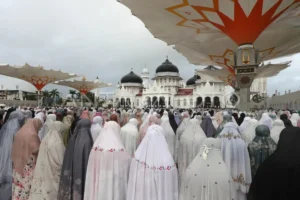
Exploring the intersection of faith and mental health: How daily prayer serves as a therapeutic anchor in modern life

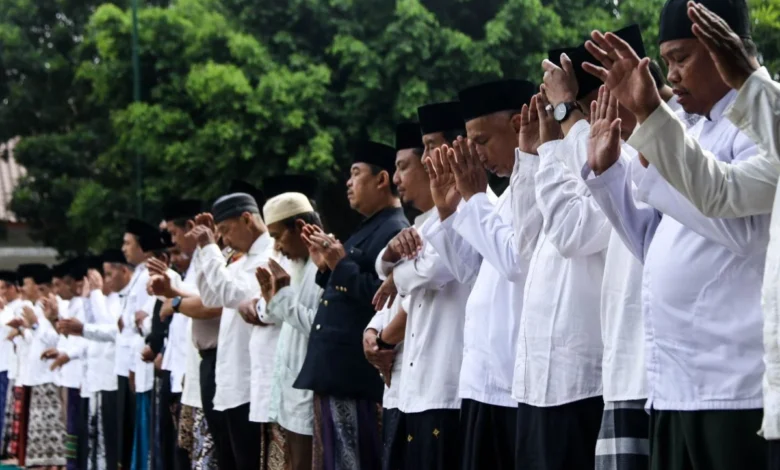
In the fast-paced environment of the 21st century, where the demands of professional obligations, social pressures, and digital connectivity often leave individuals in a state of chronic hyper-arousal, the practice of daily prayer has emerged as a focal point for psychological research. For the global Muslim community, the performance of Salah—the five daily prayers—is a cornerstone of religious observance. Beyond its theological status as a mandatory act of worship, contemporary mental health experts and religious scholars are increasingly examining the ritualistic and meditative elements of Salah as potential mechanisms for emotional regulation and stress management.
While the primary intent of prayer is spiritual devotion and submission to the Divine, the physical, cognitive, and social dimensions of the ritual offer a structured framework that mirrors several principles found in clinical mindfulness practices. This convergence of faith and well-being raises critical questions about how ancient traditions provide modern utility in maintaining psychological stability.
The Science of Stillness: Understanding the Psychological Mechanisms
To understand the potential impact of prayer on mental health, it is necessary to examine the ritual not just as a set of movements, but as a deliberate interruption of daily stressors. The structure of Salah requires a transition from the chaotic state of mundane activity to a state of focused attention, or khusyu.
Psychological studies have often drawn parallels between this state of focused devotion and mindfulness-based interventions (MBIs). According to the World Health Organization (WHO), stress management techniques that incorporate breathing, physical posture, and cognitive grounding are effective in mitigating the physiological symptoms of anxiety. In the context of prayer, the cycle of standing, bowing, and prostrating provides a physical rhythm that encourages parasympathetic nervous system activation—the body’s "rest and digest" mode—which directly counteracts the "fight or flight" response triggered by chronic stress.
A seminal study, Mindfulness in Salah Prayer and its Association with Mental Health, published in the Journal of Religion and Health in 2017, provided empirical data to support these observations. By surveying 174 participants, researchers identified a significant positive correlation between regular, mindful prayer and improved mental health outcomes. Participants reported that the act of "shutting out" worldly concerns five times a day acted as a psychological circuit breaker, allowing them to recalibrate their emotional state before returning to their daily tasks.
Structuring the Day: The Role of Routine in Mental Resilience
One of the most profound, yet often overlooked, aspects of Salah is its temporal structure. Human psychology thrives on predictability and routine. The five-time-a-day schedule creates a "temporal anchor" that divides the day into manageable segments.
In the field of behavioral psychology, establishing a routine is a primary recommendation for individuals suffering from anxiety or executive dysfunction. By breaking the day into segments punctuated by prayer, the practitioner is forced to pause, which prevents the buildup of cumulative stress. This periodic "de-escalation" of the mind is particularly relevant for urban professionals in cities like Jakarta, where traffic, high-cost living, and competitive work environments create a constant baseline of anxiety.
Furthermore, this routine serves as a form of "active recovery." Unlike passive forms of relaxation, such as scrolling through social media or consuming entertainment, which can sometimes lead to mental fatigue, the active nature of prayer—involving physical movement and verbal recitation—requires a level of engagement that successfully redirects the brain’s focus.
The Social Dimension: Communal Prayer and Belonging
While individual prayer provides personal reflection, congregational prayer (Jama’ah) introduces a critical social element. Human beings are inherently social creatures, and isolation is a known precursor to depressive symptoms. Attending the mosque for daily prayers facilitates regular interaction with a community, fostering a sense of belonging and mutual support.
Sociological data suggests that social capital—the networks of relationships among people who live and work in a particular society—is a key determinant of mental health. In the context of the mosque, this social capital is reinforced through shared values, collective goals, and the informal check-ins that occur before and after the prayer. For many, the mosque acts as a "third space"—distinct from the workplace and the home—where individuals can feel supported by their peers, thereby reducing feelings of loneliness and alienation.
Navigating the Boundaries of Faith and Therapy
It is essential to clarify that the discussion regarding prayer and mental health is not intended to pathologize the human experience or to suggest that religious practice is a clinical substitute for professional psychiatric intervention. The medical community maintains a clear distinction between spiritual well-being and the treatment of clinical mental health disorders.
Clinical experts emphasize that conditions such as major depressive disorder, generalized anxiety disorder (GAD), or post-traumatic stress disorder (PTSD) are medical conditions that require evidence-based treatments, including psychotherapy and, where necessary, pharmacological intervention. A growing movement among Muslim mental health professionals advocates for a "holistic" approach—one that validates the spiritual comfort provided by prayer while simultaneously utilizing clinical resources when symptoms reach a level of impairment.
The danger of viewing prayer as a "cure-all" is that it may lead individuals to delay seeking necessary medical treatment, potentially exacerbating their condition. Therefore, the narrative within the medical and religious community has shifted toward "integrative care." This approach encourages patients to maintain their spiritual practices as part of their overall wellness plan, while being empowered to seek professional help when the weight of their challenges exceeds their individual capacity to cope.
Chronology of Research and Institutional Perspective
The investigation into the relationship between Islamic practices and mental health has gained momentum over the past decade.
- 2015-2017: A wave of academic research began to surface in journals such as the Journal of Religion and Health, specifically looking at the physiological markers of prayer (e.g., heart rate variability and blood pressure).
- 2018-2020: Increased institutional awareness in the Middle East and Southeast Asia led to the establishment of counseling centers that integrate faith-based counseling with cognitive behavioral therapy (CBT).
- 2021-Present: Global discussions during and post-pandemic highlighted the necessity of spiritual resilience as a coping mechanism, leading to increased funding for studies on the intersection of religious ritual and trauma recovery.
These developments suggest a maturation in how the intersection of faith and science is perceived. No longer viewed as mutually exclusive, many clinical psychologists now include "religious/spiritual assessment" as part of their initial intake process to better understand a patient’s coping mechanisms and support systems.
Broader Implications for Public Health
The implications of these findings are significant for public health policy. If regular, mindful prayer can assist in the regulation of stress and the maintenance of emotional stability, it represents a low-cost, widely accessible, and highly sustainable public health tool.
In diverse societies, recognizing the role of religious rituals in maintaining community mental health can lead to more inclusive public health initiatives. For instance, creating "quiet spaces" in workplaces or universities for prayer and reflection is not merely an accommodation of religious freedom; it is a proactive measure to support the mental well-being of the population.
However, the efficacy of this practice remains subjective. As the initial report noted, the impact is highly individual. Factors such as the sincerity of the practitioner, their personal understanding of the theology, and the quality of their social environment all influence the outcome. What remains consistent is the necessity of an internal locus of control—the belief that one has the agency to manage their thoughts and emotions, a belief that is deeply embedded in the practice of daily prayer.
Conclusion: A Balanced Perspective
Prayer, in its essence, serves as a bridge between the finite world of human struggle and the infinite perspective of the divine. As an instrument for mental health, it offers a structure of calm, a mechanism for emotional regulation, and a social network of support. While it is not a panacea for clinical mental illness, its role as a prophylactic against the stressors of modern life is increasingly supported by both anecdotal experience and academic research.
For those navigating the complexities of modern existence, the five daily prayers function as a recurring opportunity to pause, reflect, and reset. As long as this practice is balanced with an openness to professional care when clinical symptoms arise, it remains a powerful, time-tested strategy for maintaining equilibrium in an increasingly volatile world. The integration of spiritual discipline and clinical awareness represents the most robust pathway toward comprehensive psychological health in the contemporary era.