Jakarta Authorities Urge Motorists to Stop Tipping Unauthorized Traffic Attenders to Improve Road Safety and Urban Order

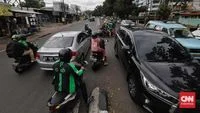
Jakarta, Indonesia — Municipal authorities and law enforcement agencies in Indonesia’s capital have intensified their campaign against informal, self-appointed traffic wardens, locally known as "Pak Ogah," urging the motoring public to immediately cease providing monetary contributions to these individuals. The practice, long woven into the chaotic fabric of Jakarta’s daily commute, is increasingly viewed by urban planners and public safety officials as a significant hazard that not only disrupts the smooth flow of vehicular traffic but also perpetuates an unregulated system of roadside entrepreneurship operating outside the bounds of the law.
The renewed directive, heavily emphasized by the Jakarta Civil Service Police Unit (Satpol PP) through its official communications channels, aims to dismantle the financial incentives that sustain the presence of unauthorized traffic regulators at critical intersections, U-turns, and bridge approaches throughout the metropolis. While individual contributions in the form of loose change may appear trivial to passing drivers, authorities argue that the cumulative effect of these transactions normalizes illegal roadside activity, undermines professional traffic management, and poses severe risks to both the unauthorized wardens and the motorists they ostensibly attempt to guide.
Understanding the Phenomenon of Pak Ogah in Jakarta
The term Pak Ogah refers to informal individuals who station themselves at high-congestion points, bottleneck intersections, and un-signalized U-turns across Jakarta. Armed with rudimentary hand signals and whistles, these individuals intervene in traffic movements to facilitate illegal turns, lane mergers, or crossings, invariably expecting a small financial tip—usually ranging from a few hundred to a few thousand rupiah—from appreciative or intimidated drivers.
Sociologically, the emergence of Pak Ogah is deeply rooted in urban unemployment, economic informality, and the historical inadequacy of formal infrastructure management in specific localized corridors. For many individuals lacking formal employment opportunities, standing at a busy intersection offers a daily source of sustenance driven by the sheer volume of Jakarta’s notorious traffic congestion. However, urban transportation experts have long argued that these individuals lack the professional training, situational awareness, and legal authority required to manage complex traffic flows. Instead of mitigating congestion, their ad-hoc interventions frequently create bottlenecks, confuse motorists, and provoke sudden braking maneuvers that escalate the risk of rear-end collisions and pedestrian accidents.
The Legal Framework and Regulatory Enforcement
The legal basis for cracking down on unauthorized traffic regulators is firmly established under regional regulations. According to Jakarta Provincial Regulation (Peraturan Daerah) Number 8 of 2007 concerning Public Order, Article 7, Paragraph 1 explicitly stipulates that any individual or group lacking official authority is strictly prohibited from regulating traffic at intersections, sharp curves, or turning points with the intention of soliciting financial compensation or service fees.
Despite the existence of this regulatory framework for nearly two decades, enforcement has historically faced logistical challenges due to the sheer scale of the city and the transient nature of the informal workers. The recent escalation in public messaging represents a shift toward addressing the demand side of the equation—the motorists—by cutting off the financial lifeline that makes the occupation viable. Satpol PP has underscored that by continuing to hand out money, drivers are inadvertently complicit in sustaining an illegal enterprise that compromises public safety. "Do not normalize giving to Pak Ogah," the agency stated in an official public advisory. "Let us begin to be wiser. Do not give money to parties who regulate traffic without authority. Do not normalize what is wrong."
Political Will and Leadership Perspectives
The crackdown on informal traffic wardens has also gained high-level political backing from Jakarta’s leadership. Governor Pramono Anung has publicly asserted that the complete elimination of Pak Ogah from the city’s thoroughfares is a critical prerequisite for achieving sustained improvements in traffic mobility and urban order.
Governor Pramono highlighted empirical evidence from specific infrastructure corridors where informal wardens have been successfully cleared out. Citing the transformation along Jalan HR Rasuna Said—one of the capital’s major commercial arteries—he noted a marked improvement in traffic fluidity following the removal of unauthorized attendants. According to the governor’s assessment, the economic incentive structure of the Pak Ogah creates a perverse incentive: individuals managing traffic informally actually benefit financially when congestion worsens, as slower traffic allows for more prolonged interactions with trapped motorists.
"There must be no Pak Ogah," Governor Pramono stated during a recent public briefing, referencing observations along major transit corridors. "Why? Because the so-called Pak Ogah only earns money when there is a traffic jam. As soon as the Pak Ogah is gone, Rasuna Said becomes fluent and smooth."
In alignment with this vision, the Jakarta Provincial Government has mandated that all aspects of road management, traffic engineering, and intersection monitoring must be handled exclusively by authorized state apparatuses. Consequently, the Jakarta Transportation Agency (Dishub) has been instructed to strengthen its operational synergy with the Jakarta Metro Police (Polda Metro Jaya) to ensure continuous surveillance and rapid response to unauthorized traffic interference across all five administrative municipalities.
Broader Implications for Urban Mobility and Public Safety
The concerted effort to eradicate unauthorized traffic regulators touches upon several broader themes in contemporary urban management, including public safety, economic development, and law enforcement consistency.
From a safety perspective, the presence of pedestrians standing in active lanes of traffic to collect money creates an unacceptable hazard. Traffic accidents involving roadside vendors and informal wardens are a recurring concern in dense metropolitan areas. Furthermore, the arbitrary stopping of vehicles to accommodate preferred turns disrupts the synchronized timing of modern traffic light systems and intelligent transportation networks implemented by the provincial government.
Economically, experts suggest that resolving the underlying issue requires more than punitive measures or public awareness campaigns directed at motorists. While cutting off financial incentives discourages the occupation, sustainable long-term success depends on providing alternative livelihood programs, vocational training, and formal employment pathways for individuals displaced from informal street-level economies. Social welfare agencies within the Jakarta administration are under pressure to formulate comprehensive intervention programs that absorb these informal workers into the formal labor market.
Conclusion and Future Outlook
As Jakarta continues its transition into a globally competitive megacity and prepares for its evolving role as a major economic hub, municipal authorities remain steadfast in their pursuit of public order. The campaign against unauthorized traffic regulators serves as a test case for the government’s ability to enforce regional regulations and reshape civic behavior.
By urging motorists to withhold financial patronage and mobilizing joint patrols between the Transportation Agency and the police, Jakarta is signaling a zero-tolerance approach to informal disruptions on public roads. The ultimate success of this initiative will be measured not only by the immediate clearance of intersections but by the permanent institutionalization of professional, data-driven traffic management that ensures safety and efficiency for all road users across the capital.
Related posts: