Exploring Yogyakarta on Foot: Eight Iconic Destinations Surrounding the Historic Malioboro Corridor

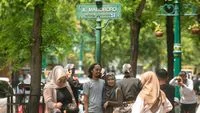
The historic cultural hub of Yogyakarta continues to solidify its position as one of Southeast Asia’s premier tourism destinations, welcoming millions of domestic and international travelers annually. At the heart of this vibrant Special Region lies Malioboro, a renowned thoroughfare that serves as the commercial and cultural epicenter of the city. Strategically situated mere minutes from Yogyakarta Railway Station, Malioboro provides seamless connectivity for tourists arriving via Indonesia’s extensive rail network. While the iconic avenue itself remains a mandatory stop for any itinerary, the broader urban landscape surrounding Malioboro harbors a wealth of cultural, historical, and educational landmarks that can be explored entirely on foot or via traditional non-motorized transport. This pedestrian-friendly ecosystem not only alleviates urban traffic congestion but also offers an immersive travel experience, allowing visitors to engage directly with the authentic daily life and rich heritage of the Javanese metropolis.
Historical Evolution and Urban Mobility in Central Yogyakarta
The urban architecture of central Yogyakarta reflects a deeply rooted cosmological layout conceptualized by the founding monarch of the Sultanate, Sri Sultan Hamengkubuwono I, in the mid-18th century. The alignment stretching from the Tugu monument in the north, passing through the bustling Malioboro corridor and the Kraton (Palace) complex in the south, forms an imaginary sacred axis known as the Sumbu Filosofis. In recent years, local municipal authorities and the provincial government have prioritized pedestrianization projects along this vital corridor. Sidewalks have been systematically widened, street vendors reorganized, and motorized vehicle restrictions implemented periodically to encourage foot traffic. This urban transformation has elevated the accessibility of surrounding heritage sites, transforming a congested commercial district into an interconnected cultural park where museums, royal properties, and traditional markets coexist within a comfortable walking radius of less than two kilometers.
Top Eight Pedestrian-Accessible Destinations Around Malioboro
For travelers seeking a comprehensive yet efficient itinerary, urban planners and tourism boards recommend a curated circuit of eight prominent attractions situated within the immediate vicinity of Malioboro and the Zero Kilometer Point.
-
Benteng Vredeburg: A Bastion of Colonial History
Located at the southern terminus of the Malioboro corridor on Jalan Margo Mulyo, Benteng Vredeburg stands as a silent witness to centuries of geopolitical shifts. Constructed originally as a modest wooden fortification by the Dutch East India Company (VOC) in 1760 at the behest of Sultan Hamengkubuwono I—ostensibly to protect the Dutch resident, though historically perceived as a means to monitor the royal court—the fort was later expanded into a permanent stone structure following earthquakes. Today, the meticulously preserved compound functions as a state museum. Inside, visitors encounter a series of comprehensive dioramas detailing Indonesia’s struggle for independence, colonial-era architecture, and rotating exhibitions highlighting national heroes. -
Pasar Beringharjo: The Epicenter of Traditional Commerce
Operating continuously since the establishment of the Sultanate, Pasar Beringharjo is the oldest and largest traditional market in Yogyakarta. Situated just steps away from Vredeburg, the multi-level market complex is a bustling emporium where centuries-old trading traditions persist. The ground floor is dominated by thousands of stalls offering an extensive array of batik garments, hand-woven fabrics, and traditional textiles ranging from affordable daily wear to exquisite hand-drawn silk pieces. The upper levels specialize in antiques, traditional herbs (jamu), and spiritual artifacts. Surrounding the perimeter, street vendors serve classic Yogyakarta culinary staples such as sate klatak and various market snacks (jajanan pasar), providing an authentic sensory immersion into local commerce. -
Taman Pintar: Fostering Science and Education
Positioned within the civic core near the Zero Kilometer Point, Taman Pintar (The Smart Park) bridges the gap between historical preservation and modern educational infrastructure. Established to promote science literacy among youth, the interactive science museum features dozens of thematic zones equipped with hands-on apparatus covering physics, astronomy, renewable energy, and environmental science. Beyond scientific exhibits, the facility integrates cultural workshops where visitors, particularly school-aged children, can engage in traditional crafts such as pottery throwing and batik stamping. The integration of modern pedagogy within a historic urban setting underscores the city’s dual identity as a center of education and tradition. -
Kraton Yogyakarta: The Living Heart of the Sultanate
Occupying the structural core of the city’s southern district, the Kraton Yogyakarta Ngayogyakarta Hadiningrat serves as the official residence of the reigning monarch, Sri Sultan Hamengkubuwono X, and functions as a living repository of classical Mataram culture. Designed according to strict cosmological principles, the palace complex features sprawling courtyards, grand pavilions (pendopo) supported by massive teak pillars, and extensive collections of royal regalia, historical photographs, and European-gifted artifacts. Visitors can witness court guards attired in traditional royal uniforms performing ceremonial duties. On specific mornings, scheduled artistic performances—including classical Javanese court dances and gamelan recitals—offer profound insights into an unbroken aristocratic tradition that continues to shape the civic identity of modern Yogyakarta. -
Alun-Alun Kidul: Nocturnal Social Hub and Cultural Traditions
As daylight fades, the southern public square, locally known as Alun-Alun Kidul (Alkid), transforms into a vibrant nocturnal leisure ground. Flanked by majestic banyan trees, the expansive grassy square is famous for the centuries-old ritual known locally as Masangin—the challenge of walking blindfolded between two sacred banyan trees (pohon beringin kembar). Local folklore suggests that individuals with pure intentions will successfully navigate the narrow passage. Beyond this playful tradition, the square comes alive with an array of brightly illuminated, pedal-powered vehicle carts decorated with neon lights (odong-odong), alongside numerous food stalls offering regional delicacies, making it a favored gathering space for families, students, and tourists alike. -
Taman Sari Water Castle: Royal Pleasure Grounds and Architectural Fusion
Taman Sari, translating literally to "Beautiful Garden," served as the royal pleasure garden, meditation sanctuary, and defense fortification for the Sultanate following its construction in the mid-18th century under Sultan Hamengkubuwono I. Located a short becak (trishaw) ride or a pleasant walk southwest of the Kraton, the sprawling complex exhibits a fascinating architectural synthesis of Javanese spatial concepts and European baroque elements, credited to a mysterious Portuguese architect known locally as Demang Tegoris. The site features intricate subterranean passages, hanging gardens, artificial lakes, and the iconic bathing complex (Umbul Pasiraman) adorned with multi-tiered towers and water spouts shaped like mythical water dragons. -
Museum Sonobudoyo: Preserving Archipelago Heritage
Positioned strategically opposite the northern square of the Kraton, Museum Sonobudoyo stands as one of the most comprehensive repositories of Javanese art and archaeology in Indonesia. Established in the colonial era by the Java Instituut in 1935, the museum houses extensive collections encompassing ancient stone sculptures, bronze-age implements, classic wayang kulit (leather shadow puppets) from various regions of the archipelago, traditional weapons such as keris, and exquisite textile exhibits. The institution plays a pivotal role in heritage preservation, regularly hosting classical wayang shadow puppet performances accompanied by live gamelan orchestras, thereby providing an accessible academic and cultural bridge for visitors based in the Malioboro district. -
Tugu Yogyakarta: The Iconic Northern Anchor
Marking the northern extremity of the historic philosophical axis, the Tugu Yogyakarta monument—formally known as Tugu Pal Putih (White Monument)—is perhaps the most recognizable urban landmark in the region. Originally constructed in 1755 in a cylindrical, phallic-symbolic design known as Golong Gilig that represented the unity of man and Creator (manunggaling kawula gusti), the structure was severely damaged by a major earthquake in 1867. The Dutch colonial administration subsequently rebuilt it in 1889 into a square-based white pillar, giving it its current neoclassical appearance. Today, the intersection where the monument stands serves as a symbolic meeting point and a premier nocturnal photography spot, framed by the bustling street life of Jalan Jenderal Sudirman and Jalan Margo Utomo.
Economic Implications and Sustainable Urban Tourism
The high concentration of accessible landmarks surrounding Malioboro generates substantial economic benefits for the local community, fostering an ecosystem where small-scale merchants, traditional artisans, street vendors, and hospitality operators thrive. According to regional tourism data, pedestrian-centric tourism models significantly increase the average length of stay and daily expenditure per visitor, as travelers are more likely to pause at local cafes, purchase handcrafted souvenirs, and utilize non-motorized public transport.
However, urban analysts and municipal planners face ongoing challenges regarding crowd management, waste reduction, and the preservation of historical structures against environmental wear and tear. Recent infrastructure upgrades, including the implementation of specialized pedestrian zones, designated parking hubs outside the immediate core, and enhanced waste management protocols, represent proactive measures by the local government to balance economic vitality with heritage conservation.
As Yogyakarta looks toward the future, the integration of historical districts with modern urban mobility initiatives ensures that the enduring charm of Malioboro and its surrounding heritage sites will remain accessible, educational, and sustainable for generations of travelers to come.