Bill Skarsgard expresses keen interest in portraying a James Bond villain despite exhaustion with antagonist roles

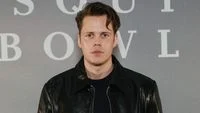
The landscape of the James Bond franchise remains in a state of high-stakes transition as Eon Productions continues its exhaustive search for the next actor to embody the legendary 007. Amidst the swirling speculation regarding the future of the franchise, Swedish actor Bill Skarsgard has emerged as a compelling figure, publicly signaling his openness to joining the Bond universe—not as the titular spy, but as a formidable antagonist.
Known for his chilling performances in high-profile genre projects, the 36-year-old actor’s comments have reignited discussions regarding the casting process for the next chapter of the long-running series. While Skarsgard has openly admitted to a degree of professional fatigue regarding villainous archetypes, his enthusiasm for the iconic franchise suggests that the allure of the Bond antagonist remains a pinnacle for actors within the industry.
The Art of the Antagonist: Skarsgard’s Cinematic Trajectory
Bill Skarsgard has cemented his reputation as one of Hollywood’s most versatile character actors, particularly through his mastery of unsettling, transformative roles. His portrayal of the interdimensional entity Pennywise in the It saga (2017–2019) introduced him to a global audience, showcasing an ability to disappear entirely into a menacing persona. This trajectory continued with his recent, critically acclaimed performance as Count Orlok in Robert Eggers’ Nosferatu (2024).
However, during a recent appearance on the Happy Sad Confused podcast, Skarsgard revealed that the repetition of such roles has prompted a more discerning approach to his career. "For a villain role, the character has to feel original to me—something I haven’t done before," Skarsgard noted. "I feel quite tired of those types of roles. That said, there is a certain kind of villain character that could be very interesting to play, provided the character is right."
Skarsgard’s hesitancy is grounded in the creative desire for evolution. Having played monsters, supernatural entities, and psychologically complex antagonists, the actor is cognizant of the risk of being pigeonholed. Yet, when host Josh Horowitz pivoted the conversation toward the prospect of a James Bond villain, the actor’s demeanor shifted perceptibly.
"Yes! The problem is, they haven’t called me about James Bond. For some reason," Skarsgard remarked with a lighthearted touch. "Maybe they think, ‘We can’t cast a Swede for this role.’ I’m not even on the list."
The Strategic Appeal of the One-Off Villain
For many actors, the commitment required for the James Bond franchise is a double-edged sword. While playing the lead agent offers unprecedented global fame, it also necessitates a multi-film commitment spanning over a decade, as seen with Daniel Craig’s 15-year tenure from Casino Royale (2006) to No Time to Die (2021).
Skarsgard specifically cited this long-term obligation as a deterrent for the lead role, but clarified that the structure of the Bond antagonist is significantly more flexible. Historically, Bond villains are designed as "one-and-done" entities, allowing actors to leave an indelible mark on the franchise without sacrificing their ability to pursue other diverse projects. He pointed to the performances of Mads Mikkelsen (Le Chiffre in Casino Royale) and Javier Bardem (Raoul Silva in Skyfall) as gold standards for the role—performances that were both impactful and contained.
The Broader Search for 007: A Shift in Strategy
The conversation around Skarsgard’s potential involvement occurs against the backdrop of an intense, clandestine search for the next James Bond. The departure of Daniel Craig left a void that producers Barbara Broccoli and Michael G. Wilson have been filling with extreme caution. The timeline of this search has been protracted, with industry reports indicating that the production team is looking for an actor who can carry the franchise for the next decade while maintaining the grounded, visceral tone established by the Craig era.
Recent reports from The Hollywood Reporter have added a layer of complexity to the casting rumors. Sources close to the production indicate that Robert Pattinson and Nicholas Hoult have engaged in secret, high-level auditions for the role. These names represent a shift toward established, high-caliber actors who have already proven their ability to handle large-scale studio franchises. Pattinson’s turn as the Caped Crusader in The Batman and Hoult’s extensive work in the X-Men and Mad Max universes demonstrate the level of physical and psychological preparation the producers are currently vetting.
These actors join a shortlist that includes Callum Turner, Jack Lowden, and Josh O’Connor. The inclusion of O’Connor, known for his nuanced work in The Crown, sparked significant media attention following unverified reports in British tabloid The Sun, which suggested that O’Connor had secured the role following a theatrical production in London. While these reports have not been officially corroborated by Amazon MGM Studios, the fervor surrounding the rumors underscores the massive cultural weight carried by the role.
Analysis: The Evolution of the Bond Villain
The casting of a villain is often as critical to a Bond film’s success as the casting of the hero. Historically, the Bond antagonist serves as a foil to the protagonist, often reflecting the geopolitical anxieties of the era. From the megalomaniacal schemes of the Cold War era to the more cerebral, technological threats of the modern age, the villain’s role has evolved to demand more psychological depth.
If Eon Productions were to consider an actor of Skarsgard’s caliber, it would signal a continued commitment to the "prestige" casting model that has defined the franchise since the turn of the millennium. By casting actors with significant range—such as Mikkelsen, Bardem, or Christoph Waltz—the franchise elevates its narrative stakes.
However, the "Swedish factor" jokingly mentioned by Skarsgard highlights a recurring point of debate in the Bond casting process: the balance between traditional archetypes and the need for fresh, international perspectives. While James Bond himself has traditionally been portrayed by British or Commonwealth actors, the role of the antagonist has historically been much more fluid, often serving as a platform for global talent to challenge the British secret agent.
Looking Toward the Future
As the production team evaluates the next steps, the industry remains in a holding pattern. The combination of established stars auditioning for the lead and character actors expressing interest in supporting roles suggests that the next iteration of the franchise is being built with a high degree of precision.
The timeline for an official announcement remains opaque. Producers have repeatedly stated that they are in no rush to finalize the decision, acknowledging that the transition between actors is a delicate process that requires careful brand management.
For Bill Skarsgard, the prospect of playing a Bond villain remains an intriguing hypothetical. Whether or not his name ever makes it to the formal casting list, his public interest serves as a reminder of the enduring power of the 007 mythos. As the franchise prepares to write its next chapter, the focus remains on finding the right creative synergy between the hero and the threat they face—a dynamic that will ultimately define the legacy of the next era of Bond films.
The search continues, and as the industry watches closely, the anticipation surrounding the franchise only grows, ensuring that when the final decision is made, it will be one of the most significant moments in contemporary cinema history.
Related posts: