Seven Vital Signs Your Car Tires Are Underinflated and How to Maintain Optimal Road Safety

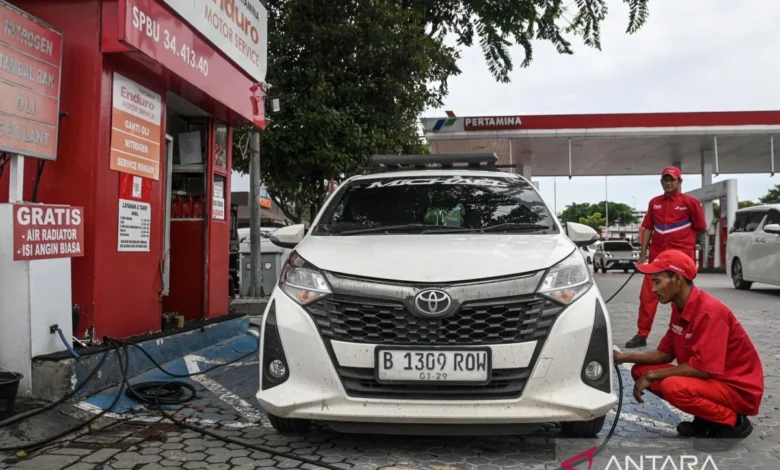
Maintaining proper tire pressure is one of the most fundamental yet frequently overlooked aspects of vehicle maintenance. While often perceived as a minor chore, the state of tire inflation serves as a critical bridge between the vehicle’s mechanical performance and road safety. Underinflated tires do more than just compromise fuel economy; they alter the structural integrity of the tire, leading to erratic handling, increased thermal stress, and in extreme cases, catastrophic failure at high speeds. Despite the technological advancements in modern automotive engineering, the responsibility of monitoring tire pressure remains largely with the operator, a fact that underscores the need for constant vigilance.
According to data from the National Highway Traffic Safety Administration (NHTSA), tires that are underinflated by 25 percent are three times more likely to be involved in a crash, while tires overinflated by 25 percent are more likely to suffer from road hazard damage. This technical reality makes the detection of low pressure a high-priority skill for every driver.
The Physics of Underinflation: Why Pressure Matters
To understand why tire pressure is vital, one must consider the tire as a pneumatic spring. A tire filled to the manufacturer’s recommended pressure (PSI) supports the vehicle’s load primarily through the air inside the casing. When pressure drops, the tire’s sidewalls begin to flex excessively. This increased flex leads to internal friction, which manifests as heat.
As the tire temperature rises, the rubber compounds begin to degrade at an accelerated rate. Furthermore, the contact patch—the area of the tire touching the road—is distorted. Instead of maintaining a uniform footprint, the weight of the vehicle is pushed toward the edges of the tire, leading to uneven tread wear and poor traction. This structural deformation is the root cause of the seven warning signs every driver must recognize.
1. Visual Distortions and the Contact Patch
The most immediate, albeit sometimes subtle, sign of low pressure is the "bulge" at the base of the tire. When the pressure is insufficient to support the vehicle’s weight, the sidewall may appear to bow outward. While modern radial tires are designed to handle some flex, a noticeable flatness at the bottom of the tire indicates a significant loss of air. Drivers should conduct a walk-around inspection before every long journey. However, relying solely on vision is discouraged; the human eye can rarely detect a pressure drop of 3 to 5 PSI, which is enough to negatively impact performance.
2. Steering Dynamics and Handling Feedback
A vehicle’s steering system is calibrated to work in tandem with the specified tire pressure. When the front tires are underinflated, the steering often feels "heavy" or "sluggish." This is due to the increased rolling resistance and the widening of the contact patch, which creates more friction between the rubber and the road surface. In a turn, this may manifest as "understeer," where the car fails to turn as sharply as the driver expects. If a driver notices a sudden change in how the steering wheel feels, particularly in parking maneuvers or highway curves, checking tire pressure should be the first diagnostic step.
3. Compromised Vehicle Stability
Stability is a primary concern during adverse weather or high-speed maneuvers. Underinflated tires struggle to evacuate water from the road surface effectively, increasing the risk of hydroplaning. Furthermore, the excessive sidewall flex creates a "lag" in the vehicle’s response to steering inputs. During sudden lane changes or evasive maneuvers, this lag can result in a loss of vehicle control. The feeling of "wandering" on straight roads is a classic symptom of uneven or low tire pressure across the four wheels.
4. The Economic Impact: Fuel Consumption and Efficiency
The relationship between tire pressure and fuel economy is well-documented by the U.S. Department of Energy. For every 1 PSI drop in pressure across all four tires, a vehicle’s fuel economy can decrease by approximately 0.2 to 0.4 percent. While this may seem negligible, over a vehicle’s lifespan, the cumulative cost of increased fuel consumption—coupled with the cost of premature tire replacement—presents a significant financial burden. In an era where vehicle efficiency is a top priority for manufacturers and consumers alike, maintaining optimal pressure is the simplest way to optimize fuel consumption without requiring mechanical modifications.
5. Uneven Tread Wear Patterns
Tire health can be assessed by examining the tread. When a tire is consistently underinflated, the weight of the vehicle is concentrated on the outer edges (the shoulders) of the tire. Over time, this leads to rapid wearing of the shoulder ribs, while the center of the tread remains relatively untouched. Conversely, overinflated tires wear primarily in the center. Technicians often use these patterns as a diagnostic tool; if the shoulders are bald while the center has plenty of tread, the driver has likely been running on low pressure for an extended period.
6. Thermal Accumulation and Structural Failure
The heat generated by a flexing, underinflated tire is the leading cause of "blowouts." As the tire rolls, the sidewalls undergo repeated cycles of compression and release. This internal energy dissipation creates heat that cannot be easily shed by the rubber. In high-speed highway driving, this heat buildup can lead to a separation of the tire’s internal layers or a total structural failure. If a driver notices that the tires feel unusually hot to the touch after a drive—or if there is a distinct smell of burning rubber—it is a critical warning sign that the tires are operating in an unsafe thermal zone.
7. The Digital Guardian: Tire Pressure Monitoring Systems (TPMS)
Modern vehicles are equipped with TPMS, which uses sensors inside the wheel assembly to monitor air pressure in real-time. When the pressure falls below a set threshold, a warning icon—usually a horseshoe-shaped symbol with an exclamation point—illuminates on the dashboard. It is a common misconception that if the light is off, the tires are fine. TPMS systems typically trigger only when the pressure drops 20 to 25 percent below the manufacturer’s recommended level. By the time the light turns on, the tire may have already sustained internal damage. Therefore, TPMS should be viewed as a backup, not a replacement for regular manual checks.
Best Practices for Maintenance
To ensure maximum safety and longevity, vehicle owners should adhere to a strict maintenance schedule:
- Monthly Checks: Tire pressure should be checked at least once a month, including the spare tire. Pressure fluctuates with ambient temperature; for every 10-degree Fahrenheit change in temperature, tire pressure changes by about 1 PSI.
- The "Cold" Rule: Always check pressure when the tires are "cold," meaning the vehicle has been stationary for at least three hours or has been driven for less than one mile. Driving generates heat, which artificially inflates the pressure reading.
- Reference the Placard: Never rely on the maximum PSI printed on the tire sidewall. Instead, consult the vehicle manufacturer’s recommended PSI, which is found on the sticker inside the driver’s door jamb or in the owner’s manual.
- Invest in a Quality Gauge: Digital or high-quality analog gauges are far more reliable than the cheap pen-style gauges found at gas stations.
Broader Implications for Road Safety
The aggregate impact of underinflated tires on road safety is significant. Traffic authorities and automotive associations worldwide, such as the Japan Automobile Federation (JAF) and the European Tyre and Rim Technical Organisation (ETRTO), emphasize that tire maintenance is a collective responsibility. Beyond individual costs, poorly maintained tires contribute to higher accident rates, increased road debris from tire fragments, and a greater environmental footprint due to inefficient fuel use.
As vehicle technology evolves, the industry is moving toward autonomous tire inflation systems and advanced telematics that provide constant, granular data to the driver. However, until such technology becomes universal, the manual inspection process remains the most effective defense against the risks posed by improper tire pressure. By paying attention to the mechanical feedback of the vehicle and adhering to a consistent maintenance schedule, drivers can ensure their vehicles remain safe, efficient, and reliable for the long haul. Failure to do so not only shortens the life of the tires but, more importantly, places the safety of the vehicle’s occupants at unnecessary risk.
Related posts: