Kadin Indonesia Formulates Three Strategic Economic Recommendations for President Prabowo Subianto to Navigate Global Uncertainty

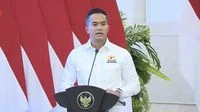
The Indonesian Chamber of Commerce and Industry, widely known as Kamar Dagang dan Industri (Kadin) Indonesia, has officially formulated three strategic policy recommendations derived from the comprehensive deliberations of its 2026 National Leadership Meeting, or Rapat Pimpinan Nasional (Rapimnas). These vital recommendations are scheduled to be formally presented directly to President Prabowo Subianto, serving as a blueprint for strengthening national economic resilience, ensuring a steady and reliable supply of production materials, and establishing absolute legal and operational certainty for businesses operating within the archipelago.
As geopolitical tensions, supply chain reconfigurations, and macroeconomic volatility continue to buffet the global landscape, the leadership of Kadin Indonesia has positioned these proposals as a vital collaborative roadmap. The core objective is to insulate the domestic market from external shocks while aggressively elevating the global competitiveness of Indonesian enterprises, ranging from micro, small, and medium-sized enterprises (MSMEs) to large-scale multinational conglomerates.
Comprehensive Deliberations and the Path to the Rapimnas Consensus
The formulation of these strategic insights is the culmination of rigorous, multi-day discussions held during the Rapimnas Kadin, which took place from October 29 to October 30, 2026. The event served as a major convergence point for economic policymakers, industry leaders, regional chambers, and sector-specific business associations.
According to Anindya Novyan Bakrie, the General Chairperson of Kadin Indonesia, the intensive brainstorming and policy synthesis were distributed among three primary working committees—designated as Komisi A, B, and C. Each committee tackled distinct structural hurdles facing the Indonesian economy. Komisi A centered its debates on macroeconomic stability and fiscal buffers, Komisi B focused on industrial supply chains and raw material accessibility, and Komisi C analyzed regulatory frameworks, investment climates, and international trade barriers.
Addressing a press conference convened at the conclusion of the summit on Friday, October 30, 2026, Anindya elaborated that the collective findings reflect the genuine, ground-level realities experienced by business practitioners across the nation. Notably, the recommendations incorporate explicit feedback, grievances, and strategic propositions gathered from Kadin branches spanning all 38 provinces of Indonesia, alongside numerous trade associations and sector federations. This extensive grassroots consultation ensures that the final policy package is not merely an ivory-tower abstraction, but an authentic reflection of what enterprises require to survive, scale, and thrive in an increasingly unpredictable global economy.
Pillar One: Bolstering Economic Buffers to Withstand Global Shocks
The first major recommendation adopted by the Rapimnas centers squarely on fortifying the nation’s economic shock absorbers. In an era defined by unpredictable commodity price swings, fluctuating exchange rates, and tightening global liquidity, Kadin emphasizes that both the state and private enterprises must maintain robust defensive cushions.
Elaborating on this priority during his press briefing, Anindya noted that safeguarding these economic cushions requires a multi-pronged approach involving cash flow management, regional fiscal health, and the preservation of domestic household purchasing power.
"When we talk about economic buffers, we are looking at several interconnected elements," Anindya stated. "First, we must meticulously protect the cash flows of both private businesses and the state. Tied directly into this equation is the health of regional fiscal budgets—the APBD—and, crucially, the purchasing power of households. By maintaining household consumption, the absorption capacity of people-centric businesses and major industrial sectors remains robust."
Economists point out that domestic consumption has historically served as the primary engine of Indonesia’s Gross Domestic Product (GDP) growth, typically contributing over 50 percent to the national economic output. By ensuring that inflationary pressures do not erode real wages and that regional governments execute their developmental spending efficiently, the domestic market can effectively cushion the economy against softening external demand for Indonesian exports. Kadin’s focus on business and state cash flows is equally critical; maintaining liquidity prevents a cascading wave of corporate defaults and severe employment contractions during downturns.
Pillar Two: Securing Raw Materials and Enhancing Supply Chain Integration
The second foundational pillar emerging from the 2026 Rapimnas addresses the availability, stability, and cost-efficiency of raw materials for production. Throughout the discussions, industry stakeholders repeatedly highlighted that domestic manufacturing and small-scale community production units—often categorized as usaha rakyat—frequently struggle with supply bottlenecks, high logistics costs, and volatile raw material pricing.
To combat these systemic vulnerabilities, Kadin is aggressively advocating for the development and enforcement of fully integrated supply chains stretching seamlessly from upstream resource extraction to downstream finished goods manufacturing. Anindya stressed that the availability of affordable and reliable raw materials is non-negotiable if Indonesian producers are to remain viable in domestic and international markets.
"The second recommendation dictates that the raw materials required for popular production and general industrial output must be strictly protected and managed," Anindya explained. "We need an integrated supply chain ecosystem from upstream to downstream. This structural integration ensures that the productive output of ordinary citizens and small businesses can be systematically connected to institutional financing channels and dependable end-buyers."
This emphasis on supply chain integration aligns closely with the national agenda on downstreaming (hilirisasi), a policy priority aimed at transforming Indonesia from a raw commodity exporter into a high-value manufacturing hub. By ensuring that local industries have unhindered access to domestic inputs—ranging from agricultural produce to critical industrial minerals—the chamber aims to reduce import dependency and shield local producers from external supply chain disruptions, such as those witnessed during recent global geopolitical crises.
Pillar Three: Establishing Absolute Certainty in the Business Environment
The third and final recommendation targets the regulatory and legal frameworks governing commerce and industry within the country. In an intensely competitive global market, foreign and domestic investors continually evaluate jurisdictions based on legal predictability, ease of doing business, regulatory transparency, and the stability of tax and labor policies.
Kadin’s third recommendation calls for a concerted national effort to fortify the certainty of doing business in Indonesia, thereby enabling domestic firms to scale their operations and project confidence onto the global stage.
"Our third core focus is ensuring absolute certainty in the Indonesian business environment, allowing our corporations to expand their footprints and compete effectively on the global stage," Anindya remarked.
To operationalize this ambition, the Kadin leadership introduced two overarching strategic catchphrases during the post-Rapimnas briefing: Buy from Indonesia and Buy Indonesia. These twin concepts encapsulate the chamber’s vision for foreign trade and capital accumulation.
The Buy from Indonesia initiative is designed as an aggressive export-promotion campaign. It aims to elevate the global profile of Indonesian manufactured goods, agricultural commodities, and creative industries, signaling to international buyers that Indonesian products meet world-class standards of quality, sustainability, and reliability.
Conversely, the Buy Indonesia initiative focuses on inward investment and capital attraction. It serves as a compelling call to action for domestic and international investors to deploy capital directly into the Indonesian economy. This encompasses both Foreign Direct Investment (FDI)—which establishes physical manufacturing plants, technology transfers, and job creation—and portfolio investments, such as purchasing sovereign state bonds and equities that finance national development projects.
Chronology of Engagement: Delivering the Blueprint to the Executive Branch
The transition of these theoretical recommendations into actionable state policy is slated to occur swiftly. Demonstrating the close working relationship between the private sector and the executive branch of government, Kadin Indonesia has arranged a direct audience with President Prabowo Subianto.
According to the established timeline, a high-level delegation representing Kadin will meet with the President on Saturday, October 31, 2026. Anindya confirmed that official confirmation of the meeting had already been secured from the office of the State Secretariat (Sekretariat Kabinet).
This timely audience underscores the administration’s receptiveness to private sector insights. By presenting the Rapimnas findings directly to the head of state less than 24 hours after the conclusion of the chamber’s deliberations, Kadin ensures that its policy proposals can be integrated into ongoing fiscal evaluations, legislative agendas, and strategic economic planning sessions.
The Philosophy of Indonesia Incorporated and Regional Inclusivity
Throughout the discourse surrounding the 2026 Rapimnas, Kadin leadership repeatedly invoked the guiding philosophy of Indonesia Incorporated. This conceptual framework emphasizes a symbiotic, harmonious partnership—frequently described in the Indonesian context as gotong-royong—between the central government, regional authorities, state-owned enterprises, and the private business community.
Anindya reiterated that President Prabowo has consistently championed this collaborative ethos, recognizing that national economic resilience cannot be achieved by state mandates alone, nor by market forces operating in an institutional vacuum.
"President Prabowo has always emphasized the concept of Indonesia Incorporated," Anindya noted. "This signifies true mutual cooperation between the government and the business sector. We are partners in building this nation’s economic future."
Furthermore, the legitimacy of the policy package submitted to the executive branch is heavily reinforced by its broad demographic and geographic foundation. By incorporating delegates, sector leaders, and economic data from all 38 provinces—spanning from Aceh to Papua—the recommendations capture the diverse economic realities of a vast archipelago. Issues unique to agrarian provinces, maritime economies, industrial powerhouses, and remote trading hubs were all synthesized into the final Rapimnas document.
Implications for Indonesia’s Economic Trajectory
The delivery of Kadin’s three-point recommendation package arrives at a pivotal juncture for the Indonesian economy. As the nation navigates complex global headwinds—including shifting monetary policies in major western economies, volatile energy markets, and intensifying technological competition—the alignment between public policy and private sector execution is more critical than ever.
Financial analysts suggest that if the government adopts and effectively implements Kadin’s suggestions regarding fiscal buffer management, supply chain localization, and regulatory certainty, Indonesia will be significantly better positioned to attract high-quality foreign investment and protect vulnerable segments of its labor force. The dual focus on export expansion (Buy from Indonesia) and capital inflow (Buy Indonesia) provides a balanced macroeconomic strategy that addresses both the external trade account and domestic capital formation.
As the leadership of Kadin Indonesia steps into the State Palace to present these findings to President Prabowo Subianto, the nation’s business community watches with cautious optimism. The success of this initiative will ultimately depend on the agility of regulatory implementation and the steadfast commitment of both government and industry to translate these visionary recommendations into tangible, daily operational realities for businesses across the archipelago.
Related posts: