Exploring the World Without Borders: Four Countries Offering Months of Visa-Free Travel for Indonesian Passport Holders

For citizens of Indonesia, international travel has historically involved navigating complex administrative hurdles, notably the visa application process. Securing a tourist visa often requires submitting extensive financial documentation, employment verification, detailed itineraries, and enduring lengthy waiting periods at foreign embassies. However, a select group of nations worldwide extends a welcoming policy to Indonesian passport holders, allowing entry without a pre-arranged visa for extended periods. These destinations enable travelers to bypass the traditional bureaucratic red tape and immerse themselves in foreign cultures for up to several months.
While the global mobility of the Indonesian green passport has experienced steady evolution, driven by diplomatic agreements and reciprocal tourism initiatives, certain destinations stand out by offering exceptionally generous durations of stay. Rather than the standard 14 to 30 days common in many bilateral tourism pacts, these countries permit Indonesian visitors to remain for periods ranging from 90 to 120 days. This extended timeline transforms the nature of international travel from brief, fast-paced sightseeing trips into immersive cultural exchanges, digital nomadism, or slow travel experiences.
Understanding the landscape of international mobility requires examining the mechanisms behind visa exemptions, the specific conditions enforced by destination countries, and the broader implications for Indonesian outbound tourism. Although these nations do not require a visa prior to departure, travelers remain subject to standard immigration controls upon arrival, where compliance with financial, logistical, and legal entry requirements is rigorously evaluated.
The Evolution of Indonesian Passport Mobility and Visa-Free Policies
The Henley Passport Index and similar global mobility trackers consistently monitor the strength of national passports based on the number of destinations holders can access without a prior visa. Over the past decade, the Indonesian government has continuously engaged in bilateral and multilateral diplomacy to expand visa-free and visa-on-arrival privileges for its citizens. These efforts aim to boost bilateral trade, foster educational exchanges, and strengthen diplomatic ties.
Historically, Indonesian travelers faced severe restrictions due to economic factors, migration concerns, and administrative misalignment. However, as Indonesia’s economy has grown—solidifying its position as Southeast Asia’s largest economy and a member of the G20—its geopolitical standing has improved. Consequently, various nations in the Americas, Africa, and Oceania have opened their borders more generously to Indonesian nationals, recognizing the economic value of Indonesian tourists while maintaining standard border security measures.
Despite these advancements, visa-free access does not equate to unconditional entry. Immigration authorities worldwide retain the sovereign right to deny entry to any traveler who fails to meet entry prerequisites, even if they hold a passport from a country officially granted visa-free status. Therefore, comprehensive preparation remains essential for anyone planning an extended stay abroad.
Detailed Breakdown of Destinations Offering Extended Visa-Free Stays
Four prominent destinations across different continents provide Indonesian citizens with the opportunity to reside for multiple months without securing a visa in advance. Each destination operates under distinct immigration frameworks, offering unique cultural landscapes and regulatory expectations.
- Fiji: Up to 120 Days of Island Exploration
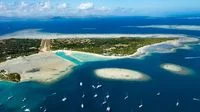
Located in the South Pacific, the Republic of Fiji offers one of the most generous entry policies for Indonesian passport holders, permitting stays of up to 120 days. Under Fijian immigration regulations, eligible visitors receive a visitor permit upon arrival, granting them approximately four months to explore the archipelago’s hundreds of islands.
Fiji’s policy is designed to encourage long-term tourism, ecotourism, and cultural tourism. To qualify for the 120-day permit at the border, Indonesian travelers must present a valid passport with sufficient validity, a confirmed return ticket or proof of onward travel to a third destination, and verifiable evidence of adequate financial resources to sustain themselves throughout the duration of their stay without engaging in unauthorized local employment.
- Peru: Up to 90 Days in the Heart of South America
Peru, renowned for its rich pre-Columbian history, the Andes mountain range, and archaeological wonders such as Machu Picchu, grants Indonesian citizens up to 90 days of visa-free travel for tourism purposes. This policy aligns with Peru’s broader strategy to attract international visitors from Southeast Asia and diversify its tourism demographics.
Upon arrival at Jorge Chávez International Airport in Lima or other designated ports of entry, Indonesian travelers undergo routine immigration screening. While no pre-arranged visa is required, immigration officers assess the purpose of the visit. Travelers are advised to carry comprehensive documentation, including proof of accommodation, return flight itineraries, and sufficient funds. The final determination regarding the authorized length of stay rests entirely with the Peruvian immigration official on duty.
- Chile: Up to 90 Days of South American Diversity
Chile offers Indonesian passport holders a maximum of 90 days of visa-free entry under its temporary stay category, known locally as Permanencia Transitoria. Spanning a narrow strip of land between the Andes and the Pacific Ocean, Chile provides diverse geographical landscapes ranging from the Atacama Desert in the north to the glacial fjords of Patagonia in the south.
Chilean immigration authorities mandate that visitors entering under this waiver demonstrate clear economic solvency to cover living expenses during their stay. Furthermore, Chile offers a unique administrative provision: travelers who wish to extend their stay beyond the initial 90-day period may apply for a single extension of an additional 90 days. This process requires submitting an application to the official migration service, fulfilling specific administrative criteria, and paying the requisite processing fees. The extension is not guaranteed and must be approved before the expiration of the initial entry permit.
- Maroko: Up to 90 Days at the Crossroads of Africa and Europe
Maroko, or Morocco, situated in North Africa, welcomes Indonesian passport holders with a visa-free stay of up to 90 days for tourism. According to official diplomatic documentation from the Consulate of the Kingdom of Morocco, Indonesia is officially listed among the nations exempt from visa requirements for short-term visits.
This policy facilitates cultural exchange between Southeast Asia and the Maghreb region, allowing Indonesian travelers to experience Morocco’s historic imperial cities, the Sahara Desert, and its distinct culinary and architectural heritage. Upon arrival at Moroccan ports of entry, travelers must present a valid passport and meet standard border control criteria. Visitors planning to exceed the 90-day limit must navigate local administrative channels to request formal residency or visa extensions in compliance with Moroccan law.
Immigration Protocols and Essential Requirements for Travelers
While the absence of a visa requirement significantly reduces administrative friction, it does not exempt travelers from standard border compliance. International aviation and immigration standards require all passengers utilizing visa-free facilities to satisfy several mandatory conditions upon arrival:
- Passport Validity: Passports must generally be valid for a minimum of six months beyond the planned date of departure from the destination country.
- Onward Travel Proof: Airlines and immigration officers routinely request confirmed return tickets or proof of continuous travel exiting the host country. One-way tickets without an exit plan frequently result in boarding denials at the point of origin.
- Financial Sufficiency: Proof of financial capability—such as recent bank statements, international credit cards, or cash—ensures travelers can support themselves without recourse to public funds or illegal work.
- Accommodation Details: Having verifiable hotel reservations, an invitation letter from a host, or tour itineraries strengthens a traveler’s profile during immigration interrogation.
Economic and Tourism Implications of Extended Visa-Free Access
The availability of extended visa-free travel to distant nations has notable implications for both travelers and the tourism industry. For Indonesian citizens, it lowers the financial and temporal barriers associated with long-haul international travel, encouraging a shift toward experiential and slow travel rather than rushed, multi-country itineraries.
From an economic perspective, destinations that relax entry requirements for emerging source markets often see a gradual increase in high-spending tourists. Long-term visitors tend to distribute their economic impact across local businesses, regional transport sectors, and accommodation providers beyond major tourist hubs. Conversely, host nations continuously monitor compliance rates to ensure that visa-free privileges are utilized strictly for tourism, cultural exchange, or authorized personal pursuits, balancing openness with national security and labor market integrity.
Conclusion
The privilege of visiting nations such as Fiji, Peru, Chile, and Maroko for periods of up to three to four months without a visa represents a significant expansion of travel opportunities for Indonesian passport holders. By understanding and respecting the legal frameworks, financial requirements, and administrative procedures of each destination, travelers can maximize these global mobility options safely, legally, and memorably.