PSSI Ordinary Congress 2026 Focuses on Electoral Code Amendments Amid Controversy Over Leadership Timelines and Governance Challenges

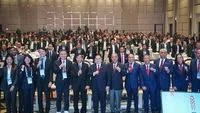
Jakarta, CNN Indonesia — The Football Association of Indonesia, known locally as Persatuan Sepak Bola Seluruh Indonesia (PSSI), convened its highly anticipated Ordinary Congress on Saturday, November 28, 2026, at the luxury Westin Hotel in Jakarta. The high-stakes gathering brought together key stakeholders from across the Indonesian football ecosystem, including club representatives and regional association delegates, to deliberate on critical administrative reforms and governance updates. At the absolute center of the agenda was a controversial set of proposed amendments to the PSSI Electoral Code, a document that dictates the procedural framework for selecting future federation leaders.
The congress unfolded against a backdrop of escalating administrative tension, ongoing legal and structural debates regarding executive mandates, and widespread scrutiny from observers who closely monitor the transparency and democratization of Indonesian sports governance. While ordinary congresses are traditionally routine affairs designed to evaluate annual programs and financial reports, the November 28 session carried immense weight due to the potential ramifications of the electoral adjustments under consideration.
Core Amendments to the PSSI Electoral Code
The primary focus of the legislative debate at the Westin Hotel centered on two specific modifications to the PSSI Electoral Code. The first major amendment targets the eligibility requirements for individuals wishing to run for seats on the prestigious PSSI Executive Committee (Exco), a body that includes the positions of general chairperson, vice-chairpersons, and ordinary members.
According to draft documents circulating prior to the commencement of the congress, prospective candidates for the Exco must secure a remarkably high threshold of formal support to enter the electoral race. Specifically, a candidate must obtain endorsement from at least 20 voting football clubs and 15 Provincial Associations, widely known as Asprovs. Critics and independent legal analysts have pointed out that setting the nomination threshold at this level could potentially create a systemic barrier for independent challengers or reform-minded candidates who lack deep-rooted institutional networks within the current establishment.
The second critical amendment addressed the administrative timeline for the election process itself. Under the previous version of the Electoral Code—which was formally established and ratified in August 2026—the official registration window for presidential and executive committee candidates was set at a generous 30 days. However, the newly proposed draft drastically truncates this period down to a mere seven days. Proponents of the change argue that a compressed timeline streamlines administrative operations and minimizes prolonged political campaigning that could disrupt domestic league competitions. Conversely, detractors contend that a seven-day registration window severely restricts adequate preparation time for candidates, limits public scrutiny of contenders’ backgrounds, and favors incumbents who already possess pre-organized campaign apparatuses.
Timeline Discrepancies and the February 2027 Election Debate
Beyond the official textual amendments to the Electoral Code, the congress was overshadowed by persistent rumors and intense behind-the-scenes negotiations regarding the precise date of the next PSSI Elective Congress. Initially, the sports community understood that the elective congress would take place in May 2027. This timeline was subsequently shifted to July 2027 before fresh discussions surfaced indicating that the leadership election might be fast-tracked to early February 2027.
The debate over the calendar is not merely a scheduling preference; it touches upon fundamental questions regarding constitutional legality and tenure limits. The current PSSI administration, spearheaded by general chairperson Erick Thohir, officially assumed office following a high-profile extraordinary congress held on February 16, 2023. Under standard sports administration principles and the statutory framework governing national sports bodies in Indonesia, the natural termination of a four-year executive cycle aligns with the anniversary date of the election.
If the elective congress is delayed beyond mid-February 2027, the federation risks facing a constitutional vacuum or an unprocedural extension of executive power. Conversely, holding the election prematurely in early February 2027 to strictly adhere to the anniversary date compresses the operational runway required to implement the newly amended Electoral Code effectively. While legal apologists within the organization argue that any extension of tenure remains legally sound provided it receives formal ratification from the supreme legislative body—the congress itself—external observers remain skeptical. Critics emphasize that stretching mandates beyond statutory limits without compelling force majeure justifications undermines institutional accountability and sets a problematic precedent for sports administration in Southeast Asia’s largest nation.
Widespread Governance Issues Within Regional Associations
Compounding the complexity of the national congress is a deepening structural crisis at the grassroots level. A significant number of the PSSI Provincial Associations, or Asprovs, currently operate without permanent, democratically elected leadership. Reports indicate that numerous regional bodies have repeatedly failed to successfully execute their local elective congresses due to internal factionalism, administrative gridlock, or financial constraints.
Consequently, these vital regional stakeholders continue to be administered by temporary caretakers or Acting Plt. (Pelaksana Tugas) chairpersons. This lack of permanent leadership at the provincial level introduces severe systemic vulnerabilities into the broader national electoral architecture. Because Asprov delegates play a decisive role in voting for the national Executive Committee and endorsing candidates, the legitimacy of votes cast by caretaker-led provincial associations has become a major point of contention. If regional bodies lack permanent, stable leadership mandated by local constituents, their participation in a high-stakes national congress threatens to dilute the democratic integrity of the entire electoral outcome.
The FFI Conflict and Broader Institutional Friction
Adding fuel to an already volatile operational environment, PSSI is currently entangled in a public and administrative conflict with one of its prominent organizational members: the Indonesian Futsal Federation (Federasi/Asosiasi Futsal Indonesia – FFI). Futsal, which enjoys a massive and passionate following across Indonesia and has made significant strides in international competitions, operates under a semi-autonomous structure affiliated with PSSI. Recent disagreements regarding jurisdiction, financial revenue sharing, calendar harmonization, and operational independence have strained relations between the football parent body and its futsal counterpart.
The ongoing friction with FFI highlights a broader pattern of institutional challenges facing the national federation as it attempts to centralize control while simultaneously managing diverse sports disciplines. Stakeholders across the domestic sports landscape watched the November 28 Ordinary Congress closely to see whether leadership would extend olive branches to aggrieved member federations or adopt a more assertive, centralized posture.
Implications for the Future of Indonesian Football
The decisions ratified during the PSSI Ordinary Congress 2026 carry profound implications for the trajectory of the sport in the country. As Indonesia continues its ambitious quest to elevate the standards of its domestic leagues, strengthen national team pipelines across all age groups, and maintain compliance with international governing bodies such as FIFA and the Asian Football Confederation (AFC), internal political stability is paramount.
The implementation of stricter candidacy requirements, paired with a drastically shortened registration window, signals a tightening of administrative control by the incumbent leadership structure. While proponents maintain that such measures protect the organization from opportunistic entries and frivolous candidacies, independent sports governance advocates argue that exclusionary rules hinder progressive reform. Restricting the democratic space within the federation risks alienating qualified professionals who could otherwise contribute valuable expertise to the development of Indonesian football.
Furthermore, the unresolved leadership voids across numerous Asprovs demand urgent remediation. A national sports federation cannot claim true democratization if its regional foundations are crippled by perpetual caretaker governance and localized political infighting. Addressing these grassroots structural deficits must run parallel to high-level constitutional debates in Jakarta if the federation is to achieve sustainable, long-term health.
As the dust settles on the deliberations at the Westin Hotel, the immediate focus of the Indonesian football community shifts toward the upcoming execution of the electoral timeline. Whether the elective congress materializes in February 2027 as dictated by the anniversary of the current administration’s inauguration, and how strictly the newly amended Electoral Code is enforced in practice, will serve as definitive litmus tests for the state of sports governance in Indonesia. The final resolutions adopted on Saturday will ultimately shape not only who commands the executive offices of PSSI in the years to come, but also the fundamental credibility of the nation’s most popular sport.
Related posts: