Former Vice President Jusuf Kalla Defends UGM Sermon Amid Blasphemy Allegations, Citing Focus on Peace and Conflict Resolution


Jakarta, Indonesia – Former Indonesian Vice President Jusuf Kalla, who served two terms as the nation’s tenth and twelfth Vice President, has issued a robust defense of his recent sermon delivered at Gadjah Mada University (UGM), vehemently denying accusations of blasphemy that have led to multiple police reports. Kalla, a veteran statesman known for his pivotal role in resolving several sectarian conflicts across Indonesia, clarified that his discourse centered on the critical theme of peace and conflict resolution, not religious doctrine or ideology. His clarification comes amidst growing scrutiny and legal challenges following remarks made during a Ramadan lecture.
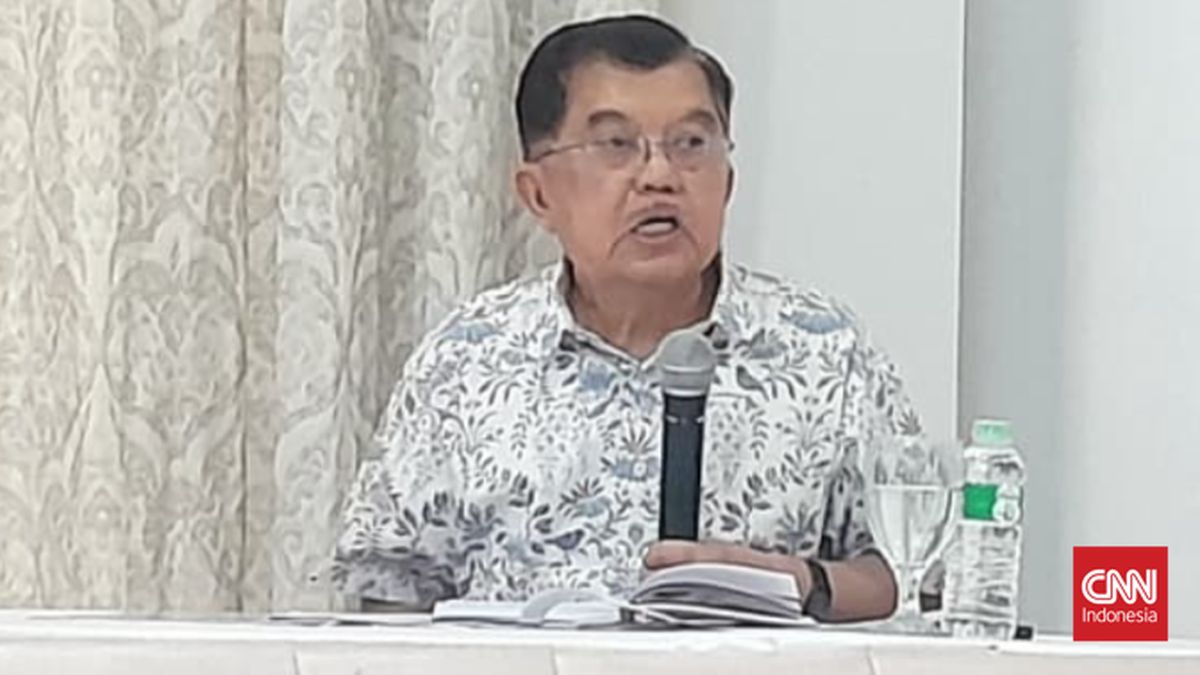
Speaking from his residence in South Jakarta on Saturday, April 18, 2020, Kalla explained the genesis and content of the UGM event. "The event at UGM was a Ramadan lecture, just like those held everywhere in mosques during the holy month. I was invited and attended because the theme was peace. Specifically, it was about steps towards achieving peace," Kalla stated, emphasizing the overarching objective of his address. He elaborated that during the lecture, he delved into the multifaceted nature of peace and conflict, exploring various types of global and domestic disputes. Among these, he referenced historical conflicts in Indonesia, including those rooted in ideology, such as the Madiun affair; territorial disputes, like the case of East Timor; and economic conflicts, exemplified by the situation in Aceh.
A significant portion of his explanation focused on conflicts driven by religious factors, particularly highlighting the prolonged sectarian violence that ravaged Poso in Central Sulawesi and Ambon in Maluku. Kalla recounted how these conflicts had become intractable, with no clear path to resolution before his personal intervention. "I dedicated a minute or two to discuss conflicts arising from religion, specifically mentioning Ambon and Poso," he recalled. He then passionately questioned the basis of the blasphemy accusations, asserting his long-standing commitment to interfaith harmony and peacebuilding. "Is it true that I committed blasphemy? I was the one who brokered peace in these regions. How could I blaspheme religion? I risked my life, along with [then Coordinating Minister for People’s Welfare] Hamid Awaluddin, entering those volatile areas. No minister, no President Gus Dur, no President Megawati, could resolve it at the time," Kalla asserted, underscoring the gravity and personal risk involved in his peace efforts.
Kalla further explained that during the height of the Poso and Ambon conflicts, a dangerous narrative had taken root among some community members, portraying the fighting as a holy war. This narrative led to the belief that anyone who died in the conflict would be considered a syahid (martyr in Islam) or a martyr (in Christianity). He clarified his use of the term syahid in his UGM sermon, stating, "They thought it was a religious war. Anyone who died would be a syahid for Islam. Christians referred to them as martyrs. But I was in a mosque and did not use the term ‘martyr.’ What I said was, because they are almost similar, syahid and martyr are almost the same. The only difference is the method." He elaborated, "If syahid, it’s all the same – dying while defending one’s religion. That is syahid. Martyr is also similar, defending, dying while defending one’s religion. So it’s just a term." Kalla emphatically stressed that his discussion was not about religious dogma or ideology, but rather a critical examination of why people were killing each other. "I was not talking about religious dogma, I was not talking about religious ideology. No. [I was talking about] why were they killing each other? Why were they killing each other? Is there any teaching in Islam and Christianity [that condones this]? No. So, they were all violating religious teachings," he concluded, reiterating his core message that violence is antithetical to the fundamental tenets of both faiths.
The Allegations: Police Reports and Public Outcry
The controversy stems from Kalla’s UGM sermon during Ramadan 2020, which prompted formal complaints to law enforcement agencies. The Democratic Party of Indonesia’s Youth Wing (DPP Gerakan Angkatan Muda Kristen Indonesia or GAMKI), along with several other organizations, lodged a police report against Kalla. Sahat Sinurat, the Chairman of GAMKI, contended that Kalla’s statements were perceived as offensive to Christian teachings and had incited public unrest, particularly in his remarks concerning the Poso and Ambon conflicts. Sinurat adamantly asserted that Christian doctrine unequivocally rejects the notion of killing as a pathway to heaven.
Adding to the legal pressure, a similar report emerged from North Sumatra on April 14, 2020. A coalition of organizations, united under the banner of the Civil Society Alliance of North Sumatra, formally accused Kalla of religious blasphemy at the North Sumatra Regional Police (Polda Sumut). These multiple reports underscore the deep sensitivities surrounding religious discourse in Indonesia and the public’s vigilance against perceived slights to faith.
Background of the Poso and Ambon Conflicts and Kalla’s Peacemaking Legacy
To fully comprehend the context of Jusuf Kalla’s remarks, it is essential to revisit the brutal sectarian conflicts in Poso, Central Sulawesi, and Ambon, Maluku. These conflicts, which erupted in the late 1990s and early 2000s, represent some of the most devastating episodes of communal violence in post-Suharto Indonesia.
The conflict in Ambon, Maluku, began in January 1999 and quickly escalated into a full-scale religious war between Christian and Muslim communities. Fuelled by a complex interplay of political, economic, and social grievances, exacerbated by the collapse of the New Order regime, the violence resulted in thousands of deaths, widespread displacement, and severe damage to infrastructure. The conflict dragged on for years, defying numerous attempts at resolution by central government authorities. Similarly, Poso, Central Sulawesi, experienced intense inter-communal violence primarily between Muslim and Christian groups, beginning in late 1998 and continuing intermittently until the mid-2000s. This conflict also claimed thousands of lives, displaced tens of thousands, and left deep scars on the social fabric of the region. Both conflicts were characterized by brutal massacres, forced conversions, and the systematic destruction of places of worship and homes.
It was against this backdrop of seemingly intractable violence that Jusuf Kalla emerged as a crucial peacemaker. In 2001, Kalla, then Coordinating Minister for People’s Welfare under President Abdurrahman Wahid, spearheaded a series of intensive, high-stakes negotiations that led to the signing of the Malino I Accord for Poso in December 2001 and the Malino II Accord for Ambon in February 2002. These accords, brokered through Kalla’s tireless mediation and deep understanding of local dynamics, brought together warring factions and laid the groundwork for a fragile but ultimately enduring peace. His approach involved direct engagement with community leaders, religious figures, and militia commanders from both sides, often venturing into highly dangerous territories where other officials dared not tread. Kalla’s personal commitment and ability to build trust across divides were instrumental in achieving these breakthroughs, which effectively ended the large-scale organized violence in both regions. His success in Poso and Ambon cemented his reputation as a formidable negotiator and a champion of peace, a legacy he invoked in his defense against the blasphemy charges.
Indonesia’s Blasphemy Laws and Legal Precedent
Indonesia’s blasphemy laws, primarily Article 156a of the Criminal Code (KUHP), are a contentious subject, often criticized for their potential to stifle freedom of expression and for being disproportionately applied against minority groups or political opponents. The article criminalizes anyone who "publicly expresses feelings or commits acts which principally are hostile, abuse, or desecrate a religion embraced in Indonesia" or "with the intention to prevent others from embracing any religion based on the belief in Almighty God." Penalties can include imprisonment for up to five years.
The application of these laws has historically been sensitive and has seen several high-profile cases. One of the most notable examples is the conviction of former Jakarta Governor Basuki Tjahaja Purnama (Ahok) in 2017, which sparked widespread protests and drew international condemnation. His case highlighted the immense pressure that can be exerted by mass mobilizations and the challenges of distinguishing between legitimate religious discourse and actual incitement to hatred or disrespect. The legal process often involves subjective interpretations of religious texts and public sentiment, making it a complex area of law with significant societal implications. Kalla’s situation, therefore, falls into a highly sensitive legal and social landscape, where public figures must navigate carefully to avoid accusations that can quickly escalate into legal battles.
Reactions from Related Parties and Broader Implications
The controversy surrounding Jusuf Kalla’s sermon has drawn varied reactions from public figures, highlighting the delicate balance between freedom of speech, religious sensitivity, and legal accountability in Indonesia. Natalius Pigai, who was serving as the Minister of Human Rights at the time, publicly voiced his disapproval of the police reports against Kalla. On Wednesday, April 15, 2020, Pigai urged for the resolution of the polemic through dialogue rather than resorting to legal channels. "As Minister of Human Rights, I do not agree with the police reports against Pak JK. I strongly reject them. Frankly, there is no benefit in them," Pigai was quoted as saying by Antara news agency. His statement reflects a broader sentiment among some policymakers and civil society groups who advocate for mediation and interfaith dialogue as preferred mechanisms for addressing perceived religious offenses, rather than the often divisive and punitive legal route.
This incident carries broader implications for interfaith relations and freedom of expression in Indonesia, a nation built on the pluralistic philosophy of Pancasila. Kalla’s case underscores the inherent tension between protecting religious sentiments and allowing for robust discussion, even critical analysis, of religiously-motivated actions or interpretations, particularly from a figure with his unique experience in conflict resolution. As a former Vice President and an acclaimed peace negotiator, Kalla’s intention was seemingly to share insights gleaned from direct experience in resolving religious conflicts, emphasizing the universal teachings of peace over sectarian violence. However, the interpretation of his words by certain groups highlights the fine line public figures must tread when discussing sensitive topics, especially those touching upon religious concepts like martyrdom or holy war.
The ongoing legal proceedings and public discourse surrounding Kalla’s sermon serve as a crucial reminder of Indonesia’s continuous effort to foster religious harmony while upholding democratic principles. It calls for a deeper reflection on how discussions about faith, conflict, and peace are conducted in the public sphere, and how legal frameworks can be applied without stifling constructive dialogue essential for a diverse society. The outcome of this case could set a precedent for future discussions on religion and conflict, further shaping the boundaries of expression and religious freedom in the archipelago. The emphasis on dialogue by figures like Natalius Pigai suggests a path forward that prioritizes understanding and reconciliation over confrontation, aiming to strengthen the nation’s pluralistic fabric in the face of complex challenges.