Demokrat Party Legal Bureau Issues Formal Somasi Against Three YouTube Channels Over Alleged Hoaxes Involving SBY and AHY

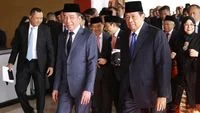
The Legal and Party Security Agency (Badan Hukum dan Pengamanan Partai – BHPP) of the Democratic Party has officially issued a formal legal warning, known locally as a somasi, directed at three distinct YouTube channels. This decisive legal maneuver comes in response to the publication of digital content that the party leadership characterizes as entirely fabricated, misleading, and potentially defamatory. The contested videos allegedly propagate false narratives concerning high-level political meetings between senior Democratic Party officials and prominent national political figures, specifically targeting former Indonesian President Susilo Bambang Yudhoyono and current Minister of Agrarian Affairs and Spatial Planning/Head of the National Land Agency, Agus Harimurti Yudhoyono.
According to official documentation released by the BHPP, the three targeted channels—identified as Dangkal Politik, Berita Semampir, and Tinta Kahivang—have been formally designated as the recipients of this legal reprimand. The Democratic Party’s legal team asserts that the digital content disseminated by these platforms crosses the line from speculative political commentary into the realm of deliberate disinformation, malicious slander, and public incitement. Consequently, the party has established a strict 3×24-hour ultimatum for the administrators of these channels to issue formal, public retractions and apologies across both their respective video-sharing platforms and recognized national mass media outlets.
Anatomy of the Alleged Disinformation Campaign
The controversy centers on a series of video uploads disseminated concurrently during the final week of November. The digital footprints left by these channels highlight a coordinated or parallel narrative-building effort aimed at speculating about the long-term political alignments leading toward the 2029 Indonesian presidential election.
The first target of the legal action, the YouTube channel operating under the moniker Dangkal Politik, published a video segment on November 27. At approximately the 2 minute and 57 second mark of the broadcast, the channel explicitly claimed that the sixth President of the Republic of Indonesia and Chairman of the Democratic Party’s High Council, Susilo Bambang Yudhoyono, had traveled to Solo, Central Java, on a clandestine political mission. The video alleged that SBY went to "sowan" (a traditional Javanese term denoting a respectful visit to an elder or superior) to meet with the seventh President of Indonesia, Joko Widodo, to negotiate a political coalition for the upcoming 2029 presidential and vice-presidential elections.
The second recipient of the somasi, the YouTube channel Berita Semampir, echoed a nearly identical narrative. Uploading content on the exact same date, this channel broadcasted parallel claims regarding SBY’s alleged movements and political intentions in Solo. The Democratic Party’s legal representatives noted that the repetition of these unsubstantiated claims across multiple digital vectors demonstrated a systematic attempt to mislead public perception regarding the party’s strategic independence and its current positioning within the national political landscape.
The third entity, the YouTube channel Tinta Kahivang, expanded the scope of the allegations to include the current leadership of the party. This channel released content targeting the Democratic Party Chairman and Coordinating Minister-level official Agus Harimurti Yudhoyono (AHY). The provocative title and framing of the video suggested that AHY had similarly traveled to Solo to meet not only former President Joko Widodo but also his two sons, Gibran Rakabuming Raka—who currently serves as the Vice President of Indonesia—and Kaesang Pangarep, the General Chairman of the Indonesian Solidarity Party (PSI). The video’s narrative further sensationalized the claim by asserting that these figures were forming a strategic alliance for 2029, explicitly attempting to provoke anxiety within the current ruling coalition by suggesting that President Prabowo Subianto should be wary of these behind-the-scenes political maneuvers.
The Legal Response and Ultimatums Issued by BHPP Demokrat
Faced with what it views as a direct assault on the party’s institutional integrity and the personal reputations of its primary figures, the BHPP swiftly mobilized a formidable legal defense team. The formal somasi document bears the signatures of nine prominent advocates and legal professionals representing the Democratic Party’s internal security and judicial wing. The signatories include Muhajir, Cepi Hendrayani, Muhammad Mualimin, Nadya Prita Gemala D, Nurhidayat Umacina, Yandri Sudarso, Novianto Rahmantyo, Dedy Dwi Yulianto, and Andhika Yuda Perwira.
In their official statement, the legal team minced no words regarding the gravity of the infraction. They formally declared that the assertions propagated by the three YouTube channels are entirely false, divorced from any semblance of objective reality, and constitute systemic character assassination designed to manipulate public sentiment.
"The statements presented within the YouTube accounts designated in points one, two, and three above are entirely untrue, far from any standard of truth, and represent fraudulent news reporting, defamation, slander, and public incitement," the BHPP legal team emphasized in their written directive.
To rectify the situation, the legal framework of the somasi outlines precise remediation steps. The administrators, creators, or legal owners of the Dangkal Politik, Berita Semampir, and Tinta Kahivang channels are required to execute the following within the allotted 72-hour window:
- Immediately remove the offending video content from public access.
- Draft and publish an explicit, unreserved public apology acknowledging the falsehood of the previous broadcasts.
- Broadcast this apology prominently on their respective YouTube channels.
- Publish the apology across established national mass media networks to ensure the rectification reaches the broader public audience that may have been exposed to the initial misinformation.
Failure to comply with these directives within the stipulated 3×24-hour period will compel the BHPP to escalate the matter from a preliminary legal warning to formal criminal charges under the prevailing Indonesian legislative framework, particularly invoking the Information and Electronic Transactions (ITE) Act and relevant provisions of the Criminal Code concerning defamation and the dissemination of false information.
Broader Context of Political Speculation Ahead of 2029
The swift and aggressive legal response by the Democratic Party underscores the hyper-sensitive nature of political positioning in contemporary Indonesia, even during periods well removed from active electoral cycles. Although the next national general election cycle is scheduled for 2029, the political ecosystem remains perpetually primed for coalition maneuvering, realignment, and strategic posturing.
The Democratic Party currently occupies a stable and influential position within the national government. Having transitioned into the governmental coalition supporting President Prabowo Subianto and Vice President Gibran Rakabuming Raka following the 2024 elections, the party leadership is acutely sensitive to any narratives that might suggest independent or subversive political actions running counter to the established coalition framework. Rumors regarding secret pacts between senior party figures and former President Joko Widodo carry significant political weight, given the complex dynamics of national political patronage, party loyalty, and the ongoing consolidation of power under the current administration.
In the Indonesian political lexicon, visits to Solo—long associated with the political base of Joko Widodo—frequently become the epicenter of media speculation. Observers and digital content creators routinely exploit this geographical and political symbol to generate clickbait, monetize sensationalist hypotheses, and capitalize on public curiosity regarding high-level elite negotiations. However, the proliferation of such content on decentralized platforms like YouTube presents a persistent challenge for mainstream political parties seeking to maintain narrative discipline and protect their institutional reputation from algorithmic amplification of unverified rumors.
Implications for Digital Media Ethics and Political Accountability
The decisive action taken by the BHPP Demokrat serves as a critical case study regarding the evolving intersection of digital media, freedom of expression, and legal accountability in Indonesia. As independent content creation on platforms like YouTube continues to democratize political commentary, it simultaneously blurs the boundaries between legitimate analytical discourse, political satire, and malicious disinformation.
For political parties, the traditional reliance on press releases and verbal denials is increasingly insufficient to combat the viral nature of algorithmic content monetization. By employing formal legal instruments such as the somasi, political organizations are signaling a zero-tolerance policy toward unauthorized digital fabrication that weaponizes the reputations of key national figures for commercial or political disruption.
As the 72-hour deadline ticks down, the broader political and media communities will be closely monitoring whether the targeted YouTube channels choose compliance, retraction, or escalation. Regardless of the immediate outcome for Dangkal Politik, Berita Semampir, and Tinta Kahivang, this incident establishes a clear precedent for how major Indonesian political entities intend to police digital spaces and defend against speculative narratives in the lead-up to the 2029 political horizon. The case highlights the pressing need for heightened digital literacy, editorial responsibility among independent creators, and stringent adherence to factual accuracy in the modern information ecosystem.
Related posts: