Beyond the Mask: Navigating Respiratory Health Risks Amidst Escalating Forest and Land Fire Smoke

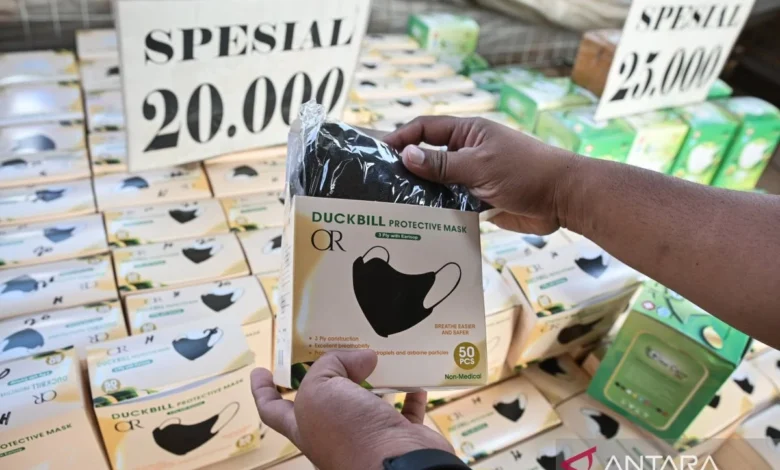
As wildfire seasons grow increasingly intense across Southeast Asia, particularly in regions like Sumatra and Kalimantan, the prevalence of dense haze has become a critical public health challenge. With the persistent rise of air pollution, many citizens have turned to standard medical or surgical masks as a first line of defense. However, public health experts and respiratory specialists are now sounding an urgent alarm: the common surgical mask, while effective against viral droplets, is fundamentally ill-equipped to filter the microscopic particulate matter generated by forest and land fires (karhutla). Understanding the distinction between various types of protective gear and the biological impact of fine particulate matter is no longer just a recommendation—it is a vital survival necessity for those living in smoke-affected areas.
The Anatomy of the Hazard: Why PM2.5 Matters
The primary health concern during a wildfire event is not merely the visible haze, but the invisible, microscopic particles known as PM2.5. These particles, which measure 2.5 micrometers or less in diameter—roughly 30 times smaller than the width of a human hair—are the silent culprits behind widespread respiratory distress. Unlike larger dust particles that are often trapped in the nose or throat, PM2.5 particles are small enough to penetrate deep into the alveolar sacs of the lungs and can even enter the bloodstream.
Once in the bloodstream, these particulates induce systemic inflammation. For individuals with pre-existing conditions such as chronic obstructive pulmonary disease (COPD), asthma, or cardiovascular diseases, the inhalation of this smoke can trigger acute exacerbations. Research conducted by health organizations, including the Centers for Disease Control and Prevention (CDC), consistently highlights that prolonged exposure to such particulate matter is linked to increased hospitalizations, reduced lung function, and in severe cases, premature mortality. The chemical composition of wildfire smoke is also complex; it includes a volatile cocktail of carbon monoxide, nitrogen oxides, and various organic compounds that can irritate the eyes, skin, and mucosal linings, compounding the physical burden on the human body.
The Misconception of Medical Mask Efficacy
A significant public health hurdle is the widespread reliance on standard surgical masks. These masks are engineered primarily for clinical environments—designed to contain large respiratory droplets expelled by the wearer or to protect a sterile field from the wearer’s own secretions. They are not airtight.
The structural design of a standard surgical mask is loose-fitting, leaving significant gaps around the nose, cheeks, and chin. During a haze event, air follows the path of least resistance. When a wearer inhales, the polluted, smoke-filled air bypasses the filter material entirely, entering the respiratory tract through these peripheral gaps. Furthermore, the material used in surgical masks is not rated to capture the fine aerosols and particulate matter associated with combustion. Relying on these masks provides a dangerous sense of false security, leading individuals to believe they are protected while they are, in reality, inhaling toxic air.
The Superiority of Respirators: N95 and Beyond
For those who must navigate the outdoors during periods of poor air quality, health authorities emphasize the transition to specialized respiratory protection, most notably the N95 respirator. An N95 respirator, when properly fitted, is certified to filter at least 95 percent of airborne particles, including those as small as 0.3 microns.
However, the efficacy of an N95 is not inherent to the mask itself but to the quality of the "seal." A respirator is only as effective as its fit. In industrial and medical settings, individuals undergo "fit testing" to ensure the mask conforms to the unique contours of their face. Without this seal, even the highest-rated respirator loses its protective capacity. For the general public, this means ensuring that the straps are tightened securely and that the nose piece is molded firmly against the bridge of the nose. Even with a high-quality respirator, it is important to acknowledge that these devices are designed to filter particles, not gases. They do not eliminate the risk posed by gaseous pollutants like carbon monoxide or formaldehyde that may be present in forest fire smoke.
A Chronology of Crisis: The Haze Cycle
The recurring nature of forest fires in Indonesia and the surrounding region follows a predictable but devastating cycle. Typically exacerbated by the dry season and compounded by the El Niño-Southern Oscillation (ENSO) phenomenon, the fires reach their peak during the middle and latter parts of the year.
In recent months, the situation in provinces like Jambi, Riau, and parts of Kalimantan has prompted swift, albeit reactive, responses from the government. Agencies such as the Meteorology, Climatology, and Geophysics Agency (BMKG) have been deploying cloud-seeding technologies and specialized "dry ice" operations to suppress fire hotspots. Despite these engineering interventions, the sheer scale of the land being burned often outpaces mitigation efforts, leading to persistent hazardous air quality index (AQI) readings. The persistence of these fires has forced local governments to implement emergency protocols, including the distribution of masks to vulnerable populations and the temporary closure of schools to protect children, who are particularly susceptible to the long-term impacts of air pollution on lung development.
Broader Implications and Strategic Responses
The economic and social implications of persistent haze are profound. Beyond the immediate strain on healthcare infrastructure, which sees a surge in patients reporting respiratory and ocular distress, there is a cumulative impact on labor productivity and education. The "haze season" has become a seasonal disruption to the regional economy.
Official responses have evolved to include more than just hardware; there is an increasing focus on public communication and real-time monitoring. The Ministry of Health (Kemenkes) has been actively coordinating with local clinics in affected provinces, such as Palangka Raya, to ensure that emergency care is prioritized for the elderly and those with chronic illnesses. However, experts argue that the solution must be systemic. Improving land management, enforcing stricter penalties for illegal burning, and enhancing regional cooperation are the only long-term pathways to mitigating the source of the smoke.
Practical Mitigation Strategies for Residents
When the air quality drops into the "unhealthy" or "hazardous" categories, medical experts advise a multi-layered approach to protection. The primary strategy should always be the avoidance of exposure.
- Indoor Air Quality Control: The home should be a sanctuary. During peak smoke hours, keep windows and doors sealed. If available, the use of high-efficiency particulate air (HEPA) purifiers can significantly reduce the concentration of PM2.5 indoors.
- Behavioral Modification: Reduce the intensity and duration of physical activity. Heavy exercise increases the rate and depth of respiration, forcing the lungs to process a larger volume of contaminated air.
- Information Vigilance: Residents should rely on verified air quality data from government portals rather than anecdotal observations. AQI levels can fluctuate rapidly depending on wind patterns; staying informed allows for strategic planning of necessary errands.
- Vulnerable Population Protection: Children, the elderly, and pregnant women should be prioritized for indoor environments. Their biological vulnerabilities make them the first to suffer from the physiological stress caused by smoke inhalation.
- Symptom Monitoring: Early detection of respiratory issues is key. Individuals should be wary of persistent coughing, wheezing, or an unusual tightness in the chest. These symptoms are not merely irritations; they are indicators that the body is struggling against an environmental toxin.
Conclusion: A Collective Responsibility
The myth that a simple medical mask is a sufficient shield against the complex particulate threats of wildfire smoke must be dispelled through continuous public education. While the responsibility for regional air quality lies with environmental regulators and those tasked with fire suppression, the responsibility for personal health lies with the individual.
Moving forward, the integration of better personal protective equipment (PPE) knowledge into the broader disaster management framework is essential. By understanding the limitations of common masks and embracing the protective potential of certified respirators, alongside proactive lifestyle adjustments, the public can better mitigate the health risks associated with the inevitable reality of wildfire haze. As the climate continues to change, making fire seasons longer and more unpredictable, the shift from reactive behavior to informed, evidence-based protection will define the resilience of communities across the region. The smoke may be a recurring adversary, but with the right precautions, its impact on human health can be significantly curtailed.