
Black English White People
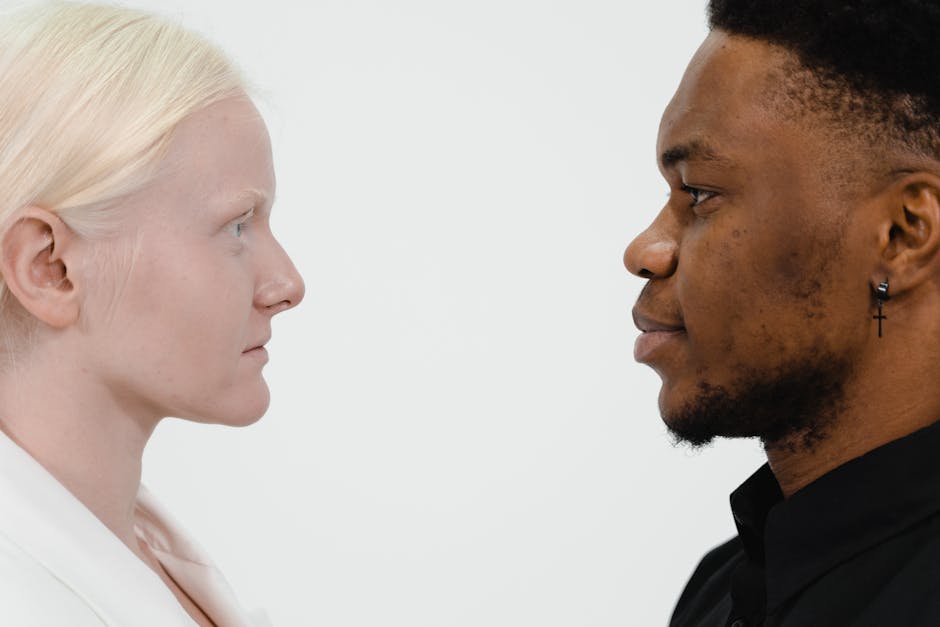
Black English and White People: Navigating Linguistic and Cultural Landscapes
The intersection of Black English Vernacular (BEV), often referred to as African American Vernacular English (AAVE), and white communities presents a complex and dynamic linguistic and cultural landscape. This interaction is not a monolithic phenomenon but rather a multifaceted phenomenon shaped by history, social dynamics, and individual choices. Understanding this relationship requires moving beyond simplistic notions of language adoption or appropriation and delving into the intricate ways BEV influences and is perceived by white speakers, and how white individuals engage with or distance themselves from this linguistic system.
Historically, the presence of BEV has been intrinsically linked to the experiences of Black Americans, originating from the unique sociolinguistic conditions of enslavement and its aftermath. Its grammatical structures, phonological features, and vocabulary have evolved independently, reflecting a distinct cultural heritage. For white people, exposure to BEV has been mediated through various channels: direct social interaction, media portrayals, popular culture, and the evolving linguistic landscape of diverse communities. This exposure has led to a spectrum of responses, ranging from unconscious adoption of certain features to conscious appropriation, and from outright rejection to respectful engagement.
One significant aspect of this interaction is the linguistic phenomenon of code-switching. White individuals, particularly those living in or interacting frequently with Black communities, may adopt certain features of BEV in specific contexts. This can manifest in varied ways, from the use of specific slang terms or idiomatic expressions to adopting certain phonetic pronunciations or grammatical constructions. The motivations behind code-switching can be diverse. For some, it is a strategic tool for building rapport, demonstrating solidarity, or signaling belonging within a particular social group. In these instances, the adoption of BEV features is often context-dependent and may not indicate a full embrace or understanding of the linguistic system as a whole.
Conversely, the conscious appropriation of BEV by some white individuals, especially within popular culture, has sparked considerable debate and criticism. This often involves the adoption of BEV lexicon and stylistic elements, particularly in music genres like hip-hop and R&B, without a corresponding understanding of or respect for the cultural origins and nuances of the language. Critics argue that such appropriation can trivialize the linguistic heritage of Black communities, turning elements of a distinct cultural expression into fleeting trends for the dominant culture. This can be particularly galling when the linguistic features that are deemed "cool" or "trendy" when used by white individuals are simultaneously stigmatized when used by Black speakers in more formal settings.
The influence of BEV on mainstream American English is undeniable, even if not always explicitly acknowledged. Many words and phrases that are now commonplace in the lexicon of white speakers have roots in BEV. Examples include terms like "cool," "hip," "dig," "get down," and "whip." This diffusion of vocabulary is a natural process of language evolution, particularly in a multicultural society where linguistic boundaries are fluid. However, it is crucial to distinguish between the organic integration of linguistic elements and the selective adoption of "cool" slang detached from its cultural context.
The perception of BEV among white people is often shaped by societal biases and stereotypes. BEV has, unfortunately, been historically and continues to be, mischaracterized and stigmatized by some segments of white society. It is often wrongly perceived as "broken" or "incorrect" English, a deficit in linguistic ability rather than a distinct and rule-governed linguistic system. This perception is deeply rooted in linguistic prejudice, which often associates language varieties with social status and intelligence. When white speakers encounter or adopt features of BEV, their motivations and the social implications can be vastly different from those of Black speakers.
For many white individuals, particularly younger generations, engagement with BEV is often mediated through popular culture. The widespread influence of hip-hop music, in particular, has exposed millions of white listeners to BEV’s distinctive sounds, rhythms, and vocabulary. This exposure can lead to a casual adoption of slang and stylistic elements, sometimes without a deep understanding of the language’s linguistic complexity or cultural significance. This can lead to a superficial engagement, where the "coolness" factor overrides any appreciation for the linguistic heritage.
Furthermore, the geographic and social proximity of white and Black communities plays a significant role. In diverse urban and suburban areas, white individuals may have more frequent and intimate interactions with BEV speakers. These interactions can lead to a more nuanced understanding and a greater likelihood of adopting certain linguistic features as a natural part of everyday communication. In such environments, code-switching may become a more fluid and less conspicuous aspect of linguistic repertoire.
Conversely, in more homogenous white communities, exposure to BEV might be more limited, primarily occurring through media. This can lead to a reliance on stereotypes or a perception of BEV as an exotic or alien language, further perpetuating misunderstandings and biases. The absence of direct, sustained, and respectful interaction can hinder a genuine appreciation for the linguistic richness and complexity of BEV.
The concept of linguistic appropriation becomes particularly salient when discussing the interaction between white individuals and BEV. While language borrowing and diffusion are natural, appropriation occurs when members of a dominant group adopt elements from a marginalized group’s culture without understanding, acknowledgment, or respect, often for personal gain or social cachet. In the context of BEV, this can involve white artists or influencers adopting slang, linguistic styles, or even the very cadence of Black speech to enhance their image or profit, while the originating community may continue to face discrimination for using the same linguistic features.
The debate around "mainstream" versus "vernacular" English also intersects with this discussion. Some argue that the influence of BEV has, in fact, "enriched" mainstream American English, suggesting a positive contribution. However, this perspective can sometimes overlook the power dynamics at play. When linguistic elements are adopted by the dominant culture, they are often decontextualized and re-signified, losing their original cultural resonance. This can lead to a situation where the very linguistic tools that served as a marker of identity and community for Black Americans are then re-branded and commercialized by white entrepreneurs.
The education system also plays a role in shaping perceptions and interactions. For decades, BEV has been the subject of debate in educational settings, with some advocating for its recognition and validation as a legitimate linguistic system, while others have historically sought to suppress it in favor of a perceived "standard" English. This often leaves white educators and students with a limited or even negative understanding of BEV, contributing to the perpetuation of linguistic prejudice.
In conclusion, the relationship between Black English Vernacular and white people is a complex tapestry woven from threads of history, culture, power, and linguistic evolution. It is characterized by a spectrum of engagement, from unconscious influence and strategic code-switching to conscious appropriation and persistent prejudice. Understanding this interaction requires acknowledging the origins and validity of BEV as a distinct linguistic system, recognizing the potential pitfalls of appropriation, and fostering environments that encourage genuine respect and understanding across linguistic and cultural divides. The ongoing diffusion and adoption of BEV features by white speakers, whether intentional or unintentional, is a testament to its pervasive influence, but it is crucial that this influence is not divorced from an appreciation for its rich cultural heritage and the communities from which it originates. Moving forward, fostering genuine cross-cultural linguistic dialogue, promoting accurate linguistic education, and challenging linguistic prejudice are paramount to navigating this complex landscape with integrity and respect. The linguistic landscape is constantly shifting, and the interaction between BEV and white communities will undoubtedly continue to evolve, presenting ongoing opportunities for both understanding and misunderstanding.
