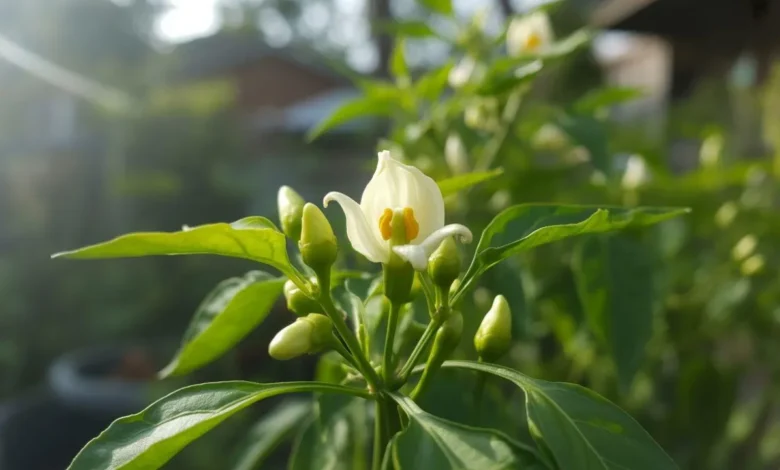
Achieving a high-yield harvest in pepper cultivation relies heavily on a critical developmental phase: transitioning the plant from vegetative growth to prolific flowering. For agriculturalists, home gardeners, and commercial farmers alike, mastering how to stimulate chili pepper flowers without triggering premature bud drop is a central challenge. According to agricultural extensions from institutions such as the University of Georgia, chili pepper plants are self-pollinating and thrive best in warm-to-hot conditions bathed in full sunlight. However, environmental stress, improper nutrient management, and absent pollinators frequently derail the flowering cycle, leading to stunted yields and heavy crop loss. Successfully accelerating bloom production and ensuring those blossoms mature into robust fruits requires an integrated horticultural strategy encompassing precise nutrient adjustment, microclimate regulation, strategic pruning, artificial pollination support, and rigorous pest management.
Understanding the Science of Pepper Plant Growth Stages
The biological clock of a chili pepper plant dictates distinct shifts in nutritional and environmental requirements. Typically, pepper plants begin initiating flower buds between 30 and 45 days after transplanting, varying by specific cultivar and prevailing weather patterns. During the initial weeks, the plant focuses its energy on building a strong structural foundation—developing deep root systems and lush green foliage through the absorption of nitrogen.
However, maintaining high nitrogen levels once the plant reaches maturity often backfires. Excessive nitrogen forces the plant to continuously allocate resources toward leaf proliferation rather than reproductive development. To successfully pivot the plant toward blooming, growers must intervene by modifying the fertilizer regimen, reducing nitrogen inputs, and elevating phosphorus and potassium levels. This physiological shift is essential for robust cellular wall formation, robust root support, and the successful setting of blossoms.
Nutritional Balance: The Key to Shifting from Foliage to Blossoms
Nutrient management serves as the primary engine for floral induction. Rather than simply increasing fertilizer doses—which can result in nutrient burn and root toxicity—growers must focus on balanced compositions tailored to the plant’s exact age. Charmaine Peters, director of agriculture at Arden Farm, notes that fertilizing plants six weeks after planting, followed by secondary applications upon the appearance of initial blossoms, provides the vital nutritional support required to sustain fruit production without shocking the root system.
Horticultural experts widely advocate for shifting toward fertilizers low in nitrogen but rich in phosphorus and potassium—such as standard 5-10-10 blends or specialized water-soluble formulas like Monopotassium Phosphate (MKP)—during the pre-flowering stage. Robin Phelps, writing for Homes and Gardens, emphasizes this principle by advising growers to slightly taper off nitrogen availability to encourage larger, healthier fruit development. Additionally, incorporating secondary and micronutrients such as calcium and boron prevents common physiological disorders like blossom-end rot and structural fragility in newly formed buds. Organic soil amendments, such as well-aged compost, further improve soil structure, supplying slow-release nutrients that commercial synthetic fertilizers often fail to replicate consistently.
Environmental Stability: Managing Light, Temperature, and Moisture
Environmental stressors are among the leading catalysts for bud drop in chili peppers. Even with optimal fertilization, fluctuations in temperature, irregular watering, and insufficient sunlight can cause a plant to abort its flowers as a survival mechanism. Research from the Michigan State University Extension indicates that chili peppers grow ideally within daytime temperatures ranging from 21 to 27 degrees Celsius, and nighttime lows between 16 and 21 degrees Celsius.
When ambient temperatures exceed 32 degrees Celsius during the flowering stage, thermal stress frequently triggers widespread blossom drop, drastically diminishing final harvest volumes. Furthermore, a study by the University of Minnesota Extension highlights that prolonged combinations of hot days and hot nights disrupt pollination viability and pollen grain health. To mitigate these risks, growers must maintain consistent soil moisture through deep, regular watering schedules rather than erratic, shallow hydration. When cultivating peppers in confined spaces such as polybags or containers, ensuring adequate drainage and protecting root zones from overheating are equally critical measures to secure thermal stability.
Strategic Pruning and the Management of Pioneer Blossoms
Pruning is an agricultural practice frequently overlooked by novice growers, yet it remains one of the most effective methods to direct plant energy toward high-yield zones. Removing early-stage flower buds—often referred to as pioneer blossoms—during the plant’s youth forces the specimen to invest its carbohydrates into strengthening its main stem, branching out, and expanding its root architecture.
According to guidelines from the University of Maryland Extension, young plants forced into bearing fruit prematurely often remain stunted and produce significantly lower cumulative yields over their lifespans. Nathan Van Slyke, a cultivation expert at Pepper Joe’s, points out that strategically pruning apical shoots allows cultivators to shape the plant into a structurally sound, manageable size that maximizes light penetration and air circulation throughout the canopy. By opening up the inner branches, growers simultaneously reduce microclimates that favor fungal pathogens while encouraging a more synchronized, abundant wave of secondary flower sets.
Overcoming Pollination Barriers in Controlled or Protected Environments
While chili peppers possess complete flowers containing both male and female reproductive organs, successful self-pollination is not always guaranteed without external mechanical assistance. In natural outdoor ecosystems, wind gusts and foraging insects—primarily bees—vibrate the flowers, dislodging pollen from the anther to the stigma.
However, in indoor cultivation, greenhouses, or tightly enclosed urban balconies, these natural pollinating vectors are typically absent. Consequently, flowers may open, mature, and eventually wither without ever undergoing fertilization, resulting in premature shedding. To counter this, growers must step in to provide manual pollination support. Techniques range from gently shaking the plant stakes daily to using small artists’ paintbrushes or electric toothbrushes to vibrate the base of individual blossoms, ensuring the physical transfer of pollen grains necessary to initiate fruit development.
Pest Control and Phytosanitary Protection During the Flowering Window
The vulnerability of a pepper plant peaks during its reproductive phase, making proactive pest management a non-negotiable component of successful cultivation. Herbivorous insects, particularly aphids, thrips, and mites, frequently target tender flower buds and young shoots. Aphids feed directly on the plant’s phloem sap, depleting vital carbohydrates and micronutrients that the developing flowers urgently require, which ultimately leads to bud distortion and drop.
To combat these threats sustainably, experts recommend Integrated Pest Management (IPM) strategies. Tony O’Neill, a noted gardening author and horticulturalist, highlights that utilizing specific companion plants can naturally repel harmful insects, thereby reducing reliance on harsh chemical pesticides that might otherwise harm beneficial pollinators or damage delicate floral tissues. Employing organic deterrents such as neem oil sprays or introducing natural predatory insects provides an effective shield, ensuring that the flowering pipeline remains uninterrupted by parasitic damage.
Broader Economic and Practical Implications for Modern Growers
The meticulous care required to maximize pepper blossoming underscores a broader trend in modern home gardening and small-scale commercial agriculture: the shift toward precision horticulture. As urban farming and container-based food production continue to gain traction globally, mastering fundamental agronomic practices—such as nutrient balancing, microclimate control, and manual pollination—transforms unpredictable gardening outcomes into reliable, high-yield harvests.
By systematically eliminating environmental stressors, safeguarding plants against phytosanitary threats, and timing nutritional interventions to match the plant’s biological phases, growers can significantly improve both the quantity and quality of their crop yield. Ultimately, securing a bountiful harvest of chili peppers is not a matter of chance, but the direct result of disciplined, science-backed agricultural management applied consistently from the seedling stage through final fruit maturation.