KAI Commuter Adjusts Cikarang Bekasi KRL Headway to 17 Minutes Starting December 1 Amid New GAPEKA 2026 Implementation

Commuters traveling along the vital Cikarang-Bekasi electric rail corridor must prepare for adjustments to their daily travel routines as PT Kereta Commuter Indonesia (KAI Commuter), a subsidiary of the state-owned railway enterprise PT Kereta Api Indonesia (KAI), implements the new Train Travel Schedule Graph (Grafik Perjalanan Kereta Api or GAPEKA) 2026. Set to officially take effect on December 1, this comprehensive national rescheduling introduces several operational changes designed to enhance network-wide safety and passenger flow, albeit with localized trade-offs for urban transit users.
Among the most notable changes for suburban commuters is the adjustment of the train waiting time, commonly known as headway, on the Cikarang-Bekasi route. The headway will increase slightly from the current 15 minutes to 17 minutes during peak and off-peak operational windows. While a two-minute increase may appear marginal on paper, in the context of high-density commuter rail networks serving millions of metropolitan workers daily, such shifts can influence platform crowding, boarding times, and overall journey planning.
The decision to recalibrate the timetable stems from a mandatory operational restructuring tied to long-distance train services. Specifically, PT KAI Commuter has confirmed that all Long-Distance Train services (Kereta Api Jarak Jauh or KAJJ) traversing the network will now be required to make scheduled stops at Bekasi Station. This operational directive fundamentally alters track allocation, signaling intervals, and platform management at one of the busiest transit hubs on the eastern flank of the Jakarta metropolitan area.
Operational Safety as the Paramount Driving Factor
Addressing media representatives during an official press briefing held in the Gambir area of Central Jakarta, PT KAI Commuter Director of Operations and Marketing, Heri Siswanto, elaborated on the core rationale behind the scheduling overhaul. According to Heri, the integration of mandatory long-distance train stops at Bekasi Station was formulated after a rigorous evaluation of safety aspects, closely aligned with current infrastructure limitations, rolling stock availability, and evolving operational patterns across the Greater Jakarta (Jabodetabek) commuter network.
Heri emphasized that passenger and operational safety remains an uncompromising priority for the company, particularly in light of recent transit incidents. The decision directly factors in the lessons learned from a notable railway accident that occurred near East Bekasi Station some time ago. That incident served as an urgent wake-up call for railway operators to re-examine spatial-temporal conflict points between high-speed long-distance locomotives and high-frequency urban electric multiple units (EMUs).
"All long-distance trains will eventually stop at Bekasi Station," Heri stated during the press conference on Wednesday, November 18. "This adjustment is non-negotiable when we weigh the immense responsibility of safeguarding thousands of passengers daily against the operational complexities of our shared tracks."
The blending of inter-city rail traffic with rapid suburban transit presents a classic engineering challenge in railway management. Intercity trains often require longer deceleration and acceleration distances, distinct platform clearance times, and specialized switching protocols. By formalizing and standardizing the stops at Bekasi Station, railway authorities aim to eliminate ad-hoc operational maneuvers that previously introduced unpredictability into the daily schedule.
Mitigating Crowding: Capacity Enhancements on the Loop Line and Cikarang Corridor
Recognizing that extending headways on the Cikarang-Bekasi segment could potentially exacerbate platform congestion and passenger buildup during peak commuting hours, KAI Commuter has formulated a multi-pronged mitigation strategy. The operator is not merely scaling back service frequency in one area; it is simultaneously reallocating resources to bolster capacity across interconnected corridors.
Alongside the headway adjustments, KAI Commuter announced the introduction of 18 additional train trips dedicated to the Loop Line network. This expansion covers critical relational segments, including Jatinegara-Pasar Senen-Kampung Bandan, Manggarai-Kampung Bandan, and the Bekasi-Manggarai connecting routes. By injecting these additional runs into the network, the operator hopes to provide alternative pathways for commuters moving laterally across the capital, thereby diffusing some of the immense pressure traditionally funneled through central transfer stations like Manggarai.
Furthermore, KAI Commuter’s Vice President of Corporate Secretary, Karina Amanda, provided detailed insights into the specific measures prepared to maintain service quality and absorb passenger demand along the affected corridor. Karina stressed that the company has proactively designed capacity countermeasures to offset the two-minute headway increase.
Along the Cikarang Line, operational deployment will systematically prioritize high-capacity train sets. Specifically, KAI Commuter will mandate the use of train formations utilizing either the SF10 configuration—comprising 10 passenger cars—or the SF12 configuration, which features 12 passenger cars. These longer trainsets represent the maximum platform length capacity currently supported by the upgraded stations along the line.
"This measure is specifically designed to anticipate and mitigate the high-density conditions that typically occur in station areas during peak hours," Karina explained. By deploying 10-car and 12-car configurations as the operational standard for the Cikarang-Bekasi route, the operator aims to increase the absolute passenger volume carried per trip, thereby neutralizing the reduction in trip frequency caused by the 17-minute headway.
Background and Context of GAPEKA Implementation
The transition to GAPEKA 2026 marks another milestone in the ongoing modernization and rationalization of Indonesia’s national railway network. The Train Travel Schedule Graph serves as the master blueprint governing every single train movement across the tracks managed by PT Kereta Api Indonesia and its subsidiaries. Designing a GAPEKA requires balancing the conflicting demands of freight transport, long-distance passenger services, regional rail, and high-density urban commuter lines sharing the same physical infrastructure.
In recent years, the Jabodetabek commuter rail system has experienced exponential growth in ridership. Following the post-pandemic recovery of economic activities and the steady expansion of residential developments in satellite cities like Bekasi, Cikarang, Tambun, and beyond, daily passenger volumes have rebounded significantly. Millions of citizens rely on the KRL network as their economic lifeline, traveling daily from the eastern fringes of West Java into the commercial heart of DKI Jakarta.
However, this surging demand has placed immense strain on legacy infrastructure. Stations like Manggarai have undergone massive multi-year restructuring projects to transform into central grand-central transfer hubs, while supporting lines like the Cikarang-Bekasi route have required continuous signaling upgrades, electrical grid enhancements, and platform extensions to accommodate high-frequency operations.
The introduction of GAPEKA 2026 reflects a continuous fine-tuning process. While previous iterations focused aggressively on shrinking headways to maximize train throughput—successfully driving headways down to 15 minutes or less on key segments—subsequent safety reviews have necessitated a more nuanced approach. The realization that network safety cannot be sacrificed for speed alone has ushered in an era where operational planners must carefully balance volume with dwell-time management and inter-modal synchronization.
Broader Implications for Commuters and Urban Mobility
The adjustment of the Cikarang-Bekasi KRL headway to 17 minutes carries several distinct implications for urban mobility, commuter behavior, and regional economic productivity in the Greater Jakarta area.
From an individual passenger perspective, a two-minute addition to the waiting time requires psychological and practical adjustments. For a worker traveling five days a week, a two-minute delay per trip translates to twenty minutes of cumulative waiting time per week, or roughly over an hour and a half per month spent standing on platforms. While this may seem modest, in the hyper-optimized schedules of modern urban professionals, missed connections at major transfer hubs like Jatinegara, Manggarai, or Cikarang can compound travel times significantly.
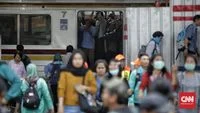
Moreover, the psychological impact of platform crowding cannot be underestimated. Even with KAI Commuter’s commitment to deploying SF10 and SF12 trainsets, a longer headway naturally concentrates more waiting passengers onto station platforms during peak morning and evening rush hours. If crowd management protocols at stations like Bekasi, Tambun, or Cikarang are not executed with precision, heightened platform density could lead to boarding bottlenecks, increased boarding times, and secondary delays that ripple through the afternoon and evening schedules.
On the institutional side, KAI Commuter’s proactive communication regarding GAPEKA 2026 represents an effort to maintain transparency and manage customer expectations well ahead of the December 1 rollout. By informing the public weeks in advance, the operator provides commuters, employers, and local transport agencies adequate time to recalibrate travel patterns. Multimodal integration—such as adjusting local feeder buses (Mikrat/Biskita/Transjakarta feeder services) serving Bekasi and Cikarang stations—will need to synchronize seamlessly with the new 17-minute headway to prevent passenger pile-ups at station forecourts.
Furthermore, the prioritization of safety at Bekasi Station highlights a broader national commitment to elevating railway safety standards across all operating sectors. By ensuring that long-distance trains—which travel across multiple provinces at high speeds—execute standardized, controlled stops at major regional nodes rather than navigating complex, ad-hoc scheduling slots, the risk of signal overruns, path conflicts, and human error is substantially diminished.
Conclusion and Outlook
As December 1 approaches, all eyes will be on KAI Commuter to see how effectively the GAPEKA 2026 operational shifts translate into daily reality. The trade-off between a slightly increased headway of 17 minutes on the Cikarang-Bekasi line and enhanced structural safety paired with the deployment of high-capacity 10-car and 12-car trainsets will face its ultimate test when millions of regular commuters put the new schedule into practice.
While operational adjustments of this scale invariably invite temporary friction and require a period of adjustment for daily riders, the overarching objective remains clear: achieving a harmonious balance between high-volume mass urban transit and uncompromised railway safety. Through careful resource reallocation, strategic capacity boosts on the Loop Line, and rigorous adherence to safety protocols, KAI Commuter seeks to navigate this transitional phase while preserving the reliability of the Greater Jakarta commuter rail network.
Related posts: