
Crispy Oven Baked Bacon 2
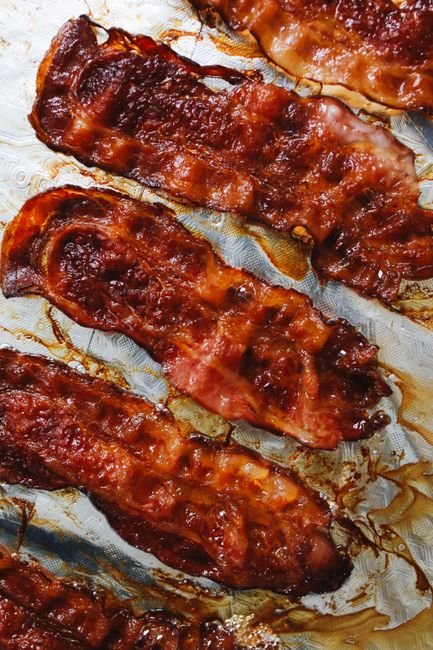
Crispy Oven Baked Bacon 2: The Ultimate Guide to Perfectly Cooked Bacon
Achieving consistently crispy oven-baked bacon is a culinary triumph, a simple yet profound pleasure that elevates breakfast, sandwiches, and salads. This comprehensive guide delves into the intricacies of oven-baked bacon, exploring the foundational principles, the optimal temperatures and techniques for achieving that sought-after shatter, and troubleshooting common pitfalls. We will examine the role of fat rendering, the impact of bacon cut and thickness, and innovative approaches to maximize crispness and minimize mess. The goal is to empower home cooks with the knowledge and confidence to produce restaurant-quality crispy bacon every single time.
The fundamental principle behind crispy oven-baked bacon lies in controlled, even heat exposure. Unlike pan-frying, which often leads to uneven cooking and potential burning, the oven provides a consistent thermal environment. This allows the fat within the bacon to render slowly and thoroughly, transforming from its solid state into a liquid that then crisps the meat. The dry heat of the oven also facilitates the evaporation of moisture from the bacon, a crucial step in achieving that satisfying crunch. The interplay of fat rendering and moisture evaporation is the alchemical secret to truly crispy bacon.
Several factors contribute to the success of oven-baked bacon, with the type and thickness of the bacon being paramount. For optimal crispness, a good quality, thicker-cut bacon is generally preferred. Thicker cuts have more intramuscular fat, which renders more effectively and contributes to a richer flavor and a more satisfying chew before achieving crispness. While thin-cut bacon can become crispy, it often cooks too quickly, making it prone to burning before the fat has fully rendered, resulting in a brittle rather than a satisfyingly crisp texture. Cured pork belly, the source of most bacon, varies in its fat-to-meat ratio. Look for bacon with visible marbling throughout. Smoked bacon varieties, such as hickory or applewood, impart distinct flavor profiles, but the fundamental cooking method remains consistent. Uncured or naturally cured options are also viable and offer a cleaner flavor profile, allowing the pork itself to shine. The quality of the pork from which the bacon is derived will directly influence the final taste and texture.
The baking sheet and rack setup is critical for air circulation and fat drainage, both essential for crisping. A rimmed baking sheet is a necessity to contain any rendered fat and prevent spills. However, simply placing bacon directly on the baking sheet often results in a greasy, semi-crispy product, as the bacon sits in its own rendered fat. The solution is a wire rack placed within the rimmed baking sheet. This elevates the bacon, allowing hot air to circulate freely around all sides, promoting even cooking and crisping. Furthermore, the rendered fat drips away from the bacon, preventing it from becoming soggy. The rack should be elevated enough to allow ample space for fat to collect without touching the bacon. Consider a sturdy, oven-safe wire rack that fits snugly within your baking sheet.
Oven temperature is a key variable in achieving perfect crispiness. While some advocate for lower temperatures and longer cooking times, a moderate to high heat is generally more effective for rapidly rendering fat and achieving a crisp texture. A temperature range of 375°F to 425°F (190°C to 220°C) is typically recommended. Lower temperatures risk overcooking the meat before significant fat rendering occurs, while excessively high temperatures can lead to scorching and uneven cooking. The ideal temperature will also depend on the thickness of the bacon. Thicker cuts benefit from the slightly longer cooking time afforded by a 375°F to 400°F (190°C to 200°C) range, allowing ample time for fat to render. Thinner cuts may require a slightly higher temperature, around 400°F to 425°F (200°C to 220°C), to achieve crispness before they dry out. Experimentation within this range is key to finding your personal sweet spot.
The cooking time for oven-baked bacon is not a fixed number but rather a range dictated by the bacon’s thickness, the oven’s calibration, and your desired level of crispness. As a general guideline, expect anywhere from 15 to 25 minutes for thicker cuts and 10 to 20 minutes for thinner cuts. The visual cues are your most reliable indicators. Look for the bacon to shrink slightly, darken to a rich mahogany color, and develop crispy edges. The fat should be fully rendered and bubbling. A good practice is to start checking for doneness around the 10-12 minute mark, even for thicker bacon, and adjust accordingly. Overcooking will result in brittle, burnt bacon. Undercooking will leave you with chewy, greasy strips.
Preheating the oven is non-negotiable. A properly preheated oven ensures that the bacon begins cooking immediately at the target temperature, promoting consistent heat distribution and efficient fat rendering from the outset. Placing bacon into a cold or underheated oven will result in a longer cooking time and a less desirable outcome. Ensure your oven has reached its set temperature before introducing the baking sheet. This also applies to the baking rack; it should be preheated within the oven along with the sheet.
Arranging the bacon on the wire rack is straightforward but important. Lay the bacon strips in a single layer, ensuring they are not overlapping. Overlapping strips will steam rather than crisp, hindering the even circulation of hot air. For particularly fatty bacon, you might consider placing a few strips of less fatty bacon at the bottom of the baking sheet, underneath the rack, to absorb some of the initial drippings, although this is often unnecessary with proper rack elevation.
Fat management is an integral part of the oven-baking process, and it’s where many home cooks falter. As the bacon cooks, a significant amount of fat will render and accumulate on the baking sheet. This rendered fat is flavorful and can be saved for other culinary applications, such as frying eggs, sautéing vegetables, or making pan sauces. However, it’s crucial to manage this fat to prevent the bacon from becoming greasy. The wire rack is the primary tool for this, allowing the fat to drip away. Some recipes suggest draining excess fat from the baking sheet halfway through cooking, but this can be a messy and potentially dangerous undertaking. A simpler and more effective approach is to simply allow the fat to collect on the sheet beneath the rack. The high heat will continue to crisp the bacon above.
Once the bacon reaches your desired level of crispness, carefully remove the baking sheet from the oven. The bacon will continue to cook and crisp slightly as it rests. Transfer the crispy bacon immediately to a plate lined with paper towels. The paper towels will absorb any residual grease, further enhancing the crispiness. Allow the bacon to cool for a minute or two before serving. This resting period is crucial for achieving the perfect texture; too hot and it will be soft, too cool and it may lose some of its crispness.
Troubleshooting common issues is key to perfecting your oven-baked bacon technique.
Problem: Greasy Bacon
- Cause: Insufficient fat rendering, bacon sitting in its own fat, oven temperature too low.
- Solution: Ensure your oven is at the correct temperature (375°F-425°F). Use a wire rack to elevate the bacon, allowing fat to drip away. Cook for a sufficient amount of time until the fat is visibly rendered and bubbling.
Problem: Burnt or Overcooked Bacon
- Cause: Oven temperature too high, cooking time too long, thin-cut bacon cooked at too high a temperature or for too long.
- Solution: Reduce oven temperature. Monitor bacon closely and remove it as soon as it reaches your desired crispness, not just when it looks "done." For thin-cut bacon, consider a slightly lower temperature or shorter cooking time.
Problem: Uneven Cooking
- Cause: Bacon overlapping, oven hot spots, baking sheet not placed in the center of the oven.
- Solution: Ensure bacon is in a single layer without overlap. Rotate the baking sheet halfway through cooking to promote even browning, especially if you notice one side cooking faster.
Problem: Soggy Bacon
- Cause: Moisture trapped from undercooked fat, bacon not fully rendered.
- Solution: Increase cooking time and/or temperature. Ensure the fat has rendered completely. Allowing bacon to cool slightly on paper towels after removing from the oven can also help.
Problem: Bacon Curling Excessively
- Cause: Inherent fat distribution in the bacon, uneven heat.
- Solution: While some curling is natural, you can minimize it by laying bacon strips flat without stretching. If it continues to curl significantly, you can try placing a second, lighter baking sheet or an oven-safe piece of foil gently on top of the bacon for the first half of cooking to help keep it flat, but be careful not to press down too hard.
Beyond the basic method, several advanced techniques can further enhance your crispy oven-baked bacon experience.
Seasoning Variations: While salt and pepper are classic, consider experimenting with a light dusting of brown sugar (added in the last 5-10 minutes of cooking to prevent burning), paprika, chili powder, or even a sprinkle of your favorite herb blend. These additions can create a sweet, spicy, or savory crust.
Foil Lining for Easier Cleanup: To simplify cleanup, you can line your rimmed baking sheet with aluminum foil or parchment paper before placing the wire rack inside. Be sure the foil/paper does not extend up the sides of the pan where it could catch fire. This contains the majority of the rendered fat, making disposal and pan cleaning much easier.
Low and Slow Approach (with a Twist): For those who prefer a more hands-off approach and a guaranteed crisp, a slightly different method involves starting at a lower temperature (around 300°F-325°F / 150°C-160°C) for a longer duration (30-45 minutes or even more), allowing the fat to render very slowly. Then, the temperature can be increased to 400°F-425°F (200°C-220°C) for the last 5-10 minutes to achieve the desired crispness. This method is more forgiving for thicker cuts.
Managing Rendered Fat: As mentioned, rendered bacon fat is a treasure. Pour the cooled fat through a fine-mesh sieve into a heat-safe container (like a glass jar) and store it in the refrigerator. It will solidify and can be used for months. Strain it to remove any browned bits that could impart a burnt flavor.
Bacon as a Flavor Enhancer: Crispy oven-baked bacon is not just for breakfast. Its inherent saltiness and smokiness make it an ideal addition to a myriad of dishes. Crumble it over salads for a delightful textural contrast and savory punch. Incorporate it into pasta dishes for an extra layer of flavor. Wrap around asparagus or shrimp for an elegant appetizer. Use it as a topping for baked potatoes or creamy soups. Its versatility is truly remarkable.
The pursuit of perfectly crispy oven-baked bacon is a journey of understanding heat, fat, and time. By mastering the fundamental principles of even cooking, effective fat rendering, and careful monitoring, any home cook can achieve consistently delicious results. The oven offers a controlled and less hands-on alternative to pan-frying, minimizing splatter and maximizing the potential for that satisfying, shatteringly crisp bite. Embrace experimentation, pay attention to the visual cues, and don’t be afraid to adjust temperatures and times to suit your preferences and your bacon. The reward is a simple yet profound culinary pleasure that elevates countless dishes. This guide provides the framework, but your own kitchen and your own palate will ultimately perfect the art of crispy oven-baked bacon.
