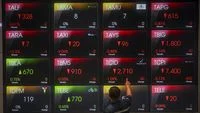
Jakarta, Indonesia – The Indonesian Stock Exchange (IHSG) is projected to experience a correction during trading on Friday, May 29th. Analysts are closely monitoring key support and resistance levels, with differing perspectives on the potential trajectory of the market.
Market Outlook and Analyst Projections
Herditya Wicaksana, a Technical Analyst at MNC Sekuritas, anticipates a weakening trend for the IHSG on Friday. He forecasts the index will test the 5,899 support area. "The correction area we can predict next will test down to 5,899, which is also its support level," Wicaksana stated in his daily research report.
Based on this sentiment, Wicaksana projects the IHSG to trade within a range of support levels at 5,996 and 5,899, with resistance levels at 6,318 and 6,459 for the day. He further recommended specific stocks for investors to consider, including BBTN (Bank Tabungan Negara), BREN (Barito Renewables Energy), BRPT (Barito Pacific Tbk), and EMAS (Aneka Tambang Tbk). These recommendations are often based on technical indicators and chart patterns that suggest potential upward movement or resilience in the face of broader market weakness.
Conversely, Ivan Rosanova, an Analyst at Binaartha Sekuritas, predicts that the downward trend in the stock market could reassert its dominance during Friday’s trading session. "In any case, the downward trend can re-dominate if the IHSG starts moving below 6,053, which is a minor support level," Rosanova explained.
Rosanova’s forecast places the IHSG within support levels of 5,911, 5,673, and 5,439, with resistance levels identified at 6,459, 6,587, 6,787, and 7,001. His stock recommendations for the day include MEDC (Medco Energi Internasional Tbk) and UNVR (Unilever Indonesia Tbk), suggesting these companies may offer defensive qualities or opportunities for short-term gains despite the anticipated market weakness.
Recent Market Performance and Context
The IHSG closed at 6,130 on Tuesday, May 26th. This represented a decline of 76.15 points, or 1.23 percent, from the previous trading day. This downward movement occurred within a broader context of global market volatility influenced by ongoing economic uncertainties related to the COVID-19 pandemic and its impact on various sectors.
According to RTI Infokom, investor transactions on Tuesday totaled Rp17.99 trillion, with 24.69 billion shares traded. The market breadth at the close indicated a predominantly bearish sentiment, with 447 stocks declining, 241 stocks advancing, and 133 stocks remaining stagnant. This uneven distribution of gains and losses highlights the prevailing cautiousness among investors.
The period leading up to May 29th saw the Indonesian stock market navigating a complex landscape. Global economic recovery remained a key concern, with investors assessing the effectiveness of stimulus measures implemented by various governments and central banks. In Indonesia, the government had been actively working to mitigate the economic fallout from the pandemic, including providing incentives for businesses and individuals. However, concerns about potential second waves of infections and their impact on economic activity continued to weigh on market sentiment.
Key Technical Levels and Their Significance
The differing outlooks from the analysts underscore the importance of key technical levels in determining the short-term direction of the IHSG.
Support Levels: These are price points where buying interest is expected to be strong enough to prevent further price declines.
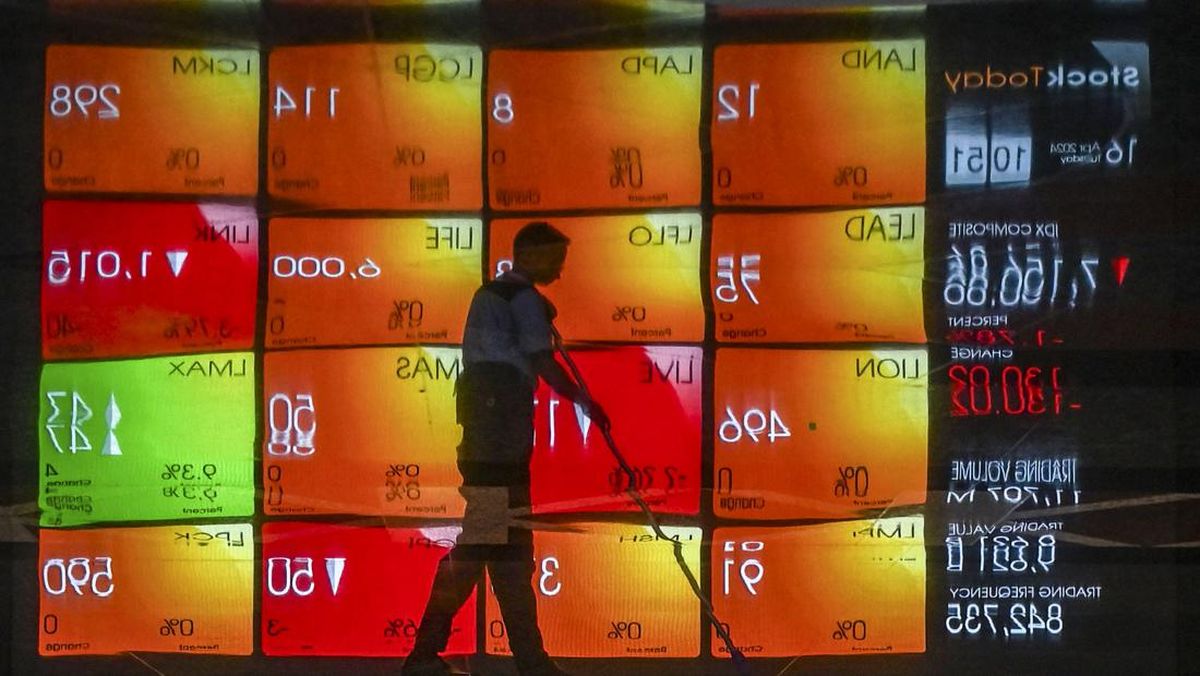
- 5,899: Identified by Herditya Wicaksana as a significant support area that the IHSG may test. A break below this level could signal further downside.
- 5,996: Another support level cited by Wicaksana, representing a slightly higher threshold.
- 6,053: Considered a "minor support" by Ivan Rosanova. A move below this level is seen as a potential trigger for a dominant downward trend.
- 5,911, 5,673, 5,439: Lower support levels predicted by Rosanova, indicating potential targets if the market experiences a more significant downturn.
Resistance Levels: These are price points where selling pressure is expected to emerge, potentially halting or reversing an upward price movement.
- 6,318, 6,459: Resistance levels projected by Herditya Wicaksana. These represent potential ceilings for any short-term rallies.
- 6,459, 6,587, 6,787, 7,001: A broader range of resistance levels provided by Ivan Rosanova, with 6,459 being a shared upper boundary in both analyses. The higher levels suggest potential targets if the market manages to reverse its current trend and move higher.
The interplay between these support and resistance levels will be crucial for traders and investors to monitor throughout Friday’s trading session.
Broader Economic and Market Implications
The projected correction in the IHSG on May 29th is not an isolated event but rather a reflection of broader economic and market dynamics. Several factors are likely contributing to the cautious sentiment:
- Global Economic Uncertainty: The ongoing global economic recovery remains fragile. Lingering concerns about the pace of recovery, potential trade tensions, and the possibility of further pandemic-related disruptions continue to influence investor confidence.
- Inflationary Pressures: In some economies, there are emerging signs of inflationary pressures as demand rebounds and supply chains adjust. This could lead to expectations of tighter monetary policies by central banks, which can impact equity markets.
- Corporate Earnings Season: While not explicitly mentioned in the provided text, the performance of corporate earnings is a critical driver of stock prices. Companies that have recently reported earnings might be influencing sector-specific movements and overall market sentiment.
- Commodity Prices: Fluctuations in commodity prices, such as oil and metals, can have a significant impact on Indonesian companies, particularly those involved in resource extraction and export.
- Domestic Policy Developments: Investor sentiment in Indonesia is also influenced by domestic economic policies, government spending, and regulatory changes. Any news or developments in these areas can lead to market reactions.
A sustained correction in the IHSG could have several implications:
- Reduced Investor Wealth: A declining stock market directly impacts the value of investment portfolios, potentially leading to a decrease in investor wealth.
- Impact on Consumer and Business Confidence: A significant market downturn can dampen consumer and business confidence, potentially affecting spending and investment decisions.
- Challenges for Capital Raising: Companies looking to raise capital through equity issuance might face more challenging conditions during a market correction, potentially leading to lower valuations.
- Opportunities for Value Investors: Conversely, a correction can present buying opportunities for long-term investors who believe in the fundamental value of certain companies, allowing them to acquire shares at lower prices.
Analyst Recommendations and Investment Strategies
The stock recommendations provided by the analysts offer a glimpse into their strategic thinking amidst the projected market conditions.
MNC Sekuritas (Herditya Wicaksana): BBTN, BREN, BRPT, EMAS
These recommendations suggest a focus on specific sectors or companies that may exhibit resilience or offer potential upside even in a weaker market.
- BBTN (Bank Tabungan Negara): As a state-owned bank focused on housing finance, BBTN’s performance is often linked to government housing programs and domestic consumption trends. Its inclusion might suggest an expectation of stability or a rebound in the property sector.
- BREN (Barito Renewables Energy) and BRPT (Barito Pacific Tbk): These companies are involved in energy and petrochemicals. Their inclusion could indicate an expectation of sustained demand in these sectors or a belief in their long-term growth prospects, possibly linked to infrastructure development or energy transition initiatives.
- EMAS (Aneka Tambang Tbk): This state-owned mining company is a producer of various commodities, including gold. Its recommendation could be driven by factors such as rising gold prices as a safe-haven asset during uncertain times, or expectations of increased demand for other metals it produces.
Binaartha Sekuritas (Ivan Rosanova): MEDC, UNVR
Rosanova’s recommendations lean towards companies that might be considered more defensive or possess strong brand equity.
- MEDC (Medco Energi Internasional Tbk): Another energy company, MEDC’s inclusion might be based on specific project developments or a view on energy price trends.
- UNVR (Unilever Indonesia Tbk): As a major consumer goods company, UNVR is often seen as a defensive stock. Its products are typically in demand regardless of economic conditions, making it a relatively stable investment. This recommendation might suggest a strategy of prioritizing stability and consumer staples in a volatile market.
It is important for investors to conduct their own due diligence and consider their individual risk tolerance and investment objectives before making any investment decisions. The recommendations provided by analysts are based on their specific methodologies and market interpretations.
Disclaimer
This article is intended for informational purposes only and does not constitute financial advice or a recommendation to buy or sell any securities. Investment decisions should be made based on thorough research, consultation with a qualified financial advisor, and consideration of individual financial circumstances and risk tolerance. The past performance of the stock market is not indicative of future results.
The views and projections presented by the analysts are their own and do not necessarily reflect the views of CNN Indonesia or its affiliates. The information provided is subject to change without notice.
The Indonesian stock market, like all financial markets, is subject to a multitude of factors that can influence its performance. Traders and investors will be closely watching economic data releases, corporate announcements, and global geopolitical developments in the coming days and weeks to gauge the market’s direction. The projected correction on May 29th serves as a reminder of the inherent volatility and risks associated with equity investments.
Related posts: