Decoding Feline Affection: 12 Behavioral Signs That Prove Your Cat Truly Loves and Trusts You


The feline species has long carried a reputation for aloofness, independence, and emotional detachment. Unlike their canine counterparts, which frequently display overt, exuberant demonstrations of affection through tail wagging and vocal greetings, domestic cats communicate their emotional states through subtle, nuanced, and often misunderstood behaviors. For centuries, pet owners have attempted to decipher whether their feline companions harbor genuine affection or merely tolerate human presence for the sake of regular meals and shelter. Recent veterinary behavioral studies, however, indicate that cats are deeply emotional creatures capable of forming profound, secure attachments with their human caregivers. Understanding these intricate behavioral signals requires a closer examination of feline ethology and the evolutionary psychology that governs how domesticated cats express trust, comfort, and affection in a domestic environment.
To bridge the communication gap between humans and felines, animal behaviorists and veterinarians have systematically cataloged the definitive physical and behavioral markers of cat affection. Far from being indifferent roommates, cats employ a sophisticated language of subtle gestures that signal vulnerability, social bonding, and deep-seated trust. The following comprehensive analysis outlines the primary behavioral indicators that confirm a cat’s affection, supported by insights from feline welfare organizations and veterinary research.
The Evolutionary Context of Feline Companionship
To fully appreciate why cats express affection in such subtle ways, one must examine their evolutionary history. Unlike dogs, which descended from highly social, pack-hunting wolves, domestic cats (Felis catus) trace their lineage back to solitary desert hunters, specifically the African wildcat (Felis lybica). In the wild, solitude was a survival mechanism; solitary hunters could not afford to sustain serious injuries, as vulnerability meant starvation. Consequently, modern domestic cats retain an instinctive aversion to showing weakness.
When a cat demonstrates vulnerability—such as exposing its abdomen, falling into a deep sleep in an open space, or slow-blinking—it is actively overriding millions of years of evolutionary self-preservation instincts. These behaviors represent the ultimate psychological endorsement, signaling that the cat views its human companion not as a potential predator or rival, but as a safe, trusted member of its core social group. Recognizing these cues allows owners to foster a more empathetic and secure environment for their pets, ultimately strengthening the human-animal bond.
Subtle Visual Cues: The Language of the Eyes and Body
Among the most universally recognized signs of feline contentment is the phenomenon known colloquially as the "cat kiss," scientifically characterized as a slow blink. When a cat locks eyes with a human and then deliberately closes and opens its eyes in a slow, measured motion, it is communicating a profound sense of safety. In the animal kingdom, direct eye contact is often interpreted as a challenge or a threat. By breaking eye contact through a slow blink, the cat willingly relinquishes its vigilant stance, demonstrating that it feels entirely secure in its surroundings. Cat owners can actively reciprocate this gesture, using slow blinks to communicate peaceful intentions back to their pets.
Another critical visual marker of trust is the exposure of the abdomen. The feline abdomen houses vital organs and is heavily protected by instinct. When a cat voluntarily rolls onto its back and exposes its belly, it places itself in a state of maximum physical vulnerability. Animal behaviorists emphasize, however, that a displayed belly is not necessarily an invitation for a belly rub; rather, it is a declarative statement of absolute trust. Many cats will react defensively if their abdomen is touched because the reflex to protect their vital organs remains intact, even in a safe household. Therefore, owners should interpret a rolled-over cat as a compliment to their trustworthiness rather than a tactile request.
Similarly, the posture of sitting with one’s back turned to a human is frequently misinterpreted as coldness or rejection. In feline social dynamics, however, turning one’s back is a sign of high confidence and security. A cat that sits with its rear facing a human does not feel the need to monitor potential threats from that direction, effectively outsourcing its perimeter security to the trusted companion.
Tactical Marking and Physical Proximity
Physical contact is another primary vector through which cats establish and reinforce social bonds. Headbutting, scientifically termed "aloenrubbing" or head-bunting, is a behavior wherein a cat presses its forehead, cheeks, or chin against a human’s body. Cats possess specialized scent glands located around their mouths, cheeks, and the base of their tails. By rubbing against a person, the cat deposits its unique pheromones, effectively claiming the individual as part of its familiar territory and social group. This olfactory marking is a comforting ritual for the cat, blending physical closeness with chemical identification.
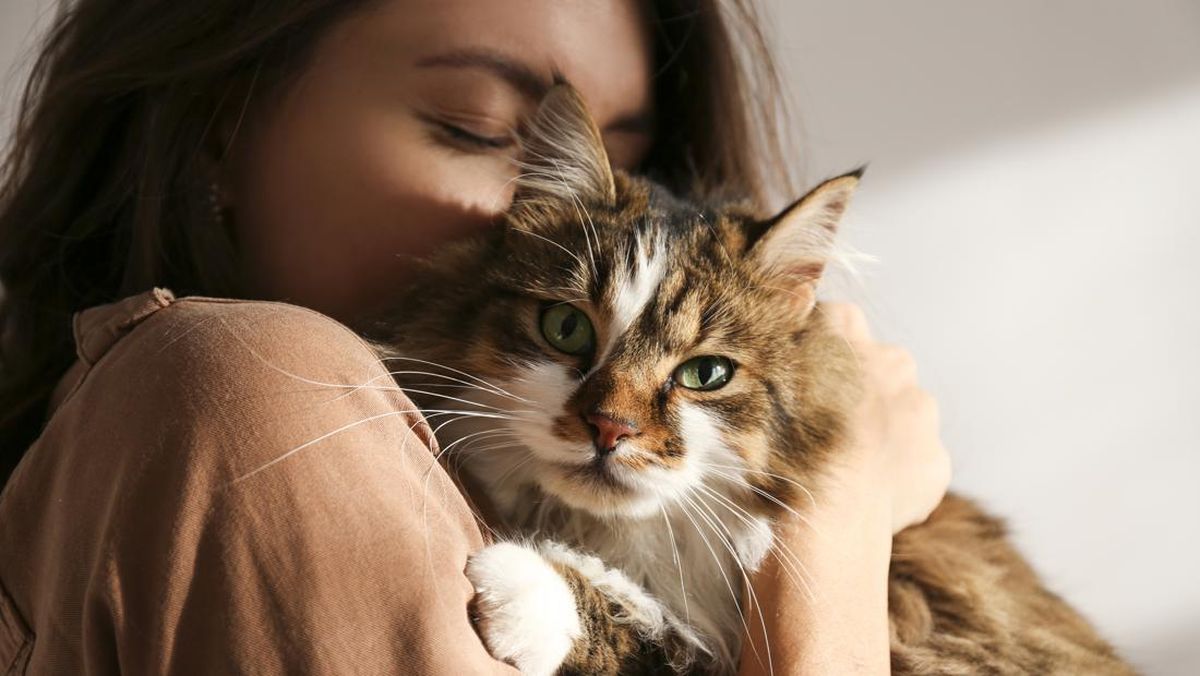
Physical proximity during periods of rest also serves as a reliable metric of affection. Because sleep renders a cat highly vulnerable to predation, the choice of sleeping location is deliberate and calculated. A cat that chooses to sleep directly adjacent to its human—whether on a pillow, across the legs, or nestled in the crook of an arm—is explicitly seeking the safety and thermal comfort of a trusted companion.
Furthermore, the persistent habit of shadowing a human from room to room—often referred to as "velcro" behavior—demonstrates an emotional investment in the human’s daily activities. Whether supervising chores in the kitchen, observing remote work from a nearby desk, or waiting outside a closed bathroom door, the cat’s motivation is rooted in companionship rather than mere curiosity or hunger.
Vocalizations and Auditory Communication
Auditory signals play a nuanced role in feline-human communication. While meowing is rarely used by adult cats to communicate with one another—having evolved primarily as a specialized tool for kittens to address their mothers—it becomes a primary method of addressing human companions. A cat that regularly "talks" or initiates vocal exchanges with its owner is demonstrating a high degree of social engagement. These vocalizations can range from soft trills and chirps to greeting meows, each carrying distinct contextual meanings aimed at eliciting a response or acknowledging the owner’s presence.
Perhaps the most iconic feline vocalization is purring, which is frequently associated with happiness and contentment. While cats do occasionally purr as a self-soothing mechanism during periods of stress, pain, or illness, a relaxed cat purring while in physical contact with a human—such as resting on a lap or receiving gentle strokes—is a clear indicator of emotional satisfaction. When combined with kneading (the rhythmic alternating paw-pushing motion often called "making biscuits"), purring reflects a regression to kittenhood safety, signaling deep contentment and psychological ease.
Grooming, Gifting, and Social Integration
Social grooming, or allogrooming, is another cornerstone of feline cooperative behavior. In feral colonies, cats groom one another to reinforce social hierarchies, maintain group scent, and strengthen familial bonds. When a domestic cat licks a human’s skin, hair, or clothing, it is extending this ritual of acceptance to its human caregiver. This behavior indicates that the cat perceives the human as an equal member of its social unit, worthy of mutual care and hygiene maintenance.
On the more complex end of the behavioral spectrum is the act of bringing gifts. Independent feline researchers and organizations such as Cats.com note that outdoor cats—and occasionally indoor cats with access to simulated prey—will bring toys, insects, or hunted items to their owners. While these offerings may occasionally distress human observers, ethologists view this behavior as an extension of maternal teaching. The cat is attempting to share resources or teach hunting skills to its perceived social dependents, viewing the human as part of the family group that requires provisioning.
The Broader Implications of Feline-Human Bonding
Recognizing and validating these subtle behavioral cues carries significant implications for feline welfare and the broader landscape of pet ownership. Historically, the misinterpretation of feline behavior has led to high rates of shelter abandonment or relinquishment, often driven by the misconception that cats are untamed, unloving, or incapable of genuine attachment. By educating the public on the quiet, sophisticated ways cats express devotion, animal welfare advocates hope to foster more patient, empathetic, and long-lasting human-animal relationships.
Veterinary behavioral medicine emphasizes that a secure cat is statistically less prone to stress-related medical conditions, such as feline interstitial cystitis, behavioral elimination issues, and stress-induced alopecia. When owners correctly interpret signs of trust and affection, they are better equipped to respond to their pets’ emotional and physical needs, creating a harmonious living environment that benefits both species. Ultimately, understanding that feline affection is measured not in boisterous enthusiasm, but in quiet loyalty, mutual grooming, and shared vulnerability, allows humans to appreciate the profound depth of the bond they share with their feline companions.