Erupsi Gunung Anak Krakatau Mengancam Wilayah Sekitar dan Protokol Perlindungan Kesehatan Masyarakat


The recent eruptive activity of Mount Anak Krakatau, located in the Sunda Strait, has escalated significantly, casting a shadow of concern across the provinces of Banten, West Java, and the Special Capital Region of Jakarta. Since the onset of intensified seismic and volcanic activity on Friday, September 4, the volcano has spewed substantial plumes of volcanic ash into the atmosphere. Driven by prevailing wind patterns, this fine particulate matter has traveled hundreds of kilometers, creating an environmental and health challenge for millions of residents living far from the volcanic source.
As the ash continues to settle over densely populated urban centers, the Indonesian Ministry of Health (Kemenkes) has issued urgent advisories. The primary concern lies in the physical nature of volcanic ash, which—unlike common household dust—is composed of pulverized rock, minerals, and glass particles. These jagged, microscopic shards pose a direct threat to the respiratory system, ocular health, and skin integrity of those exposed.
Chronology of the Current Eruption
The current phase of activity began in the early hours of Friday, September 4, when observers at the Anak Krakatau monitoring station reported a sustained column of ash reaching significant altitudes. Throughout the weekend, the volcanic output remained consistent, with the wind carrying the material eastward and southeastward.
By Saturday morning, satellite imagery and ground-level monitoring confirmed the reach of the ash cloud into the suburban areas of Banten and eventually the outskirts of Jakarta. Aviation authorities were forced to place several regional airports, most notably Soekarno-Hatta International Airport, on high alert. The danger to aviation is particularly acute; volcanic ash can melt inside jet engines, leading to catastrophic engine failure and causing significant abrasion to cockpit windows and fuselage exteriors. As of Sunday, authorities confirmed that the situation remains fluid, with flight paths being adjusted in real-time to circumvent the densest concentrations of the ash plume.
The Hidden Danger Within: Domestic Infiltration
While public health messaging often focuses on the dangers of being outdoors, the infiltration of volcanic ash into residential spaces presents a nuanced challenge. The particles, often measuring less than 10 microns in diameter, are capable of bypassing standard weather-stripping, entering through minute gaps in window frames, door seals, and ventilation ducts.
Once inside, these particles settle on surfaces, clothing, and textiles. The danger is compounded when homeowners attempt to clean the ash using conventional methods. Because the particles are so fine, sweeping them with a dry broom or dusting them with a cloth often results in the particles becoming re-aerosolized, effectively creating a cloud of hazardous dust within the home environment.
Strategic Protocols for Indoor Protection
The Ministry of Health, in collaboration with the National Disaster Management Agency (BNPB), has outlined a rigorous set of protocols to mitigate the risks associated with ash infiltration. These measures are designed to maintain indoor air quality while preventing the secondary distribution of settled particles.
1. Sealing the Building Envelope
The immediate priority for residents in the affected path is to limit the ingress of ash. This involves closing all exterior doors and windows. Furthermore, residents are advised to deactivate forced-air cooling systems, such as central air conditioning or exterior-intake fans, which act as conduits for outside air. By isolating the indoor environment, occupants can significantly reduce the concentration of airborne particulates.
2. Avoiding Dry Cleaning Methods
One of the most critical warnings issued by health experts is the prohibition of dry sweeping. Given the abrasive nature of volcanic glass, dry brushing causes the particles to become airborne again, increasing the likelihood of inhalation. Instead, the use of high-efficiency particulate air (HEPA) vacuum cleaners is strongly recommended. If a vacuum is unavailable, damp wiping—using a wet cloth to "trap" the ash—is the only safe alternative, provided the cloth is rinsed frequently and never shaken out indoors.
3. Personal Protective Equipment (PPE)
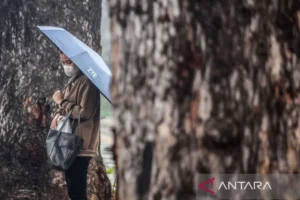
When the time comes to clean, the use of appropriate PPE is non-negotiable. Standard cloth masks or surgical masks are insufficient to filter out the microscopic shards found in volcanic ash. The Ministry of Health explicitly recommends N95, KN95, KF94, or FFP2 respirators. Additionally, the use of safety goggles is encouraged to prevent corneal abrasions, which are a common medical complication during volcanic events.
4. Sequential Cleaning Procedures
Residents are advised against premature cleanup efforts. If the eruption is ongoing and ash is still falling, cleaning the interior of the home is often futile. Experts suggest a hierarchical approach: clean the exterior of the property first to prevent further tracking of ash into the interior. Once the external area is cleared, the interior should be cleaned systematically, moving from the top of the house downward to ensure that dislodged particles are collected efficiently.
Implications for Public Health
The health implications of prolonged exposure to volcanic ash are multifaceted. In the short term, individuals may experience "volcanic conjunctivitis," a condition characterized by redness, pain, and foreign body sensation in the eyes. Respiratory irritation is another common complaint, manifesting as dry coughs, sore throats, and in more severe cases, acute bronchitis or the exacerbation of pre-existing conditions like asthma or chronic obstructive pulmonary disease (COPD).
The Ministry of Health has urged citizens to avoid rubbing their eyes if ash contact occurs. The correct protocol is to flush the eyes gently with clean, lukewarm water or saline solution. Should symptoms such as persistent respiratory distress or severe ocular pain emerge, individuals are advised to seek immediate medical intervention at the nearest public health center (Puskesmas).
Inter-Agency Coordination and Monitoring
The management of this event requires high-level coordination between the Center for Volcanology and Geological Hazard Mitigation (PVMBG), the Meteorology, Climatology, and Geophysics Agency (BMKG), and the BNPB. These agencies are continuously updating the "VONA" (Volcano Observatory Notice for Aviation) and providing public bulletins on air quality indices.
Public reliance on unverified reports circulating on social media has been discouraged. Instead, the government emphasizes that accurate information regarding the volcanic plume’s trajectory and the safety status of specific regions is available through official channels. The Provincial Government of Lampung, for instance, has explored options like "Cloud Seeding" or the use of water curtains to help wash the ash out of the atmosphere, demonstrating the proactive stance being taken to mitigate the environmental impact.
Broader Context: Living with the Ring of Fire
The current situation serves as a stark reminder of Indonesia’s geographical reality. Situated on the "Ring of Fire," the country experiences frequent volcanic activity, with Anak Krakatau being one of the most active and volatile volcanoes in the region. The 2018 collapse of the volcano’s flank, which triggered a tsunami in the Sunda Strait, remains a pivotal point in the public consciousness regarding the unpredictable nature of this specific site.
However, the recent events highlight that the threat of a volcano is not limited to its immediate proximity. Volcanic ash, when lofted into the upper atmosphere, can travel vast distances, impacting economic hubs and millions of residents who may not feel the tremors of the mountain but are nevertheless affected by its gaseous and particulate emissions.
Conclusion: Preparedness as a Permanent Requirement
As the eruption of Gunung Anak Krakatau continues, the focus remains on resilience and risk mitigation. By adhering to the established guidelines—sealing residential structures, utilizing proper filtration for cleaning, and relying on official data—the public can significantly reduce their exposure to the hazardous byproducts of the eruption.
While the mountain’s activity remains beyond human control, the impact on daily life and health can be managed through disciplined adherence to public health protocols. The situation remains under constant surveillance, and authorities continue to provide updates as the environmental conditions evolve. For the residents of Banten, Jakarta, and West Java, the current event is a testament to the necessity of constant preparedness and the importance of scientific literacy in navigating the challenges posed by Indonesia’s volcanic landscape.