Exploring the Cosmos on Screen: A Comprehensive Guide to Chinese Space and Astronaut Dramas

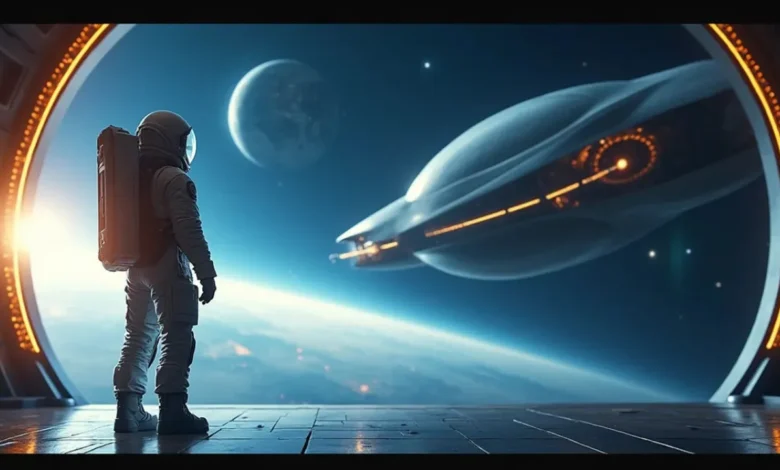
The landscape of Chinese television production has traditionally been dominated by period palace dramas, contemporary office romances, and historical martial arts epics. However, in recent years, a notable shift has occurred within the entertainment sector as creators and streaming platforms pivot toward futuristic settings, science fiction, and aerospace exploration. Although space-themed narratives remain a niche genre compared to mainstream contemporary romances, the available titles offer remarkable variety, ranging from aerospace engineering romances and extraterrestrial thrillers to spacecraft sitcoms and biographical tributes to national space programs. According to tracking data from international television databases such as MyDramaList, which categorizes over 130 titles under Chinese Futuristic and Sci-Fi Dramas, the selection has matured significantly. This growth mirrors China’s actual advancements in aerospace technology, including lunar exploration missions, space station assembly, and deep-space probes, which have collectively ignited public interest in astronomy and space travel. For viewers seeking an alternative to conventional storylines, exploring dramas centered on astronauts and cosmic exploration provides a refreshing cinematic journey.
Background Context of China’s Aerospace Expansion and Sci-Fi Boom
The surge in space-themed television programming does not happen in a vacuum; it closely parallels the rapid advancements of China’s national space program, the China National Space Administration (CNSA). Over the past decade, milestones such as the Chang’e lunar exploration program, the deployment of the Tiangong space station, and the Tianwen-1 Mars mission have captured the public imagination. Consequently, audiences have developed an appetite for media that reflects these technological triumphs. Concurrently, the global success of literary works like Liu Cixin’s Hugo Award-winning novel The Three-Body Problem laid a robust foundation for hard science fiction in Chinese media. Producers recognized that modern viewers, particularly the tech-savvy younger demographic, are increasingly drawn to narratives that combine complex scientific concepts with high production values. This cultural shift encouraged networks and streaming giants like Tencent Video, iQiyi, and Youku to invest heavily in futuristic settings, elevating the visual effects and narrative complexity of contemporary Chinese dramas.
Categorized Overview of Notable Space and Sci-Fi Productions
To navigate the diverse offerings within this burgeoning genre, television critics generally divide space-themed and futuristic Chinese media into distinct categories, each catering to different viewing preferences.
Romantic Dramas and Aerospace Engineering
For audiences preferring lighter narratives that blend emotional engagement with professional authenticity, romance-driven space dramas offer an accessible entry point. A prime example is the 2011 biographical drama The Space Dream, which adopts a more grounded and patriotic approach by tracing the historical foundations of China’s manned spaceflight initiatives. While historical and biographical projects establish the groundwork, contemporary romantic series have modernized the depiction of aerospace professionals. These productions often focus on the rigorous training, dedication, and personal sacrifices required of aerospace engineers and aspiring astronauts, blending character-driven storytelling with accurate portrayals of technical environments.
Thrillers, Mysteries, and Hard Sci-Fi
At the opposite end of the spectrum lie complex narratives dealing with astrophysics, extraterrestrial life, and cosmic philosophy. The 2023 adaptation of Three-Body represents a watershed moment for Chinese science fiction television. Rather than focusing on immediate space travel, the series explores the terrifying implications of interstellar communication, alien civilizations, and scientific anomalies. Such hard sci-fi projects demand active viewer engagement, moving away from conventional television tropes to examine humanity’s place in the universe. In addition to high-stakes thrillers, the genre accommodates lighter formats, such as the 2021 web sitcom Don’t Panic Astronauts!, which utilizes a confined spacecraft setting to deliver comedy, demonstrating the genre’s versatility across different formats and tones.
Comparative Analysis with Regional Space Media Trends
The evolution of space-themed television is not unique to mainland China; the broader East Asian entertainment market has also begun exploring extraterrestrial settings. Industry analysts frequently draw comparisons with neighboring markets, such as South Korea, where high-profile productions like When the Stars Gossip have broken new ground as early examples of Korean dramas set aboard orbital space stations. While Korean productions often lean heavily into high-concept romantic comedies embedded within futuristic work environments, Chinese productions display a broader methodological split. They range from strictly localized adaptations of hard science fiction literature to romantic pairings of aerospace engineers and entertainment figures, reflecting differing domestic cultural priorities and technological milestones.
Strategic Implications and Viewer Engagement Tips
The growing prominence of aerospace themes in television carries broader implications for the entertainment industry and educational outreach. By integrating realistic depictions of space exploration, engineering challenges, and astronomical science into mainstream entertainment, these productions inadvertently serve a public educational function, fostering STEM (Science, Technology, Engineering, and Mathematics) interest among younger demographics. For viewers looking to maximize their engagement with this specialized genre, media critics recommend a few viewing strategies. Because hard science fiction and aerospace dramas often rely on specific terminology regarding orbital mechanics, telemetry, and theoretical physics, paying close attention to foundational exposition in early episodes significantly enhances comprehension. Furthermore, balancing intense, cerebral thrillers like Three-Body with lighter, character-centric series ensures a well-rounded viewing experience. As production budgets continue to expand and visual effects capabilities improve, the horizon for Chinese science fiction and space exploration dramas remains vast, promising even more ambitious storytelling as humanity continues its reach toward the stars.