Home Fitness Revolution: Seven Simple Exercises to Boost Health and Burn Calories Without Equipment

Jakarta, Indonesia – The pursuit of a healthy and fit lifestyle no longer necessitates costly gym memberships or specialized equipment. A growing movement champions the effectiveness of simple, accessible exercises that can be performed in the comfort of one’s home, offering a potent combination of calorie burning, fitness enhancement, and muscle strengthening. These home-based routines, often blending cardiovascular and strength training elements, are proving to be a practical and time-efficient solution for individuals of all fitness levels, from absolute beginners to those with demanding schedules. The convenience and cost-effectiveness of these exercises are driving a significant shift in how people approach their physical well-being, making fitness a more integrated and sustainable part of daily life.
The resurgence of home fitness is not a new phenomenon, but it has gained considerable momentum in recent years, accelerated by global events that necessitated a reevaluation of traditional fitness paradigms. The accessibility of online fitness resources, coupled with a greater awareness of the myriad benefits of regular physical activity, has empowered individuals to take control of their health from their living rooms. Experts emphasize that consistency is key, and that even short, focused workouts can yield substantial rewards.
This article explores seven fundamental exercises that require no special gear, yet deliver significant physiological benefits. They are designed to elevate heart rate, engage major muscle groups, and contribute to overall systemic health. The emphasis is on functional movements that mimic everyday activities, thereby enhancing practical strength and coordination.
The Power of Bodyweight: Seven Effective Home Exercises
1. Jumping Jacks: A Cardiovascular Catalyst
Jumping jacks stand as a quintessential cardio exercise, renowned for their simplicity and effectiveness. This dynamic movement involves a synchronized jump that widens the stance of the legs while simultaneously raising both arms overhead, followed by a return to the starting position. The rapid elevation of heart rate achieved through jumping jacks makes them an efficient tool for calorie expenditure in a short period. Beyond their fat-burning potential, jumping jacks are instrumental in honing body coordination and bolstering cardiovascular endurance. This foundational exercise can be performed virtually anywhere, requiring only a modest amount of personal space.
Research consistently highlights the efficacy of plyometric exercises like jumping jacks in improving cardiorespiratory fitness. A study published in the Journal of Strength and Conditioning Research found that moderate-intensity plyometric training can lead to significant improvements in VO2 max, a key indicator of aerobic capacity. For individuals seeking to kickstart their fitness journey or add a quick cardio burst to their routine, jumping jacks offer an accessible and impactful option. The cumulative effect of performing several sets of jumping jacks can simulate the benefits of longer cardio sessions, making them a valuable addition to any home workout regimen.
2. Marching in Place: Elevating Everyday Movement
Marching in place emerges as an accessible exercise, particularly beneficial for beginners or individuals with limited living space. The fundamental motion involves lifting one foot at a time as if walking, but remaining stationary. To amplify the benefits and elevate the intensity, practitioners can incorporate variations such as high knees, where the knees are lifted towards the waist. This modification significantly increases the engagement of the leg muscles and boosts calorie expenditure.
While seemingly basic, consistent marching in place can contribute significantly to maintaining cardiac health and promoting healthy blood circulation. The rhythmic nature of the exercise aids in warming up the body, preparing muscles for more strenuous activity, or serving as a low-impact cooldown. The ability to control the pace and intensity allows individuals to tailor the exercise to their current fitness level, making it a highly adaptable component of a home workout. The mental benefits of rhythmic movement are also noteworthy, with studies suggesting it can have a calming effect and improve mood.
3. Squats: Building Lower Body Strength and Stability
Squats are a cornerstone exercise for developing the strength and stability of the lower body, targeting key muscle groups including the quadriceps, hamstrings, glutes, and lower back. The execution involves standing with feet shoulder-width apart, then lowering the body as if preparing to sit, before returning to an upright position. Crucial to proper form and injury prevention are maintaining a straight back and ensuring that the knees do not extend beyond the toes.
The benefits of squats extend beyond muscle hypertrophy. They are instrumental in improving balance and enhancing overall body power, translating to better performance in daily activities and sports. The compound nature of the squat, engaging multiple joints and muscle groups simultaneously, makes it an exceptionally efficient exercise for building functional strength. As individuals progress, variations like goblet squats (holding a weight at the chest) or jump squats can further challenge the muscles and increase the cardiovascular demand. The foundational squat is a testament to the power of compound movements in maximizing fitness gains with minimal equipment.
4. Lunges: Enhancing Leg Power and Balance
Lunges are a highly effective exercise for cultivating lower body strength and refining balance. The movement involves stepping forward with one leg and lowering the body until both knees are bent at approximately a 90-degree angle, before returning to the starting position and alternating legs. This controlled motion effectively engages the quadriceps, hamstrings, glutes, and crucial core muscles.
The unilateral nature of lunges – working one leg at a time – helps to identify and address muscular imbalances, which are common contributors to postural issues and injuries. By requiring the body to stabilize itself with each step, lunges significantly challenge the core musculature. This exercise is a vital component of a comprehensive leg workout, contributing to improved athletic performance and everyday functional mobility. The ability to modify lunges, such as performing reverse lunges or walking lunges, adds further versatility to this powerful exercise.
5. Planks: Fortifying the Core for Better Posture
The plank is a highly effective isometric exercise that focuses on building core strength and stability. It involves maintaining a rigid body position, supported by the forearms and toes, with the body forming a straight line from head to heels. Despite its static nature, the plank is a demanding exercise that engages a multitude of muscles, including the abdominals, obliques, lower back, and even the shoulders and glutes.
The benefits of regular planking are far-reaching. It is instrumental in improving posture, enhancing spinal stability, and can be a powerful tool in mitigating lower back pain, provided it is performed with correct technique. A strong core is the foundation for almost all physical movements, contributing to better performance in sports and reducing the risk of injury during everyday activities. The plank’s simplicity belies its profound impact on the body’s central support system. Advanced variations, such as side planks or planks with leg lifts, offer progressively challenging ways to strengthen the core.
6. Push-Ups: A Universal Upper Body Builder
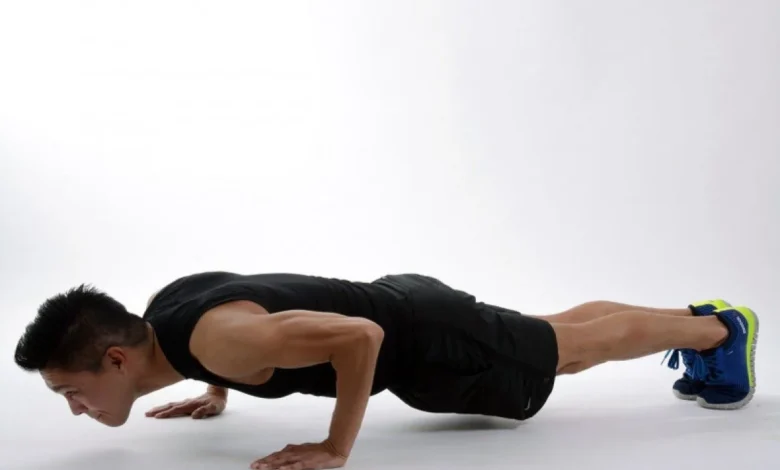
Push-ups are a globally recognized strength training exercise, celebrated for their ability to simultaneously work multiple upper body muscle groups. The standard push-up engages the chest, shoulders, triceps, and the core, which acts as a stabilizer throughout the movement. This compound exercise provides a comprehensive upper body workout without the need for any equipment.
Recognizing that the standard push-up can be challenging for beginners, modifications are readily available. Individuals can opt for knee push-ups, performing the movement with knees on the floor, or incline push-ups, using a wall or elevated surface for support. These modifications allow individuals to gradually build the necessary strength to progress to the full push-up. The push-up is a testament to the effectiveness of bodyweight training, offering a scalable path to upper body strength and endurance.
7. Burpees: The Full-Body Calorie-Burning Powerhouse
Burpees represent a high-intensity exercise that ingeniously combines multiple movements into a single, fluid sequence. The exercise typically involves transitioning from a squat position to a plank, performing a push-up, returning to the plank, jumping the feet back to the squat position, and finally exploding upwards into a jump. This integrated approach engages nearly every major muscle group in the body, making burpees an exceptionally efficient calorie-burning exercise.
The demanding nature of burpees translates to significant improvements in muscular strength, endurance, cardiovascular fitness, and overall coordination. While initially challenging, consistent practice of burpees can lead to remarkable gains in physical conditioning. The exercise is a testament to the power of functional, full-body movements in maximizing fitness outcomes in a compressed timeframe. For those seeking a truly comprehensive and time-efficient workout, the burpee stands out as a supreme option.
Integrating Home Fitness into Daily Life: Recommendations and Outlook
The consistent practice of these simple home-based exercises offers a sustainable pathway to maintaining health and fitness without the burden of financial outlay for equipment or memberships. To maximize the benefits, health professionals generally recommend engaging in at least 20 to 30 minutes of physical activity daily, or accumulating a minimum of 150 minutes of moderate-intensity exercise per week. This, coupled with a balanced nutritional diet, adequate rest, and proper hydration, forms the bedrock of a healthy lifestyle.
The implications of this home fitness surge are profound. It democratizes fitness, making it accessible to a wider demographic and challenging the notion that expensive gyms are a prerequisite for good health. The trend is likely to continue its upward trajectory, fueled by ongoing innovation in digital fitness platforms and a persistent societal emphasis on well-being. As individuals become more attuned to their bodies and the power of self-directed exercise, the home environment is poised to remain a central hub for physical activity. The ease with which these exercises can be integrated into a busy schedule underscores their enduring appeal and their critical role in promoting long-term health and vitality. The global fitness landscape is undergoing a quiet revolution, one rep, one jump, and one plank at a time, all within the confines of our own homes.