Hari Olahraga Nasional: Reflecting on the Historic Roots and Future Vision of Indonesian Athletics

Every year, September 9 serves as a cornerstone of Indonesia’s national identity, marking the celebration of Hari Olahraga Nasional (Haornas), or National Sports Day. While the date is often associated with the pursuit of physical fitness and competitive excellence, its origins are deeply embedded in the nation’s struggle for sovereignty and international recognition. As Indonesia observes the 43rd anniversary of this commemorative day in 2026, the occasion serves as both a retrospective look at a pivotal moment in history and a strategic call to action for the country’s future in global sports development.
The Genesis of a Movement: The 1948 PON in Solo
The history of Indonesian sports is inextricably linked to the first Pekan Olahraga Nasional (PON), held in Solo, Central Java, from September 9 to 12, 1948. At the time, the young Republic of Indonesia was navigating the turbulent aftermath of its proclamation of independence. The country faced immense diplomatic and military pressure, yet the leaders of the era recognized that building a nation required more than just political and military strength—it required the cultivation of a national character.
The motivation behind the inaugural PON was as much political as it was athletic. In 1948, Indonesia sought to participate in the XIV Olympic Games in London. However, the international community had yet to grant widespread recognition to the Republic of Indonesia. Consequently, the Indonesian contingent faced insurmountable administrative hurdles, effectively barring them from participating as a sovereign nation.
Rather than succumbing to diplomatic isolation, the Indonesian government responded by creating a domestic platform. By hosting the first PON in Solo, the nation demonstrated its capacity for organization and its commitment to unity. The event served as a defiant declaration of existence, proving to the world—and to its own citizens—that the Republic was fully functional. The opening date of that inaugural games, September 9, was eventually cemented as the official date for Haornas, serving as a permanent reminder of this foundational moment.
Chronology of Institutionalization
The path from the first PON to the official recognition of Haornas as a national holiday spanned several decades. The chronology of this institutionalization reflects the government’s evolving approach to sports as a tool for nation-building:
- September 9–12, 1948: The first PON is held in Solo, Central Java. This event establishes the date that would later define the national consciousness regarding sports.
- September 9, 1983: President Soeharto formally initiates the first commemoration of National Sports Day during the inauguration of the renovated Stadion Sriwedari in Surakarta. This event marked the beginning of a concerted national effort to institutionalize sports culture.
- 1985: The legal framework for the celebration is solidified with the issuance of Presidential Decree (Keppres) Number 67 of 1985. This document officially designated September 9 as Hari Olahraga Nasional, mandating its observance across the archipelago.
- 2026: Indonesia celebrates the 43rd anniversary of the official Haornas proclamation, shifting the focus from historical remembrance to the modernization of sports infrastructure and the development of the "sport tourism" sector.
The Strategic Importance of Sports Infrastructure
In recent years, the Ministry of Youth and Sports (Kemenpora) has shifted its focus toward the economic and social implications of athletic development. Recognizing that world-class athletes require world-class facilities, the government has begun prioritizing massive investment in sports academies and training centers.
Recent discussions have highlighted the need for an estimated IDR 1.5 trillion investment to construct integrated training facilities. These facilities are designed not only to cultivate talent but to serve as hubs for research in sports science, nutrition, and psychology. The strategic logic is clear: to compete at the Olympic level, Indonesia must transition from sporadic talent discovery to a systematic, sustainable pipeline of athlete development.
Furthermore, the government is increasingly leveraging the "sport tourism" model. The decision to designate regions like Sumba Timur as a focal point for the 2028 PON is a testament to this shift. By integrating high-level sports events with local tourism, the state aims to generate regional economic growth, creating a ripple effect that benefits local businesses, hospitality sectors, and infrastructure development.
Broadening the Definition of Sport: From Performance to Public Health
While the medal counts and stadium developments capture headlines, the true essence of Haornas, as emphasized by Kemenpora’s 2025 and 2026 guidelines, lies in the "cultivation of sports" (pembudayaan olahraga). This initiative views physical activity as a fundamental pillar of public health and national discipline.
Modern challenges, including rising rates of sedentary lifestyles and non-communicable diseases, have forced the government to reframe sports as a necessity rather than a pastime. The goal is to integrate physical activity into the daily lives of all citizens, regardless of age or ability. By fostering a culture of exercise, the state expects to see long-term improvements in the national healthcare burden and a strengthening of societal resilience.
Experts in public health suggest that the "democratization of sports"—making facilities accessible to the public rather than just elite athletes—is essential for this vision to materialize. Initiatives such as the "PON Pantai" (Beach PON) in Ancol are examples of efforts to bring sports into public spaces, making them more visible and accessible to the urban population.
Official Responses and Future Outlook
Government officials have consistently underscored that the development of the sports sector is not merely about prestige. The Minister of Youth and Sports has frequently noted that a vibrant sports ecosystem provides measurable benefits to both the economy and the national spirit.
"The progress we make in our sports infrastructure is a direct investment in our youth," a spokesperson for the Ministry noted during recent preparations for the 2026 celebrations. "By providing the right environment, we are building character, fostering unity across our diverse islands, and ensuring that our athletes can stand on the global stage with confidence."
However, the path forward is not without challenges. Critics and policy analysts have pointed out that the gap between rural and urban sports facilities remains significant. While major metropolitan areas benefit from centralized funding, rural districts often struggle to maintain basic fields and courts. Achieving the goals of Haornas will require a more equitable distribution of resources to ensure that the "sporting culture" is truly national in scope.
The 2026 Commemoration: A Call to Action
As September 9, 2026, approaches, the national sentiment is one of reflection and forward momentum. The 43rd anniversary of Haornas serves as a reminder that the spirit of 1948—which was characterized by resilience in the face of adversity—must be the same spirit that drives modern Indonesian athletics.
Citizens are encouraged to participate in the day through a variety of activities:
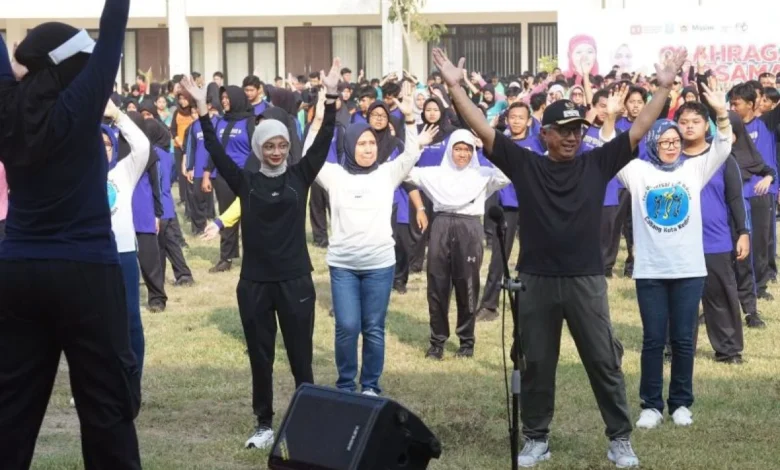
- Community Engagement: Participating in organized community runs, walks, or local tournaments.
- Support for Athletes: Engaging with the national athletic community to foster a culture of appreciation for domestic talent.
- Educational Initiatives: Schools and universities are encouraged to emphasize the importance of physical education and the history of Indonesian sports to the younger generation.
- Health Awareness: Families are urged to incorporate daily physical activity as a core component of their household lifestyle.
Implications for National Unity
Ultimately, sports in Indonesia acts as a powerful adhesive. In a country defined by its vast geography and cultural diversity, the shared experience of cheering for a national team or participating in a national game helps to bridge regional divides. The history of Haornas is a narrative of overcoming the "impossible"—from the early days of 1948, when the nation struggled for recognition, to the present day, where Indonesia is positioning itself as a credible host for international sporting events.
The 2026 observation of Hari Olahraga Nasional is not just a date on the calendar. It is a strategic assessment of how far the nation has come and a roadmap for where it needs to go. By continuing to invest in infrastructure, prioritizing public health, and celebrating the historical milestones that define its athletic identity, Indonesia is reinforcing its commitment to a future where sports is a fundamental part of the national character.
As the nation looks toward future PON cycles and international competitions, the legacy of the 1948 Solo games remains the bedrock. The lesson of the first PON remains as relevant today as it was nearly 80 years ago: that when a nation organizes itself through the medium of sport, it does more than just compete—it builds a legacy, forges a character, and solidifies its place in the global community.
Related posts: