IDAI: Pakai Masker Hanya Solusi Sementara, Segera Padamkan Karhutla demi Lindungi Kesehatan Anak

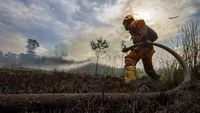
The escalating crisis of forest and land fires, commonly known in Indonesia as karhutla, has once again pushed the nation’s healthcare infrastructure to its limits, particularly in vulnerable regions such as South Kalimantan. Amid mounting concerns over the proliferation of hazardous air pollutants, the Indonesian Pediatric Society (Ikatan Dokter Anak Indonesia, or IDAI) has issued an urgent, unequivocal plea for the immediate and aggressive suppression of these blazes. Medical professionals emphasize that while personal protective equipment plays a role in crisis mitigation, masks are merely a temporary bandage on a systemic environmental catastrophe that poses grave, long-term health risks to infants and children.
The devastating intersection of environmental degradation and public health came under intense scrutiny during a recent expert webinar hosted by IDAI. Pediatric specialists, respiratory consultants, and public health advocates gathered to discuss the alarming surge in pediatric respiratory ailments directly tied to the toxic haze blanketed across affected provinces. According to the leadership of IDAI, the core issue extends far beyond immediate symptom management; it strikes at the very developmental future of Indonesia’s younger generation.
The Long-Term Threat of Fine Particulate Matter (PM 2.5)
At the center of the medical community’s concern is PM 2.5—fine particulate matter measuring 2.5 micrometers or less in diameter. These microscopic pollutants are small enough to bypass the human body’s natural respiratory defenses, penetrating deep into the pulmonary alveoli and even entering the bloodstream. For adults, exposure can trigger acute respiratory and cardiovascular distress. However, for children and toddlers whose respiratory and immune systems are still under development, the consequences are exponentially more severe.
Dr. Piprim Basarah Yanuarso, Chairman of the Central Board of IDAI, underscored the gravity of the situation during the webinar. He pointed out that medical personnel stationed in fire-stricken regions are locked in a relentless battle against a wave of pediatric respiratory cases, yet the burden of care highlights a glaring need for decisive state intervention.
"The impact of handling or treating the health and other aspects resulting from karhutla is extraordinary. I think if you ask what the best solution is, it is to extinguish the fires as quickly as possible," Dr. Piprim stated.
He further emphasized that if local and national resources are stretched too thin to contain the raging fires effectively, the government must swallow its pride and seek international cooperation or cross-border assistance from neighboring nations. Framing masks as an inadequate defense against a pervasive environmental hazard, Dr. Piprim noted that relying on personal protective gear fails to address the root cause of the crisis.
"The use of masks is not the main solution, but only a temporary one. The solution is to extinguish the fires as soon as possible. If you are not capable, then look for help from outside," he added.
A Chronology of Escalation: The South Kalimantan Crisis in 2026
To understand the scale of the current public health emergency, one must examine the staggering trajectory of the fires and their corresponding toll on healthcare systems. Data compiled from provincial monitoring networks and regional hospitals paint a grim picture of rapid environmental deterioration throughout the dry season of 2026.
Dr. Khairiyadi, a pediatric respirology consultant practicing at Ulin Regional General Hospital (RSUD Ulin) in South Kalimantan, provided harrowing empirical evidence of the crisis. The correlation between the expansion of burnt land and the influx of sick children is both direct and quantifiable.
At the onset of the peak dry season in July 2026, RSUD Ulin recorded 157 cases of Acute Respiratory Infections (ARI) among children. During this initial phase, the total area ravaged by forest and land fires stood at approximately 459.68 hectares. While concerning, the medical staff was able to manage the patient load within standard operational capacities.
However, as the weeks progressed into late summer and early autumn, governmental and community mitigation efforts proved insufficient against compounding weather patterns and persistent hotspots. By mid-October 2026, the situation had spiraled into an unprecedented humanitarian and ecological crisis.
According to hospital records presented by Dr. Khairiyadi, the number of pediatric ARI cases skyrocketed to 4,926 by October 14, 2026. Concurrently, the scale of environmental destruction expanded exponentially, with the total affected land area ballooning to 27,202.97 hectares. This nearly sixtyfold increase in burnt acreage triggered a proportional surge in pediatric hospital admissions, overwhelming emergency rooms, straining oxygen supplies, and exhausting medical personnel.
The Practical Impossibility of Mitigation at the Household Level
For physicians on the front lines, the daily reality of treating children suffering from smoke-induced wheezing, asthma exacerbations, and severe bronchitis has become a profound professional and ethical challenge. Dr. Khairiyadi recounted the emotional toll of facing desperate parents who look to medical professionals for solutions that simply do not exist within the confines of a clinic.
"Doctor, what can I do so that my child stops wheezing?" parents repeatedly ask, a question that highlights the helplessness felt by families trapped in smog-filled regions.
When physicians offer the standard medical advice to keep children indoors or have them wear masks, the practical limitations of daily life quickly render those recommendations useless. Infants and toddlers up to two years of age find it physically and psychologically intolerable to wear masks consistently. The discomfort, restricted airflow, and sensory irritation lead to constant removal, leaving the youngest and most vulnerable members of society completely unprotected against toxic air.
Moreover, the advice to temporarily evacuate families yields diminishing returns when entire provinces are choked by particulate haze. Moving to a neighboring town or district often provides no genuine relief, as the smoke plumes routinely span hundreds of kilometers across regional and national borders.
The Case for Safe Houses and Institutional Intervention
Recognizing that conventional household-level defenses are failing, IDAI and collaborating medical experts are calling for a structural paradigm shift in how regional governments manage public health emergencies during environmental disasters.
Dr. Khairiyadi has formally proposed the establishment of designated "safe houses" equipped with specialized air filtration, climate control, and medical-grade oxygen supplies. These facilities would serve as localized sanctuaries for children, infants, and other high-risk individuals—such as pregnant women and the elderly—who cannot easily be evacuated from fire-stricken zones.
"Evacuate where?" Dr. Khairiyadi questioned, highlighting the futility of unstructured displacement. "Moving regions still exposes people to karhutla smoke. We propose the provision of safe houses for sufferers of respiratory problems who cannot leave the karhutla-affected areas. These safe houses should have ventilation and oxygen for those who need it. Can this be advocated to the government?"
This institutional approach shifts the burden of protection away from impoverished or overwhelmed families and places it squarely on the shoulders of the state. Establishing clean-air shelters represents a critical bridge between immediate disaster response and long-term environmental remediation.
Broader Implications and the Imperative of Accountability
The recurring cycle of forest and land fires in Indonesia is not merely a seasonal meteorological inconvenience; it is a complex socio-environmental challenge with far-reaching implications for the nation’s human capital development.
Chronic exposure to high levels of PM 2.5 during early childhood has been linked in numerous global epidemiological studies to permanent reductions in lung function, increased susceptibility to chronic respiratory diseases in adulthood, and potential cognitive and neurological developmental delays. When millions of children across entire regions are subjected to weeks or months of severe air pollution, the collective toll on the nation’s future healthcare costs, productivity, and quality of life is immeasurable.
Public health analysts point out that while emergency medical responses and clean-air safe houses are vital life-saving interventions, they treat only the symptoms of a man-made disease. The primary drivers of karhutla—often linked to land-clearing practices for agriculture and forestry, compounded by climate anomalies—require rigorous law enforcement, strict corporate accountability, and proactive environmental governance.
As the 2026 crisis demonstrates, the medical community is no longer willing to remain silent while treating the collateral damage of environmental policy failures. The resounding message from IDAI is clear: masks are not enough, palliative hospital care is a reactive band-aid, and the ultimate health intervention is the swift, uncompromising eradication of the fires at their source. Until the state can guarantee clean air through effective fire suppression and robust prevention protocols, generations of Indonesian children will continue to bear the heaviest burden of environmental inaction.
Related posts: