Mastering the Art of Restaurant-Quality Scrambled Eggs: Techniques, Science, and Culinary Insights


Eggs have long stood as a cornerstone of global nutrition, celebrated universally for their exceptional nutritional profile, economic accessibility, and remarkable versatility in culinary applications. Among the myriad ways to prepare this kitchen staple—ranging from simple hard-boiled formats to elaborate poached preparations—scrambled eggs remain a persistent favorite. They are comforting, fast, and satisfying. Yet, despite their apparent simplicity, achieving the coveted restaurant-quality scrambled egg—characterized by a velvety, ultra-creamy texture and soft curds rather than a dry, rubbery scramble—often eludes home cooks. Culinary professionals and food scientists point out that transforming basic eggs into a gourmet breakfast dish requires understanding the underlying biochemical processes of egg proteins, coupled with precise heat management and deliberate ingredient selection.
The culinary history of scrambling eggs dates back centuries, evolving from a rustic peasant dish cooked over open hearths into a refined technique mastered in French brasseries and modern upscale kitchens. Historically, eggs were simply beaten and tossed into a hot pan with fat until solid. However, the contemporary culinary movement, heavily influenced by food science and publications like Serious Eats and The Kitchn, has demystified the process. Experts have broken down the mechanics of coagulation, demonstrating that achieving the perfect breakfast scramble is less about luck and more about scientific precision.
To understand why traditional home preparation often results in dry, overcooked, or unevenly textured eggs, one must examine the fundamental composition of an avian egg. An egg consists of distinct structural components: the shell, the thick and thin albumen (egg white), and the yolk. The white is primarily water (roughly 88 percent) and globular proteins, while the yolk contains proteins, fats, emulsifiers like lecithin, vitamins, and minerals. Crucially, the proteins in the white and the yolk coagulate at different temperatures. Egg whites begin to set at approximately 60 degrees Celsius (140 degrees Fahrenheit), while yolks require a slightly higher threshold, beginning to thicken around 65 degrees Celsius (150 degrees Fahrenheit) and firming fully near 70 degrees Celsius (158 degrees Fahrenheit).
When a home cook beats eggs haphazardly and throws them into a blazing hot skillet, these varying coagulation points lead to uneven cooking. The outer edges of the egg mixture tighten immediately and release their moisture, turning into dry curds, while the interior remains uncooked. To counteract this, master chefs utilize a systematic, science-backed methodology that prioritizes thorough mixing, temperature control, strategic timing, and the addition of specific culinary agents.
The first critical step in producing luxurious scrambled eggs begins long before the pan touches the heat: thorough mechanical agitation. According to culinary researchers, beating the eggs until the whites and yolks are completely homogenized and the mixture is slightly aerated is mandatory. When left unmixed, the distinct components cook at their respective rates, yielding a fractured texture. Complete homogenization ensures that the fats from the yolk are evenly distributed throughout the protein matrix of the white, creating a uniform mixture that sets more evenly across the entire pan surface.
Furthermore, the timing of seasoning plays a surprisingly pivotal role in the final texture of the dish. Conventional culinary wisdom sometimes suggests salting eggs at the very end of cooking. However, food science demonstrates that adding salt to raw eggs just before cooking offers a distinct advantage. Salt (sodium chloride) acts upon the protein strands within the eggs, specifically interfering with the tight cross-linking that occurs when proteins are heated. By preventing these proteins from binding too tightly to one another, salt keeps the cooked egg matrix moist, tender, and delicate, rather than tough and rubbery.
Beyond salt, the incorporation of dairy products—such as whole milk, half-and-half, or heavy cream—serves a dual purpose in elevating scrambled eggs from mundane to magnificent. While some purists argue that adding dairy dilutes the pure flavor of the egg, culinary science validates its use for specific structural outcomes. Dairy liquids dilute the concentration of egg proteins, which raises the overall coagulation temperature. Because the mixture takes slightly longer to set, the cook has a wider window of opportunity to control the cooking process. Additionally, the fats and water content in milk or cream introduce richness, moisture, and a luxurious velvety mouthfeel, reinforcing the creamy aesthetic associated with fine-dining establishments.
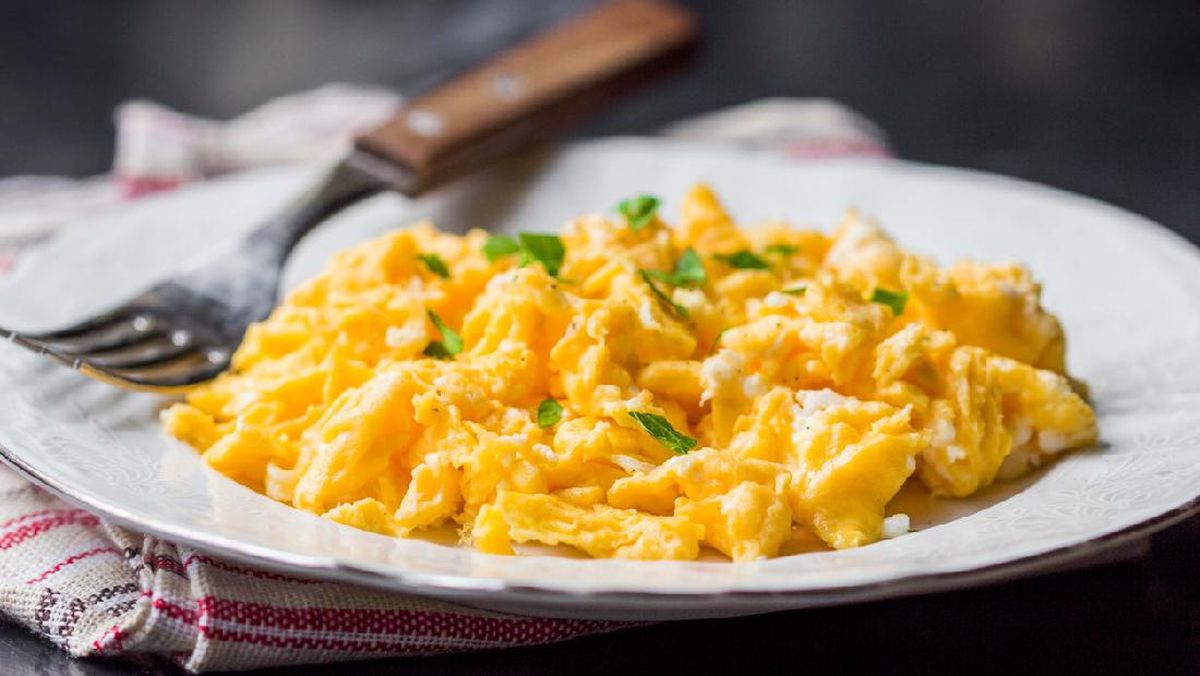
Fat is another indispensable element in this culinary equation, with butter acting as the premier choice for both cooking medium and flavor enhancer. Using an abundant amount of butter does not merely prevent sticking; the milk solids in butter toast gently, imparting a rich, nutty background note that complements the natural savoriness of the eggs. Culinary experts recommend a two-stage butter application: melting a generous amount in the pan prior to adding the eggs, and stirring a final pat of cold butter directly into the mixture just before plating. This final addition, known in professional kitchens as mounting with butter, lowers the residual heat of the eggs and emulsifies the remaining fats, locking in moisture and delivering an unmistakable gloss.
Perhaps the most crucial variable in the entire process is thermal management. High heat is the sworn enemy of soft, creamy scrambled eggs. When subjected to intense heat, the protein network contracts aggressively, squeezing out all the trapped water and transforming a delicate dish into a dry, granular scramble resembling a coarse stir-fry. Conversely, cooking eggs over low heat allows the protein strands to unfold and gently entangle into soft, velvety curds. As the pan warms, the liquid transforms slowly into delicate clusters, maintaining moisture and preventing scorching.
Patience is therefore a mandatory ingredient. The cooking process requires constant, gentle agitation using a silicone spatula or wooden spoon, scraping the bottom of the pan to continuously form and release new curds. This deliberate pacing ensures that every part of the mixture encounters the gentle heat source uniformly, resulting in an even, homogenous texture throughout the portion.
Equally important is the golden rule of timing: removing the eggs from the heat source before they appear completely finished. Because eggs retain residual thermal energy even after being pulled from the burner, they continue to cook on the plate due to carryover cooking. If a cook waits until the eggs look dry and set inside the pan, the final plated dish will inevitably be overcooked. Pulling the skillet off the burner while the eggs still possess a slightly wet, glossy sheen guarantees that they will finish setting precisely as they are served, maintaining an optimal level of moisture and tenderness.
The broader implications of these refined culinary techniques extend beyond the domestic kitchen, impacting the hospitality sector, breakfast-focused restaurant chains, and culinary education programs globally. In the commercial food service industry, consistency is paramount. Breakfast buffets and upscale brunch cafes rely on standardized cooking methods to deliver high customer satisfaction. When line cooks implement precise temperature control and science-based preparation techniques, food waste is reduced, profit margins on basic ingredients are maximized, and customer retention improves through consistently superior product delivery.
Nutritionists and dietary experts also note that understanding the science of egg preparation helps preserve the nutritional integrity of the food. Eggs are an exceptional source of high biological value protein, containing all nine essential amino acids, alongside vital micronutrients such as vitamin D, B12, selenium, and choline. Overcooking eggs not only degrades their pleasant sensory qualities—creating a sulfurous aroma and chalky texture—but can also alter the digestibility of the proteins. Gentle cooking preserves the soft structure of the proteins, making them easier for the human digestive system to process and absorb efficiently.
As global interest in home cooking continues to surge, accelerated by digital media platforms and culinary blogs, consumers are increasingly seeking out professional insights to elevate everyday meals. The transformation of scrambled eggs from an accidental breakfast experiment into a masterclass of culinary technique highlights a broader cultural shift. People are no longer satisfied with merely feeding themselves; they want to understand the why and how behind the food on their plates.
Ultimately, achieving the perfect restaurant-quality scrambled egg is a triumph of technique over complexity. By respecting the scientific properties of protein coagulation, embracing low and slow heat management, timing seasoning and dairy incorporation correctly, and exercising restraint with cooking times, any home cook can successfully replicate a luxury breakfast experience. This mastery over a humble ingredient serves as a testament to the fact that great cooking relies less on expensive components and more on attention to detail, patience, and a fundamental respect for culinary science.