The political landscape of Indonesia was irrevocably altered in November 2026 when a series of high-level investigations revealed a massive breach of trust within the nation’s security apparatus. At the heart of the crisis is the alleged unauthorized surveillance of President Prabowo Subianto, a scandal that has resulted in the criminal naming of former National Police Chief General Listyo Sigit Prabowo and two other high-ranking police officers. The controversy centers on the exploitation of the Lawful Interception Management System (LIMS), a sophisticated technological framework designed to assist law enforcement in combating crime, which was instead allegedly weaponized to monitor the state’s highest officials, political figures, journalists, and private citizens.
The gravity of this situation cannot be overstated. By targeting the Commander-in-Chief, the alleged perpetrators have not only violated the constitutional rights of individual citizens but have effectively compromised the security architecture of the Indonesian state. As the Bareskrim Polri (Criminal Investigation Agency of the Indonesian National Police) delves deeper into the digital breadcrumbs left behind by the illicit operations, the public and international observers are left questioning the integrity of the institutions tasked with protecting the republic.
Chronology of the Surveillance Crisis
The investigation, led by the Bareskrim Polri under the current administration’s mandate for absolute transparency, indicates that the illicit surveillance activities were not a sudden development but rather a sustained campaign. According to internal reports and forensic digital evidence, the unauthorized monitoring began as early as 2025 and continued through the latter half of 2026.
The timeline of discovery began in October 2026, when internal irregularities were detected within the police’s data management logs. A whistle-blower within the technical division reportedly flagged suspicious entries that did not correlate with any ongoing criminal investigations or court-authorized warrants. Upon further audit, it was discovered that specific telephone numbers—belonging to the President, key cabinet members, prominent opposition figures, and even civil society leaders—had been manually added to the LIMS target list without the requisite legal documentation.
Following the initial discovery, Bareskrim Polri moved quickly to secure the digital infrastructure. By early November 2026, the investigation officially identified three primary suspects: former National Police Chief General Listyo Sigit Prabowo, along with Irjen Ahrie Sonta Nasution and Irjen Eko Hadi Santoso. The charges brought against them are extensive, ranging from illegal interception and unauthorized data access to the deliberate destruction of electronic evidence, which allegedly occurred just as internal investigators began to close in on the perpetrators.
Understanding the LIMS Infrastructure
To grasp the magnitude of this scandal, one must first understand the purpose and function of the Lawful Interception Management System (LIMS). Contrary to popular belief, LIMS is not a singular "bug" or a physical device; it is a complex, integrated software ecosystem that serves as the bridge between telecommunications operators and law enforcement agencies.
Guided by the standards set by the European Telecommunications Standards Institute (ETSI), LIMS allows for the legal, court-mandated collection of communication data. In a lawful scenario, the system functions through a rigorous chain of custody:
- Authorization: A law enforcement agency presents a valid warrant or court order to a telecommunications provider.
- Activation: Once verified, the provider configures the LIMS interface to mirror the target’s communication traffic.
- Transmission: The system captures two types of data: Intercept Related Information (IRI)—such as metadata, location, and call duration—and the Content of Communication (CC), which includes the actual audio or text of the messages.
- Analysis: The intercepted data is routed through a secure, encrypted pipe directly to a controlled facility managed by the authorized law enforcement branch.
In the case of the 2026 scandal, the system functioned exactly as it was designed; however, the "human layer" of the security protocols was compromised. Investigators suggest that the suspects bypassed the verification stage, essentially "tricking" the system into recording individuals without judicial oversight. This abuse of power turns a tool meant for counter-terrorism and organized crime fighting into an instrument of political espionage.
Implications of Targeting the Presidency
The decision to monitor the communications of President Prabowo Subianto carries profound geopolitical and internal security implications. A President’s communications are the nerve center of the state, encompassing highly sensitive discussions on national defense, economic policy, and diplomatic strategies.
When a state leader is subjected to clandestine surveillance, the risks include:
- Exposure of State Secrets: Sensitive data regarding national security protocols could fall into the hands of external actors or hostile entities, potentially compromising Indonesia’s sovereignty.
- Diplomatic Vulnerability: If negotiations with foreign powers are intercepted, the President’s bargaining power is severely diminished.
- Erosion of Institutional Trust: The fact that the highest level of police leadership was involved suggests a deep-seated rot that could lead to public instability and a loss of faith in law enforcement.
Coordinating Minister for Political and Security Affairs (Menko Polkam) has categorized these actions as having strong indications of treason (makar). The legal logic follows that attempting to undermine or control the head of state through surveillance is an act of subverting the legitimate government, which in the Indonesian legal code carries significant weight.
Official Responses and Reform Initiatives
In response to the scandal, President Prabowo has issued a strict directive to the police force: total transparency. The President’s stance is that the investigation must be exhaustive, regardless of the ranks or historical contributions of the individuals involved.
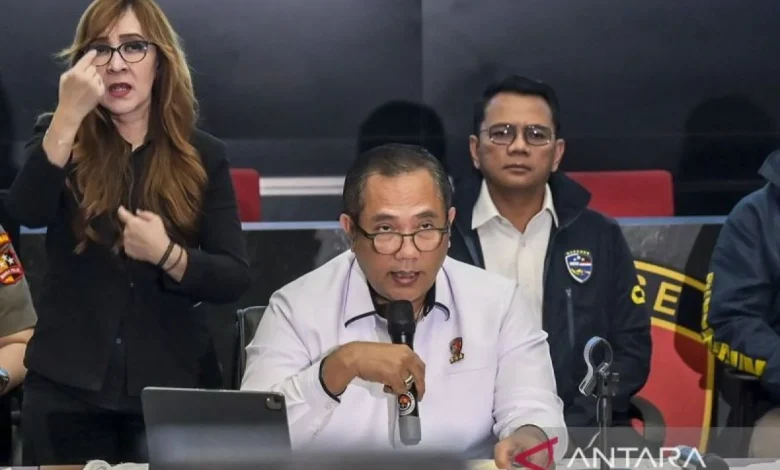
"This is a pivotal moment for the Indonesian National Police," the Menko Polkam stated in a press briefing following the announcement of the suspects. "It is a moment for deep, institutional soul-searching and reform. We cannot allow the tools of democracy and security to be used against the very foundation of our nation."
The Ombudsman of the Republic of Indonesia has also weighed in, highlighting that the incident reflects a fundamental failure in the oversight mechanisms of the state’s digital intelligence units. They have called for a complete audit of all interception technologies used by Indonesian agencies to ensure that such a breach can never recur.
Broader Impact and Future Outlook
The fallout of this scandal will likely dictate the legislative agenda for the remainder of 2026 and into 2027. Lawmakers are expected to introduce more stringent oversight bills, potentially requiring a multi-agency committee to authorize every single instance of interception, thereby removing the sole power of activation from any single institution.
Furthermore, the telecommunications industry in Indonesia is facing renewed pressure to enhance its end-to-end encryption protocols. While operators are legally obligated to assist law enforcement, the industry is now pushing for more robust "auditing logs" that are immutable and accessible by an independent third-party oversight body. This would prevent any future attempts to "delete" or "hide" activity logs, as was allegedly done by the suspects in the current case.
As the legal proceedings continue, the Indonesian public remains vigilant. The case of the LIMS scandal serves as a stark reminder that in an increasingly digitized world, the greatest threats to security often come from within the very systems designed to protect us. The trial of Listyo Sigit Prabowo and his co-defendants will not only determine their individual fates but will also serve as a litmus test for the resilience of Indonesia’s democratic institutions and the rule of law under the Prabowo administration.
The integration of advanced technology in governance is inevitable, but as this case demonstrates, without rigorous ethical standards, independent oversight, and unwavering institutional integrity, the technology intended to safeguard the nation can easily become the catalyst for its destabilization. The road to recovery for the National Police will be long, but the necessity of re-establishing public trust is now the most critical task facing the state.
Related posts: