Papuan Musicians Amplify National Pride as Indonesian Contingent Arrives for Asian Games Aichi-Nagoya 2026

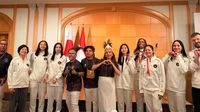
The vibrant cultural heritage of Indonesia’s easternmost region resonated across international borders as a delegation of prominent Papuan artists took center stage in Japan to rally behind national athletes competing in the Asian Games Aichi-Nagoya 2026. This cultural diplomacy initiative, heavily backed by private sector sponsorship, blended the universal language of music with the fierce competitive spirit of a major multisport quadrennial event, setting a tone of unity and collective ambition for the Indonesian contingent.
The arrival of the Indonesian delegation in Nagoya marked the official commencement of the nation’s logistical and psychological preparation for the continental games. Amidst the formalities of welcoming athletes, coaches, and officials, the atmosphere was charged with emotional resonance when a powerful rendition of the Indonesian national anthem, "Indonesia Raya," filled the air, led by a lineup of celebrated artists hailing from Papua.
Harmonies of the Archipelago: The Nagoya Performances
The musical delegation featured notable performers who have built substantial reputations within the Indonesian entertainment industry: Nowela Mikhelia, Bona Pascal, Nobo Idol, and Boii Soa Soa. These artists brought a distinct regional flavor to the official welcoming ceremonies held upon the contingent’s arrival on Friday, September 18.
The performances extended into the following day, Saturday, September 19, during the high-profile inauguration of Rumah Indonesia (The Indonesian House) in Nagoya. This cultural hub serves as a central gathering place for athletes, diplomats, and supporters throughout the duration of the games. The inauguration was attended by high-ranking officials, including Minister of Youth and Sports Erick Thohir, Chef de Mission (CdM) of the Indonesian Team for the Asian Games 2026 Todotua Pasaribu, and the Ambassador of the Republic of Indonesia to Japan, Nurmala Kartini P Sjahrir, alongside numerous athletes and supporting officials.
Against this backdrop of official state representation, the Papuan musicians delivered a curated setlist that seamlessly blended national anthems with traditional and contemporary Papuan compositions. The fusion of diverse musical traditions served as an artistic manifestation of the nation’s foundational motto, Bhinneka Tunggal Ika (Unity in Diversity), projecting a cohesive image of Indonesia to the international community gathered in Aichi Prefecture.
Corporate Sponsorship and the Empowerment of Regional Talent
The cross-continental journey of these artists was made possible through the strategic support of PT Freeport Indonesia (PTFI), a major mining enterprise operating within the region. By facilitating this cultural outreach, the corporation sought to bridge the geographical and infrastructural gaps that often limit regional talents from accessing global platforms.
PTFI President Director Tony Wenas emphasized that the initiative was designed to amplify the sense of collective national solidarity while simultaneously validating the artistic capabilities of Papua’s youth. According to Wenas, the participation of these musicians underscores a broader corporate and social commitment to fostering regional potential beyond industrial contributions.
"We take immense pride in their presence here, carrying the spirit of Papua while extending unwavering support to the Indonesian Team as they fight for glory at the Asian Games," Wenas stated. He further elaborated on the untapped potential harbored within the region, noting that systemic exposure is crucial for the holistic development of local creative economies.
"Papua possesses an abundance of talent with remarkable works and profound potential. We aim to help open doors so they can gain novel experiences, showcase their capabilities, and project the distinct identity of Papua onto a much wider stage," Wenas added.
Athlete Morale and the Cultural Significance of the Outreach
For the athletes enduring rigorous training regimens and psychological pressures associated with international athletic competition, the infusion of cultural familiarity serves as a vital morale booster. The presence of artists who share their national identity—yet bring a distinct regional vibrancy—helps cultivate a home-away-from-home environment within the host nation.
Chef de Mission Todotua Pasaribu highlighted the unique dynamic that the musicians introduced to the Indonesian camp in Nagoya. By integrating cultural performance with athletic support, the delegation successfully combined soft power diplomacy with competitive motivation.
"We are proud to witness Papuan musicians present in Nagoya, carrying the rich cultural tapestry of Papua alongside the overarching spirit of Indonesia. Their presence introduces a distinct nuance and significantly elevates the morale of the Indonesian Team as they battle in the Asian Games," Pasaribu remarked.
The sentiment was echoed by the artists themselves. Nowela Mikhelia, reflecting on the milestone in her professional career, described the assignment not merely as a performance engagement, but as a patriotic duty and a transformative personal experience.
"Standing here, representing Papua, and singing ‘Indonesia Raya’ to motivate Indonesian athletes is an immensely profound experience for me. We traveled from Papua carrying prayers and unwavering support for Indonesia," Nowela said.
She extended her gratitude to the corporate sponsors for materializing an ambition that bridges regional arts with international sports diplomacy. "Thank you to Freeport Indonesia for unlocking this opportunity for us. I am proud to bring the colors of Papua to Japan while encouraging Team Indonesia. It is my sincere hope that an increasing number of Papuan talents will secure opportunities to display their works and proficiencies to the global audience."
Broader Implications for Sports Diplomacy and Cultural Integration
The integration of regional arts into international sporting delegations reflects a sophisticated evolution in how nations project their identity abroad. Major multi-sport events such as the Asian Games transcend mere athletic competition; they function as geopolitical and cultural showcases where host nations and participating countries project narratives of national cohesion, diversity, and modernity.
By highlighting Papuan artists on an international stage in Japan, the Indonesian delegation effectively utilized cultural diplomacy to reinforce domestic inclusivity. Papua remains a region of significant strategic, economic, and cultural importance to Indonesia. Showcasing its indigenous artistic excellence in front of international spectators, diplomats, and global media sends a deliberate message regarding cultural integration and the celebration of minority identities within the broader national framework.
Furthermore, initiatives of this nature stimulate discourse surrounding the economic and social development of remote regions through the creative arts. As globalization bridges distant markets, providing indigenous artists with access to international audiences enhances the commercial viability of regional creative industries, ranging from music production to traditional textiles and performance arts.
Looking Ahead: The Road Through Aichi-Nagoya 2026
As the Asian Games Aichi-Nagoya 2026 progress, the foundational momentum established during the opening days in Nagoya remains critical for the psychological and logistical readiness of the Indonesian contingent. The fusion of athletic ambition and cultural representation encapsulated by the presence of Nowela, Bona Pascal, Nobo Idol, and Boii Soa Soa establishes a high benchmark for community engagement throughout the duration of the games.
With athletes now deeply entrenched in their respective competition schedules, the echoes of "Indonesia Raya" performed at the inauguration of Rumah Indonesia continue to serve as a unifying anchor. Through the collaborative efforts of state officials, corporate entities, and indigenous artists, the Indonesian delegation has positioned itself not only as a contender for athletic medals, but as a vibrant ambassador of cultural richness on the global stage.
Related posts: