Sugiono Emerging as Ideal Choice for Vice Presidency Following Gibran Rakabuming Raka Resignation Amid Ongoing MPR Deliberations

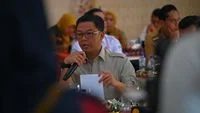
The political landscape of Indonesia has entered a period of profound transition and intense scrutiny following the unexpected resignation of Vice President Gibran Rakabuming Raka on November 12. As the nation grapples with the sudden vacancy at the second-highest office in the executive branch, political stakeholders, legislative bodies, and civic organizations have actively engaged in discussions regarding the most suitable successor to complete the current administrative term alongside President Prabowo Subianto. Among the prominent names circulating within political circles and favored by various civic groups is Sugiono, the Secretary-General of the Great Indonesia Movement (Gerindra) Party and current Coordinating Minister for Human Development and Cultural Affairs.
The endorsement of Sugiono gained significant momentum following a public statement released by Wawan Sanjaya, Chairman of the Barisan Jaga (Baja) Indonesia volunteer network. Sanjaya highlighted Sugiono’s unique combination of extensive administrative experience, deep political acumen, and unwavering loyalty to the state and the ruling administration. According to Sanjaya, these attributes position Sugiono as an exceptionally qualified candidate capable of providing immediate stability, continuity, and effective governance during a critical juncture for the republic. While the final constitutional authority to select and inaugurate a replacement vice president rests entirely with the People’s Consultative Assembly (MPR RI), the growing public discourse surrounding potential candidates underscores the high stakes involved in filling the vacant post.
Chronology of Events Leading to the Vice Presidential Vacancy
The sequence of events leading up to the current deliberations began in mid-November, catching both political analysts and the general public by surprise. On November 12, Gibran Rakabuming Raka formally submitted his resignation from the office of the Vice President of the Republic of Indonesia. While official communications cited personal and administrative reasons for his departure, the sudden exit of the nation’s second-highest-ranking official immediately triggered constitutional protocols outlined in the 1945 Constitution of the Republic of Indonesia.
Under Article 8 of the Indonesian Constitution, should the presidency and vice presidency simultaneously become vacant, or if the vice presidency alone is vacated, specific legislative mechanisms must be set into motion. In the event of a vice presidential vacancy, the President is mandated to propose candidates to the MPR RI. Subsequently, the legislative assembly is tasked with convening a plenary session to debate, verify, and ultimately vote on the candidates within a stipulated constitutional timeframe.
Following the formal receipt of Gibran’s resignation, President Prabowo Subianto initiated consultations with key coalition leaders, legal experts, and legislative heads to determine the most seamless path forward. Recognizing the imperative to maintain unbroken executive oversight and public confidence, the executive branch expedited the candidate selection process. On November 25, official channels confirmed that President Prabowo had put forward two distinct names to the MPR RI for consideration: Minister of Agriculture Amran Sulaiman and Coordinating Minister for Human Development and Cultural Affairs Sugiono. These nominations marked the official commencement of the legislative vetting process, setting the stage for a decisive plenary session scheduled for December 11, during which the final vote will take place.
Background and Profile of Sugiono
Sugiono has long been a fixture within Indonesian politics and military-adjacent administrative circles, earning a reputation as a disciplined strategist and a trusted confidant of President Prabowo Subianto. Born in Takengon, Aceh, Sugiono pursued his education at the prestigious Taruna Nusantara Military High School, an institution renowned for cultivating future military and political leaders. He later continued his studies abroad, earning a degree in Norwich University in Vermont, United States, before returning to Indonesia to dedicate his career to public service and political organization.
Before rising to prominent ministerial positions, Sugiono played a foundational role in the establishment and growth of the Gerindra Party. Serving as the Secretary-General of the party, he managed complex party infrastructure, coordinated legislative campaigns, and oversaw internal party consolidation. His organizational capabilities were further demonstrated during numerous national legislative and presidential campaigns, where he acted as a core strategist coordinating grassroots networks, volunteer organizations, and coalition partners.
In the executive sphere, Sugiono’s appointment as the Coordinating Minister for Human Development and Cultural Affairs placed him at the helm of vital social policies, poverty alleviation programs, and educational initiatives. Observers note that his dual background in military-style discipline and legislative administration equips him with a comprehensive understanding of both bureaucratic machinery and high-level policy formulation. Proponents argue that this extensive background makes him exceptionally well-prepared to step into the vice presidency without requiring an extended adaptation period.
Civic and Political Reactions to the Succession Process
The proposal of Sugiono and Amran Sulaiman to the MPR RI has generated widespread reactions across the political spectrum, involving political parties, civil society organizations, and academic institutions. The endorsement from the Barisan Jaga (Baja) Indonesia volunteer network represents a broader sentiment among various grassroots organizations that value administrative continuity and proven loyalty to the administration’s overarching vision.
Wawan Sanjaya, speaking on behalf of Baja Indonesia, emphasized that personal and professional interactions with Sugiono reveal a leader committed to institutional discipline and national development. "Pak Sugiono is a figure whose journey and capacity I have witnessed firsthand. He possesses experience, loyalty, and a strong leadership character," Sanjaya stated in his written release on November 25. He further elaborated that Sugiono has served as a mentor within political circles, emphasizing the values of dedication, operational discipline, and public service.
At the same time, Sanjaya and other civic leaders have been careful to emphasize respect for constitutional boundaries. Recognizing that the power to select a vice president is vested exclusively in the MPR RI, civil society groups have underscored the importance of adhering to legal and democratic mechanisms. "If asked about the figure we deem appropriate, Pak Sugiono certainly possesses many of the qualities needed to accompany the President. However, the final decision remains the authority of the MPR RI. Whatever the process and the result, we respect the constitutional mechanism," Sanjaya added.
Meanwhile, other political factions within the House of Representatives (DPR) and the MPR are currently conducting internal caucuses to evaluate both nominees. While coalition partners generally express support for the President’s shortlisted candidates, opposition parties and independent legislators have stressed the necessity of rigorous vetting, particularly regarding the nominees’ policy platforms, commitment to anti-corruption measures, and vision for national economic and social development.
Verification and the Upcoming MPR Plenary Session
With the official submission of the candidates to the MPR RI, the legislative body has entered a critical phase of administrative verification and background checks. The leadership of the MPR, in coordination with faction heads, has established a dedicated verification committee tasked with reviewing the qualifications, legal standing, and administrative readiness of both Sugiono and Amran Sulaiman.
This verification process involves assessing compliance with all statutory requirements mandated by the Election Law and the Constitution. These requirements include proof of tax compliance, public financial disclosures, background checks conducted by state intelligence and law enforcement agencies, and evaluations of past public service records. The committee is expected to compile a comprehensive report to be presented during the legislative recess leading up to the final vote.
The culmination of this constitutional process is scheduled for December 11, during a special MPR Plenary Session. On this day, legislators from across the political spectrum will cast their votes to determine the successor to Gibran Rakabuming Raka. The selection will require a majority vote in accordance with assembly rules, after which the newly elected Vice President will take the oath of office before the assembly, formally restoring the executive leadership team to its full complement.
Implications for National Stability and Governance
The selection of a new vice president carries significant implications for the stability, policy direction, and international credibility of the Indonesian government. In a parliamentary and presidential system like Indonesia’s, the vice presidency serves not only as a constitutional safeguard in the event of executive incapacity but also as an active managerial partner responsible for overseeing key national programs, bureaucratic reform, and regional coordination.
From an economic perspective, financial markets and international investors closely monitor transitions in high-level leadership to gauge policy predictability. Analysts suggest that the potential elevation of a seasoned administrator like Sugiono—who possesses deep familiarity with the current administration’s strategic blueprints—would signal continuity and mitigate risks of policy disruption. His background in coordinating human development portfolios aligns directly with ongoing national priorities, including healthcare reform, educational enhancement, and the reduction of stunting and poverty.
Politically, the transition offers the ruling coalition an opportunity to reinforce internal cohesion. President Prabowo Subianto’s administration relies on a broad-based coalition spanning diverse political ideologies. Navigating the vice presidential succession smoothly through the MPR RI will demonstrate the resilience of Indonesia’s democratic institutions and the maturity of its legislative processes.
As the countdown to the December 11 plenary session continues, all eyes remain fixed on the legislative assembly. Whether the choice ultimately falls on Sugiono or Amran Sulaiman, the decision will mark a defining moment in the contemporary political history of the nation, setting the tone for governance for the remainder of the presidential term.