Queen Máxima Concludes Pivotal Indonesia Visit as UN Special Advocate, Championing Financial Inclusion for Sustainable Development

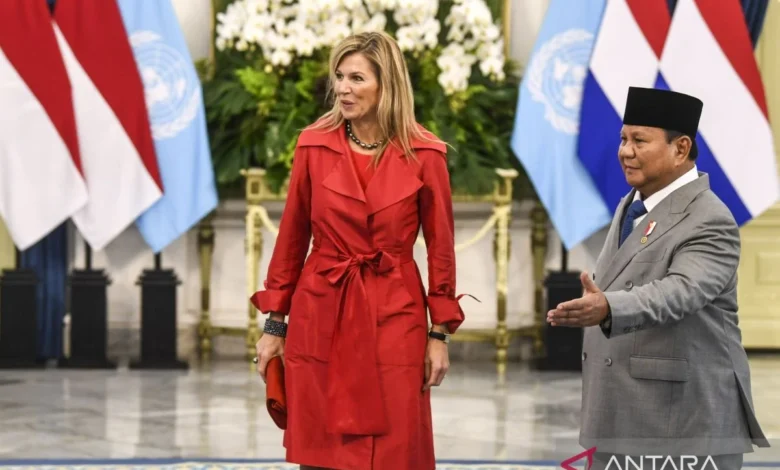
Jakarta, Indonesia – Her Majesty Queen Máxima of the Netherlands recently concluded a significant working visit to Indonesia, spanning from Monday, November 24, to Thursday, November 27, 2025. This was not a state visit in her capacity as Queen of the Netherlands, but rather a dedicated mission undertaken as the United Nations Secretary-General’s Special Advocate (UNSGSA) for Inclusive Finance for Development. Her comprehensive agenda focused on promoting financial health, resilience, and inclusive financial systems across the Indonesian archipelago, underscoring the critical role of accessible financial services in fostering sustainable development and improving livelihoods.
The Mandate of the UNSGSA: A Global Call for Financial Inclusion
Queen Máxima’s role as UNSGSA, a position she has held since 2009, involves advocating globally for financial inclusion. This mandate is rooted in the understanding that access to affordable, useful, and safe financial products and services—such as credit, savings, insurance, and payments—is a powerful tool for poverty reduction, economic empowerment, and achieving the Sustainable Development Goals (SDGs). Her work primarily involves fostering collaboration among governments, regulators, the private sector, and international development organizations to advance national financial inclusion strategies. The UNSGSA advises on policy, shares best practices, and convenes leaders to address challenges and accelerate progress. Her visits typically involve deep dives into local contexts, engaging with beneficiaries, policymakers, and innovators to understand the on-the-ground realities and identify scalable solutions.
Financial inclusion is directly linked to at least eight of the seventeen SDGs, including SDG 1 (No Poverty), SDG 2 (Zero Hunger), SDG 3 (Good Health and Well-being), SDG 5 (Gender Equality), SDG 8 (Decent Work and Economic Growth), SDG 9 (Industry, Innovation, and Infrastructure), SDG 10 (Reduced Inequalities), and SDG 17 (Partnerships for the Goals). By facilitating financial access, individuals and small businesses can better manage their finances, invest in education and health, start and expand enterprises, and cope with economic shocks, thereby building greater resilience and contributing to broader economic growth.
Indonesia’s Journey Towards Financial Inclusivity
Indonesia, as the world’s fourth most populous nation and a sprawling archipelago, presents both unique challenges and immense opportunities for financial inclusion. Despite significant progress in recent years, a substantial portion of its population, particularly those in remote areas, women, and micro, small, and medium-sized enterprises (MSMEs), still face barriers to accessing formal financial services. According to recent data from the Financial Services Authority (OJK) and Bank Indonesia (BI), while the national financial inclusion rate has steadily increased, there remain pockets of the unbanked and underbanked, particularly among lower-income segments and in rural regions. The government, through its National Financial Inclusion Strategy (SNKI), aims to further boost this rate, leveraging digital technology and innovative models to reach underserved populations. Initiatives like agent banking (Laku Pandai), digital payment platforms (QRIS), and microfinance programs have been instrumental in expanding reach.
Queen Máxima’s repeated engagements with Indonesia underscore the country’s strategic importance in the global financial inclusion agenda. Her visits serve not only to highlight existing progress but also to catalyze further action, encourage policy reforms, and mobilize resources from both public and private sectors. Her presence often brings international attention to local innovations and helps connect Indonesian stakeholders with global best practices and partnerships.
A Detailed Chronology of the Visit: From Local Innovations to High-Level Dialogue
The four-day visit, meticulously planned to cover a spectrum of financial inclusion aspects, commenced on Monday, November 24, with preparatory meetings, setting the stage for a busy itinerary. The core engagement period ran from Tuesday to Thursday, November 25-27, 2025.
Tuesday, November 25: Championing Grassroots Empowerment in Central Java
The first day of substantive engagements saw Queen Máxima travel to Central Java, focusing on the empowerment of women and MSMEs, which are vital engines of the Indonesian economy.
Her day began in Sragen Regency, where she visited a garment factory. This visit aimed to understand the financial realities of factory workers, many of whom are women, and to observe how access to formal financial services could improve their economic well-being and resilience. Discussions likely centered on wage payment systems, access to savings accounts, micro-credit for household needs, and basic financial literacy programs offered by employers or local financial institutions. The insights gained from such visits are crucial for developing policies that support the financial health of industrial workers.
Following this, Queen Máxima proceeded to Kampung Batik Laweyan in Solo City, a renowned traditional batik village. Here, she engaged with local batik artisans and small business owners, predominantly women, to delve into their experiences with financial health. The discussions likely covered challenges in accessing capital for business expansion, managing cash flow, using digital payment systems for transactions, and securing micro-insurance for their crafts and livelihoods. Kampung Batik Laweyan serves as a compelling case study for how traditional sectors can integrate modern financial tools to sustain and grow their heritage businesses, while also highlighting the importance of tailored financial products for creative industries.
The day concluded with Queen Máxima attending a Women’s World Banking event at the majestic Pura Mangkunegaran in Solo. Women’s World Banking is a global non-profit organization dedicated to designing and investing in financial solutions for women. At this event, she engaged in vibrant discussions with young entrepreneurs, university students, and seasoned business owners. The conversations revolved around their practical experiences with various financial products and services, including digital wallets, micro-loans, and online banking. This interaction provided a direct conduit for feedback on the effectiveness of existing financial instruments and identified gaps where innovative solutions are still needed to better serve women’s financial needs. Her presence underscored the global commitment to closing the gender gap in financial access and fostering women’s economic leadership.
Wednesday, November 26: Fostering Partnerships for Sustainable Development
The second day shifted focus towards policy dialogue, private sector engagement, and innovative sustainable financing models, primarily in Jakarta and its satellite city, Bekasi.
The morning commenced with a visit to the local United Nations office in Jakarta, where Queen Máxima participated in a roundtable discussion with various development organizations. This high-level dialogue provided a platform to discuss strategic approaches, coordinate efforts, and identify collaborative opportunities to accelerate financial inclusion goals in Indonesia. The conversation likely addressed challenges such as digital literacy, regulatory frameworks, and the scaling up of successful programs, drawing on the collective expertise of UN agencies and their partners operating in the country.
Subsequently, she visited the International Finance Corporation (IFC), a member of the World Bank Group. The IFC plays a crucial role in promoting private sector development in emerging markets by providing investment, advisory services, and asset management. Her discussions with IFC officials focused on the development of loans and financial products that specifically contribute to economic growth and enhance financial health, particularly for MSMEs. This engagement highlighted the private sector’s indispensable role in driving financial inclusion through market-based solutions and responsible investments.
A significant part of the day was dedicated to a visit to the Gran Harmoni Cibitung subsidized housing complex in Bekasi, West Java. This complex provides low-emission homes for low and middle-income communities, addressing the critical need for affordable housing. Queen Máxima visited a resident’s home and interacted with representatives of first-time homebuyers in the complex. This personal engagement offered insights into the financial journey of individuals striving for homeownership and the challenges they face. A particularly noteworthy stop was at a waste bank operating within the complex. This innovative initiative allows residents to pay their housing installments by depositing sorted waste, effectively turning trash into a financial asset. Queen Máxima expressed appreciation for this groundbreaking approach, which not only promotes financial discipline and access to homeownership but also contributes to environmental sustainability. She also observed the process of signing property sale and purchase agreements for dozens of prospective homeowners, witnessing firsthand the culmination of their financial planning and aspirations.
The day concluded with a visit to Deloitte Indonesia in the afternoon. Here, Queen Máxima engaged with employers to discuss their role in contributing to the financial health of their employees and clients. The conversation likely explored initiatives such as financial literacy programs in the workplace, employee savings schemes, and access to affordable financial products, recognizing that employers can be powerful agents in fostering financial well-being.
Thursday, November 27: High-Level Dialogue and Future Directions
The final day of Queen Máxima’s visit was marked by high-level engagements, solidifying partnerships and charting future directions for financial inclusion in Indonesia.
Her day began with participation in a crucial financial literacy agenda alongside representatives from Indonesia’s key financial regulatory bodies: the Otoritas Jasa Keuangan (OJK), Bank Indonesia (BI), and the Ministry of Finance (Kemenkeu) RI. This meeting underscored the importance of financial education as a cornerstone of effective financial inclusion. Discussions likely revolved around national strategies for improving financial literacy, leveraging digital platforms for broader outreach, and developing targeted educational programs for different segments of the population. Collaborative efforts between these institutions are vital for creating a robust and inclusive financial ecosystem.
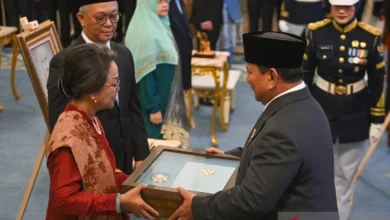
The culminating event of her visit was a meeting with President Prabowo Subianto at the Merdeka Palace in Jakarta. During this significant encounter, Queen Máxima conveyed her key findings, observations, and impressions from her engagements across Indonesia. The meeting, which included a private one-on-one discussion and a luncheon, provided an opportunity to discuss the broader strategic partnership between the Netherlands and Indonesia, with a particular focus on advancing financial inclusion as a critical component of bilateral cooperation and Indonesia’s national development agenda. She likely shared insights on successful local innovations and offered recommendations for policy enhancements and future collaborative initiatives to further strengthen Indonesia’s financial health landscape. President Prabowo, in turn, would have reaffirmed Indonesia’s commitment to financial inclusion and expressed appreciation for the UNSGSA’s continued advocacy and support.
A Legacy of Engagement: Máxima’s Enduring Commitment to Indonesia
This recent visit marks Queen Máxima’s fifth trip to Indonesia in her capacity as the UNSGSA. Her previous visits as the UN Special Advocate occurred in 2012, 2016, and 2018, demonstrating a consistent and long-term commitment to the country’s financial inclusion journey. Furthermore, she previously accompanied King Willem-Alexander during a state visit to Indonesia in 2020, highlighting the strong diplomatic ties between the two nations. This sustained engagement underscores not only Indonesia’s pivotal role in global financial inclusion efforts but also the deep appreciation for Queen Máxima’s dedicated advocacy and expertise.
Born on May 17, 1971, Queen Máxima Zorreguieta Cerruti married King Willem-Alexander in 2002 in Amsterdam, Netherlands. Her background in international finance and her passionate advocacy have made her a leading global voice for financial inclusion, driving tangible progress in many countries, including Indonesia.
Analysis and Implications: Catalyzing Future Growth
Queen Máxima’s latest visit to Indonesia carries significant implications for the country’s financial inclusion agenda. Her presence brings renewed international attention to the challenges and successes within Indonesia’s financial sector, potentially attracting further investment and technical assistance. The direct engagement with grassroots initiatives, such as the waste bank in Bekasi or the batik artisans in Solo, provides invaluable real-world data and showcases scalable models that could be replicated elsewhere.
The high-level meetings with OJK, BI, Kemenkeu, and President Prabowo are crucial for fostering policy alignment and securing political will for continued reforms. Her recommendations, informed by global best practices and local observations, can influence the development of more effective and inclusive financial policies. The discussions with the IFC and Deloitte also highlight the critical role of the private sector in developing innovative financial products and services, as well as in promoting employee financial well-being.
Despite the progress, challenges remain. These include improving digital literacy, particularly in rural and elderly populations, ensuring consumer protection in an increasingly digital financial landscape, and tailoring products to the diverse needs of MSMEs across various sectors. However, Queen Máxima’s persistent advocacy and the collaborative spirit fostered during her visits provide a strong impetus for Indonesia to overcome these hurdles and move closer to achieving universal financial inclusion, thereby empowering millions and contributing to a more equitable and prosperous society. The visit serves as a powerful reminder that financial inclusion is not merely an economic objective but a fundamental pillar of human dignity and sustainable development.