Fire Incident at PT Terra Drone Indonesia’s Kemayoran Facility Sparks Investigation into Lithium Battery Safety

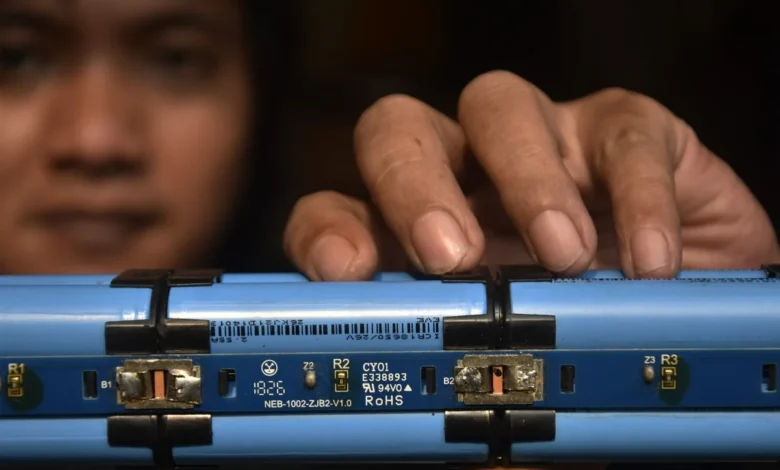
A significant fire incident occurred at the premises of PT Terra Drone Indonesia, located in the bustling Kemayoran district of Central Jakarta, on Tuesday, December 9, prompting a swift response from emergency services and initiating a comprehensive investigation into the cause. Initial assessments by the Central Jakarta Metro Police (Polres Metro Jakpus) suggest that the blaze originated from a lithium battery, specifically one associated with drone technology, which reportedly ignited on the ground floor of the facility. This incident underscores the escalating risks associated with advanced battery technologies, particularly lithium-ion cells, which are increasingly prevalent in a wide array of consumer and industrial applications, including the rapidly expanding drone sector. The rapid spread of the fire, despite early attempts by employees to contain it, highlights critical safety considerations for businesses handling high-energy density storage devices.
Chronology of the Incident and Emergency Response
The alarm was raised at approximately 12:30 PM Western Indonesian Time (WIB) when employees at the PT Terra Drone Indonesia facility observed smoke and flames emanating from a battery storage area on the ground floor. According to statements from Kombes Pol Susatyo Purnomo Condro, the Chief of the Central Jakarta Metro Police, initial reports indicated that a drone battery, presumed to be of the lithium-ion type, had combusted. Witness accounts suggest that the fire started suddenly, producing intense heat and smoke almost immediately.
Employees, trained in basic emergency procedures, reportedly attempted to extinguish the nascent fire using available fire suppression equipment, such as fire extinguishers. However, their efforts were quickly overwhelmed by the ferocity and rapid propagation of the flames. The ground floor of the facility, identified as a primary storage area for various components and potentially other flammable materials, provided ample fuel for the fire to quickly escalate. This rapid escalation made manual containment impossible, necessitating an immediate call to the Jakarta Fire and Rescue Department (Damkar DKI Jakarta).
Upon receiving the emergency call, multiple units from the Jakarta Fire and Rescue Department were dispatched to the scene in Kemayoran. Firefighters arrived within minutes, facing a well-developed fire that had already begun to spread beyond the initial point of ignition. The strategic location of the facility within a dense urban area presented immediate challenges, requiring coordinated efforts to ensure public safety and prevent the fire from spreading to adjacent buildings. Fire crews systematically worked to contain the blaze, deploying hoses and using specialized equipment to combat the intense heat. The operation involved a significant deployment of personnel and apparatus, with firefighters working tirelessly for several hours to bring the situation under control and ensure all hotspots were extinguished. Once the fire was fully contained and suppressed, investigators from both the police and the fire department commenced their preliminary assessments to determine the precise origin and cause of the incident, focusing on the suspected lithium battery ignition.
Background of PT Terra Drone Indonesia and the Drone Industry
PT Terra Drone Indonesia is a prominent player in the rapidly evolving Indonesian drone technology sector. As part of the global Terra Drone Corporation, a leading provider of industrial drone solutions, the Indonesian subsidiary specializes in offering advanced unmanned aerial vehicle (UAV) services for various applications, including infrastructure inspection, surveying, mapping, agriculture, and surveillance. Their operations heavily rely on sophisticated drone hardware, which inherently involves the use of high-performance lithium-ion batteries to power these complex aerial systems. These batteries are crucial for extended flight times, payload capacity, and overall operational efficiency.
The facility in Kemayoran, Central Jakarta, serves as a key operational hub for the company, likely housing offices, drone assembly and maintenance workshops, and critical storage areas for equipment, including a substantial inventory of drone batteries. Kemayoran itself is a strategic location, known for its mix of commercial, residential, and industrial activities, making any industrial incident in the area a matter of public concern due to potential proximity to populated zones.
Indonesia’s drone industry has experienced robust growth over recent years, driven by increasing adoption across various sectors. From assisting in disaster relief efforts to enhancing efficiency in palm oil plantations and monitoring urban development, drones have become indispensable tools. This expansion, however, brings with it an increased demand for reliable and powerful energy sources, predominantly lithium-ion batteries. The widespread use of these batteries, while enabling technological advancements, simultaneously elevates the importance of stringent safety protocols for their handling, storage, charging, and disposal, a factor critically highlighted by the incident at Terra Drone Indonesia.
Official Responses and Ongoing Investigations
Following the successful containment of the fire, law enforcement and fire safety authorities immediately launched a full-scale investigation into the incident. Kombes Pol Susatyo Purnomo Condro reiterated the police’s focus on the lithium battery as the primary suspected cause, noting that forensic teams would be deployed to meticulously examine the scene. This forensic investigation will involve collecting evidence, analyzing burn patterns, and potentially retrieving fragments of the suspected battery to ascertain the exact mechanism of ignition. Witness statements from employees who were present during the initial stages of the fire are also being gathered to build a comprehensive timeline and understanding of events leading up to the blaze. CCTV footage, if available, will be crucial in providing visual evidence of the incident’s onset and progression.
The Jakarta Fire and Rescue Department, beyond their immediate firefighting efforts, is also conducting an internal review of the incident. This includes assessing the response time, the effectiveness of their operational tactics, and identifying any potential lessons learned for future industrial fires involving specialized technologies. Fire safety inspectors will also be evaluating the facility’s adherence to fire safety regulations, including the presence and functionality of fire suppression systems, emergency exits, and the overall storage protocols for hazardous materials like lithium batteries.
PT Terra Drone Indonesia has issued a preliminary statement expressing regret over the incident and confirming their full cooperation with all investigating authorities. While specific details regarding the extent of the damage or the immediate impact on operations were not immediately available, the company emphasized its commitment to employee safety and its intention to conduct a thorough internal investigation. This internal probe will likely focus on reviewing their battery handling and storage procedures, assessing equipment maintenance logs, and reinforcing safety training for all personnel. The company is expected to provide further updates as more information becomes available and the full scope of the damage and operational disruption becomes clear.
The Intricacies and Dangers of Lithium-Ion Batteries
Lithium-ion batteries are ubiquitous in modern technology, powering everything from smartphones and laptops to electric vehicles and, critically, drones. Their popularity stems from their high energy density, lightweight design, and long cycle life. However, this powerful technology also carries inherent risks, primarily the potential for "thermal runaway," a phenomenon implicated in numerous battery-related fires and explosions globally.
Thermal runaway occurs when the internal temperature of a lithium-ion cell rapidly and uncontrollably increases. This surge in temperature triggers a chain reaction of exothermic chemical processes within the battery. As the temperature rises, it can lead to the breakdown of the electrolyte, a highly flammable organic solvent, and the release of highly pressurized gases. If the battery’s outer casing cannot withstand this internal pressure, it can rupture, leading to an explosion, the forceful expulsion of hot gases and molten materials, and subsequent fire. Several factors can precipitate thermal runaway:
-
Overcharging and Over-discharging:
- Overcharging: Pushing more electrical energy into a battery than its design capacity allows can cause lithium plating on the anode, generate excessive heat, and destabilize the internal chemistry. Using non-standard or faulty chargers can bypass safety mechanisms designed to prevent overcharging, significantly elevating risk.
- Over-discharging: Draining a battery below its minimum safe voltage can lead to irreversible damage to the cell’s internal structure, potentially causing copper dissolution and subsequent internal short circuits when the battery is recharged, which can then trigger thermal runaway.
-
Physical Damage:
- Impacts from drops, punctures, crushing, or even minor structural deformities can compromise the delicate internal separators between the anode and cathode. This can lead to an internal short circuit, generating immediate heat and initiating thermal runaway. External pressure or stress on battery packs, especially during storage or transport, can also contribute to this risk.
-
Manufacturing Defects:
- Even high-quality batteries can possess latent manufacturing flaws. These can include impurities in the cell materials, inconsistencies in electrode coating, or minute defects in the separator material. Such imperfections can lead to localized heating or microscopic internal short circuits that, over time or under stress, can escalate into full-blown thermal runaway. High-profile product recalls, such as those involving specific smartphone models in the past, often trace back to such manufacturing inconsistencies.
-
Exposure to High Temperatures:
- Storing or operating lithium-ion batteries in environments with extreme ambient temperatures, such as inside a hot car or in direct sunlight, can significantly elevate their internal temperature beyond safe operating limits. This external heat accelerates the degradation of internal components and can directly trigger thermal runaway without any internal fault, as the battery’s cooling mechanisms are overwhelmed.
-
Aging and Degradation:
- Over time and repeated charge-discharge cycles, the chemical components within lithium-ion batteries degrade. This degradation can lead to increased internal resistance, reduced capacity, and a higher propensity for internal short circuits or localized heating, making older batteries more susceptible to thermal events.
Globally, incidents involving lithium-ion battery fires have been on the rise, mirroring the increasing adoption of these technologies. From e-scooter fires in apartments to large-scale incidents in energy storage facilities, the risks are well-documented. Organizations like the National Fire Protection Association (NFPA) in the United States and various European safety bodies have published extensive guidelines and warnings regarding the safe handling and storage of these batteries, emphasizing the need for robust safety protocols in both consumer and industrial settings.
Preventative Measures and Best Practices for Lithium-Ion Battery Safety
Given the inherent risks, rigorous adherence to safety protocols is paramount for any entity handling lithium-ion batteries. While the technology is generally safe when properly managed, the consequences of a mishap can be severe. The following preventative measures and best practices are essential for mitigating the risk of thermal runaway and ensuring safe operations:
- Use Approved Chargers and Equipment: Always use chargers specifically designed and approved for the battery type in question. Non-standard or damaged chargers can deliver incorrect voltage or current, leading to overcharging or excessive heat generation.
- Avoid Overcharging and Over-discharging: Monitor charging processes and disconnect batteries once fully charged. Avoid leaving batteries on charge indefinitely. Similarly, do not drain batteries completely; most manufacturers recommend keeping them within a certain charge range (e.g., 20-80%) for optimal longevity and safety.
- Proper Storage Conditions: Store batteries in a cool, dry, well-ventilated area, away from direct sunlight, heat sources, and flammable materials. Ideal storage temperatures are typically between 15°C and 25°C. Avoid extreme hot or cold environments.
- Regular Inspection for Damage: Routinely inspect batteries for any signs of physical damage, such as swelling, punctures, leaks, discoloration, or deformation. Any damaged battery should be immediately removed from service and handled with extreme caution.
- Use Fire-Resistant Storage: For industrial settings and large quantities of batteries, consider storing them in dedicated fire-resistant cabinets, enclosures, or rooms. These can help contain a fire if one occurs, preventing its spread.
- Maintain Adequate Ventilation: Ensure proper air circulation around batteries, especially during charging and storage, to dissipate any heat build-up.
- Implement Robust Fire Suppression Systems: Facilities storing or handling significant numbers of lithium-ion batteries should be equipped with appropriate fire detection and suppression systems, including smoke detectors, heat detectors, and potentially specialized suppression agents (e.g., specific dry chemical extinguishers or inert gas systems, as water can be less effective or even dangerous in certain lithium fires).
- Employee Training and Emergency Protocols: Provide comprehensive training to all personnel involved in handling, charging, and storing batteries. This training should cover proper procedures, hazard recognition, and emergency response protocols, including the correct use of fire extinguishers and evacuation procedures.
- Safe Disposal Practices: Never dispose of lithium-ion batteries in regular waste bins. They must be recycled through specialized programs that handle hazardous waste to prevent environmental contamination and potential fires in landfills.
- Regular Safety Audits: Conduct periodic safety audits of battery storage and handling areas to ensure compliance with all internal protocols and external regulations.
Broader Implications and Industry Impact
The incident at PT Terra Drone Indonesia carries broader implications for the rapidly expanding drone industry and other sectors heavily reliant on lithium-ion battery technology. It serves as a stark reminder of the critical need for continuous vigilance and adaptation of safety standards.
From a regulatory standpoint, such incidents often prompt a review of existing safety guidelines for the storage and handling of high-energy density batteries in commercial and industrial settings. Authorities, including national standardization bodies and ministries overseeing industrial safety, may consider tightening regulations or issuing updated advisories, particularly for companies operating with large inventories of these powerful cells. This could lead to stricter requirements for fire suppression systems, ventilation, storage containment, and mandatory safety training programs.
For PT Terra Drone Indonesia, the immediate aftermath will involve assessing the full extent of property damage, which could be substantial, and the potential impact on their operational capabilities. Business continuity plans will be tested, and the company will likely face insurance claims and potentially reputational challenges. Their response to the incident, including transparency in investigation and commitment to enhanced safety, will be crucial in maintaining client trust and market position.
The incident also casts a spotlight on the wider drone industry. While incidents are rare relative to the vast number of drones in operation, a high-profile fire can affect public perception and potentially lead to increased scrutiny from clients and the public regarding the safety of drone operations. This could spur further investment in safer battery technologies, such as solid-state batteries, which promise higher energy density with reduced flammability, a technology China and other nations are actively pursuing. The transition to such advanced, inherently safer power sources, as referenced in industry discussions about "new generation solid-state battery revolution," could mitigate future risks.
Ultimately, the fire at the Terra Drone Indonesia facility is a potent reminder that technological advancement must always be coupled with rigorous safety engineering and adherence to best practices. As our reliance on powerful portable energy sources grows, so too does the imperative for every organization and individual to understand and manage the inherent risks associated with lithium-ion batteries to prevent future incidents and ensure a safe technological future.
Related posts: