
The Complex Chemistry And Craft Of Coffee Extraction Navigating Pour Over And Immersion For The Perfect Brew
The Alchemy of Aroma: Mastering Pour Over and Immersion Coffee Extraction
Coffee extraction is a sophisticated interplay of chemistry and craft, a process by which desirable soluble compounds are dissolved from roasted coffee grounds into water. This delicate dance dictates the final flavor profile of the brewed beverage, transforming a simple bean into a complex sensory experience. Understanding the fundamental principles governing this dissolution is paramount for any aspiring barista or home brewer seeking the perfect cup. The process is driven by diffusion, where higher concentrations of dissolved solids in the coffee grounds lead to their movement into the lower concentration of the brewing water. The efficiency of this mass transfer is influenced by a multitude of variables, including water temperature, grind size, water-to-coffee ratio, and contact time. These parameters directly impact the extraction of different classes of soluble compounds, each contributing distinct characteristics to the final taste. Acids, for instance, are the first to extract, providing brightness and fruitiness, typically within the first 30 seconds of brewing. Sugars follow, contributing sweetness and body, and their extraction window extends for a longer period. Finally, less soluble compounds, such as melanoidins and caffeine, extract last, contributing bitterness, mouthfeel, and aroma. Over-extraction occurs when these desirable compounds are overshadowed by the excessive dissolution of undesirable bitter elements, leading to a harsh, astringent, or acrid taste. Conversely, under-extraction results in a weak, sour, or vegetal brew due to insufficient dissolution of sugars and other flavor precursors.
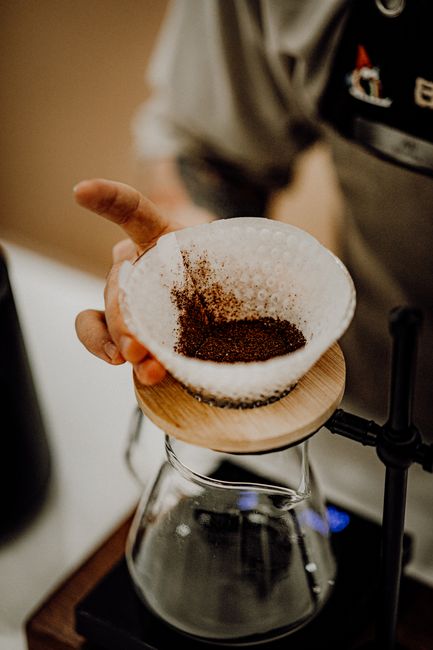
Pour-over brewing methods, epitomized by the V60, Chemex, and Kalita Wave, represent a dynamic approach to extraction, allowing for significant control over the brewing variables. The core principle involves slowly and deliberately pouring hot water over a bed of coffee grounds within a filter. This method facilitates a controlled flow rate, influencing contact time and the overall extraction trajectory. The filter itself plays a crucial role, allowing the dissolved solubles to pass through while retaining the solid coffee particles. The ceramic, glass, or plastic dripper’s design, often featuring ridged interiors, is engineered to manage airflow and prevent the filter paper from adhering too tightly, thereby ensuring consistent water flow and preventing channeling. Channeling, a phenomenon where water bypasses portions of the coffee bed, leading to uneven extraction, is a constant adversary in pour-over. Achieving an even saturation of the coffee bed is therefore critical. The initial "bloom" phase, where a small amount of water is poured to wet the grounds and allow for the release of trapped CO2, is vital. This degasses the coffee, preventing the formation of CO2 bubbles that can impede water flow and lead to channeling. Subsequent pours are typically delivered in a controlled, circular motion or in pulses, aiming to maintain a consistent bed depth and ensure all grounds are exposed to water. The water temperature is a critical factor; generally, between 90-96°C (195-205°F) is optimal, balancing efficient extraction with avoiding excessive bitterness. Lower temperatures will lead to under-extraction, while excessively high temperatures can scald the grounds and extract undesirable compounds. The grind size for pour-over is typically medium to medium-fine, resembling coarse sand. This size provides sufficient surface area for dissolution while allowing water to flow through at a manageable rate. A finer grind increases surface area and can lead to over-extraction or clogging, while a coarser grind can result in under-extraction and weak coffee. The water-to-coffee ratio, commonly between 1:15 and 1:17, influences the concentration of dissolved solids. A higher ratio yields a lighter, more diluted coffee, while a lower ratio produces a more concentrated brew. The skill in pour-over lies in the brewer’s ability to manage these variables dynamically, adjusting pour rate, pattern, and even grind size based on the coffee being brewed and the desired outcome. The visual cues – the color of the dripping coffee, the evenness of the coffee bed, and the aroma – are all important indicators for fine-tuning the process.
Immersion brewing, in contrast to pour-over, involves steeping coffee grounds directly in water for a specified period, allowing for a prolonged and uniform contact time. Methods like the French press, Aeropress (in its immersion configuration), and Clever Dripper fall under this category. In immersion, the entire coffee bed is saturated with water for the duration of the brew. This extended contact time allows for a more complete extraction of soluble compounds, often resulting in a richer, more full-bodied cup with a lower perceived acidity. The French press, a classic immersion brewer, relies on a metal filter to separate the grounds from the brewed coffee after steeping. The coarse grind typically used in French press brewing prevents excessive sediment from passing through the metal filter, contributing to a heavier mouthfeel. The immersion time for French press is usually around 4 minutes, but this can be adjusted. A longer steep time can lead to over-extraction and bitterness, while a shorter time will result in under-extraction and a weak brew. The water temperature is also crucial, with similar guidelines to pour-over (90-96°C). The Aeropress, a versatile brewer, can be used for both immersion and pressure-assisted brewing. In its immersion setup, the grounds are steeped in the chamber before being pressed through a filter, offering a cleaner cup than a traditional French press due to the finer paper filter. The Clever Dripper combines immersion with a controlled release, featuring a valve that allows the coffee to steep and then drain into a carafe when placed on a mug. This offers the full immersion extraction with the convenience of a filtered drip. The key advantage of immersion is its relative simplicity and consistency. Once the grind size, water temperature, and steep time are established, the process is less susceptible to user error compared to the manual pouring of pour-over. However, achieving optimal extraction still requires attention to detail. Over-extraction is a common pitfall with immersion, as the prolonged contact time can extract more bitter compounds. Careful attention to the steep time and grind size is essential to avoid this. The water-to-coffee ratio is also important, with typical ratios similar to pour-over. The immersion method, by its nature, generally extracts more of the coffee’s solids, leading to a bolder, more viscous brew. The choice between pour-over and immersion ultimately depends on personal preference and the desired flavor profile.
The intricate chemistry of coffee extraction reveals a spectrum of soluble compounds, each contributing to the final cup. Acids, primarily chlorogenic acids and their derivatives, are highly soluble and extract rapidly. They provide the desirable bright, fruity, and floral notes, but excessive extraction can lead to a sharp, unpleasant sourness. The initial 30-60 seconds of brewing are crucial for capturing these delicate acids. Sugars, including sucrose and various polysaccharides, are responsible for sweetness and contribute significantly to the body and mouthfeel. Their extraction is slower than acids but still relatively rapid, typically occurring within the first 1-2 minutes. Balancing sugar extraction is key to achieving a pleasant sweetness without overwhelming bitterness. Melanoidins, formed during the Maillard reaction in roasting, contribute to the coffee’s color, aroma, and bitterness. They are less soluble than acids and sugars and extract later in the brewing process. While moderate levels of melanoidins add complexity and depth, excessive extraction results in a harsh, unpalatable bitterness. Caffeine, another key soluble compound, is responsible for the stimulating effect of coffee and contributes a characteristic bitter flavor. Its extraction is also influenced by temperature and time, and it is generally extracted later in the brewing process. Lipids, or oils, are also present in coffee grounds and contribute to the mouthfeel and aroma. While not technically dissolved, they are suspended in the brewed coffee, especially in methods using metal filters like the French press. The challenge in extraction is to achieve a balanced dissolution of these compounds, targeting the sweet spot where acids and sugars are sufficiently extracted to provide brightness and sweetness, while avoiding the over-extraction of bitter melanoidins and caffeine. This balance is achieved by meticulously controlling the variables of brewing. Water temperature dictates the solubility of different compounds; higher temperatures increase the rate of dissolution for all compounds, but can also accelerate the extraction of bitter elements. Grind size directly impacts the surface area of the coffee grounds exposed to water, influencing the rate of diffusion. A finer grind increases surface area, leading to faster extraction, while a coarser grind slows it down. The water-to-coffee ratio determines the concentration of dissolved solids in the final brew. A higher ratio results in a more dilute beverage, while a lower ratio produces a more concentrated and intense flavor. Contact time is the duration for which water is in contact with the coffee grounds, directly affecting the extent of dissolution. Each brewing method manipulates these variables differently. Pour-over offers dynamic control over water flow and contact time, allowing for precise adjustments. Immersion provides a consistent and prolonged contact time, emphasizing the extraction of a wider range of solubles. Understanding these chemical principles allows the brewer to troubleshoot and optimize their extraction, whether through the meticulous artistry of pour-over or the steadfast simplicity of immersion, ultimately guiding them towards the perfect cup.
