
Trump Trial Supreme Court Delay
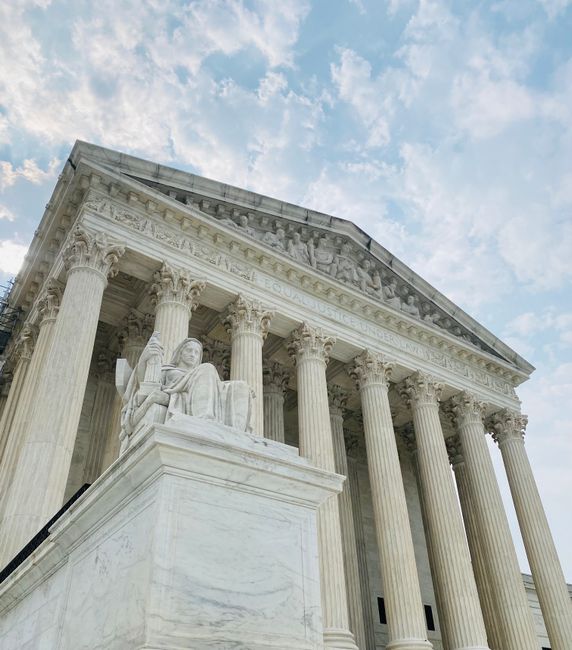
Trump Trial Supreme Court Delay: Navigating the Legal Labyrinth
The potential for a Supreme Court delay in cases involving former President Donald Trump has become a significant factor in the American legal and political landscape. These delays, whether stemming from procedural maneuvers, the Court’s own docket management, or the complex nature of the legal questions presented, can have profound implications for ongoing trials, election timelines, and public perception. Understanding the mechanisms by which such delays occur, the arguments for and against them, and their potential consequences is crucial for comprehending the current state of these high-profile legal battles. The Supreme Court, as the ultimate arbiter of federal law, holds the power to grant or deny certiorari, hear appeals, and interpret constitutional questions that can either accelerate or indefinitely postpone the resolution of cases.
One of the primary avenues for a Supreme Court delay in Trump-related trials is the granting of a writ of certiorari. This is the mechanism by which the Supreme Court agrees to review a lower court’s decision. For a case to reach the Supreme Court, a party must petition for certiorari, and at least four justices must agree to hear the case. This process itself can take months. If the Supreme Court grants certiorari in a case that is currently in progress in a lower court, it can effectively put that trial on hold pending the Supreme Court’s review. The complexity of the legal issues involved in cases pertaining to a former president, particularly those concerning executive privilege, presidential immunity, and the interpretation of federal statutes related to national security and election interference, are fertile ground for such petitions. The sheer volume of legal arguments and counter-arguments that can be raised in these intricate matters often necessitates a thorough and time-consuming appellate process, including the possibility of Supreme Court intervention.
The doctrine of presidential immunity, for instance, is a highly contentious and historically underdeveloped area of law. Trump’s legal team has invoked this doctrine in various contexts, arguing that actions taken during his presidency are shielded from criminal prosecution. The Supreme Court’s interpretation of this immunity could have far-reaching implications, not just for Trump, but for all future presidents. Given the gravity of such a constitutional question, it is highly probable that any decision by a lower court on presidential immunity would be appealed to the Supreme Court, thereby triggering a potential delay in related criminal proceedings. The Court’s deliberation process, including oral arguments, the writing of opinions, and potential concurrences or dissents, can extend for many months. This prolonged period of uncertainty directly impacts the ability of lower courts to proceed with trials.
Furthermore, the Supreme Court’s own docket is a significant factor. The Justices have discretion over which cases they choose to hear. They typically prioritize cases that present significant federal questions, conflicts between different circuit courts, or issues of national importance. Cases involving a former president, especially those with constitutional dimensions, are almost certain to meet the criteria for Supreme Court review if properly presented. The Court’s schedule is not infinite, and the sheer number of petitions it receives means that some cases will inevitably be delayed simply due to the Court’s capacity to hear and decide them within a given term. A presidential election year can further complicate this, as the Court may be hesitant to issue potentially divisive rulings close to an election, or conversely, may feel compelled to provide clarity on issues that impact the electoral process itself.
The strategic use of legal appeals by the defense in Trump’s various cases can also be a direct driver of Supreme Court delays. When faced with adverse rulings in lower courts, defense attorneys can file interlocutory appeals, seeking immediate review of specific decisions before a trial is concluded. While these appeals are not always granted, they can serve to halt proceedings. If such an appeal raises significant legal questions that the Supreme Court might find compelling, the possibility of certiorari increases, leading to further delays. This tactic, while a legitimate part of the legal process, can be particularly effective in cases where the stakes are high and the defense aims to prolong proceedings for as long as possible, perhaps to outlast political timelines.
The specific cases that could lead to Supreme Court involvement and subsequent delays include the federal charges related to the January 6th Capitol attack and efforts to overturn the 2020 election, as well as state-level prosecutions such as the Georgia election interference case and the New York hush-money trial. Each of these cases presents unique legal challenges that could necessitate Supreme Court review. For example, the federal cases raise questions about the scope of presidential power and the interpretation of statutes like the Presidential Records Act and the Election Interference Statute. The Georgia case involves novel applications of racketeering laws to alleged election interference. The New York case, while seemingly more straightforward, could still present avenues for appeal on matters of constitutional due process or the statute of limitations.
The potential consequences of Supreme Court delays are multifaceted. For the legal system, it can lead to a perception of paralysis or inequity if high-profile cases are perceived to be stalled indefinitely due to appeals or the Court’s own scheduling. For the public, prolonged legal battles can contribute to political polarization and a sense of unresolved justice, especially if the delays are seen as politically motivated. For the electoral process, the timing of any potential convictions or acquittals, or even the ongoing uncertainty of legal proceedings, could significantly influence public opinion and voting behavior. If a trial is delayed beyond a certain point, it could mean that a jury’s verdict or a judge’s ruling might not be delivered until after an election, potentially impacting the narrative and the perceived legitimacy of the outcome.
Furthermore, the Supreme Court’s decisions in cases related to Trump could set significant legal precedents. If the Court were to rule, for instance, that a former president has broad immunity from prosecution for actions taken in office, this would fundamentally alter the landscape of accountability for executive power. Conversely, a ruling that narrowly defines such immunity would reinforce the principle that no individual, not even a former president, is above the law. The weight of these potential precedents often compels the Supreme Court to exercise extreme caution and thoroughness in its deliberations, further contributing to the time it takes to reach a decision.
The role of the Supreme Court in these delays is not solely about the granting of certiorari. The Court can also issue stays of proceedings. A stay is an order to temporarily halt all or part of a legal proceeding. If a lower court is proceeding with a trial and the Supreme Court has granted certiorari in a related matter, or is considering a petition for certiorari, it can issue a stay to prevent the lower court from taking further action that could be rendered moot by the Supreme Court’s eventual ruling. These stays can be a critical tool for ensuring that the Supreme Court’s decision is the final word on the matter, and that lower courts do not render conflicting judgments.
The public’s perception of justice is also deeply intertwined with the speed at which these cases are resolved. Delays, regardless of their legal justification, can fuel narratives of a "rigged" system or political interference. Attorneys for former President Trump have frequently utilized legal procedures that have the effect of delaying proceedings, leading to accusations from opponents that they are deliberately stalling to avoid accountability or to leverage the timing of trials against electoral calendars. Conversely, supporters may view such delays as necessary to ensure a thorough and fair review of complex legal issues. The Supreme Court, by its very nature, operates on a timeline that is independent of political pressures, but the outcomes of its decisions, or the delays in reaching those outcomes, are inherently political in their impact.
The specific legal questions that might compel the Supreme Court to intervene and cause delays are vast. These include the definition of "official acts" under the Presidential Records Act, the applicability of the First Amendment to speech made by a president, and the constitutional boundaries of federal criminal statutes when applied to a former president. The resolution of these fundamental legal questions requires careful consideration and often involves extensive briefing and oral arguments before the highest court in the land. The process of judicial review at the Supreme Court level is designed to be deliberate and meticulous, which by its nature, introduces delays into the resolution of any case that reaches it.
In conclusion, the prospect of Supreme Court delays in cases involving Donald Trump is not a hypothetical concern but a tangible and ongoing factor shaping the legal landscape. The mechanisms for delay are varied, ranging from the discretionary granting of certiorari and the issuance of stays to the strategic use of appeals and the inherent complexities of the legal questions at play, particularly those surrounding presidential immunity and executive power. The implications of these delays are far-reaching, impacting the judicial process, public discourse, and the electoral calendar. The Supreme Court’s role, though driven by legal principles, inevitably intersects with the political realities of high-profile cases, making the navigation of these legal labyrinths a critical aspect of understanding the current state of American justice.