What is Zeus’ Law in Christopher Nolan’s The Odyssey? Unpacking the Ancient Greek Code of Hospitality and Its Modern Relevance


Christopher Nolan’s highly anticipated cinematic adaptation of Homer’s epic, The Odyssey, which premiered on July 15, 2026, in Indonesian cinemas, has brought to the forefront a profound moral principle from ancient Greece: Zeus’ Law of Hospitality. Often articulated by characters such as Telemachus (portrayed by Tom Holland) and Odysseus (played by Matt Damon), this principle, known as xenia, serves as the foundational ethical framework underpinning the entire narrative and guiding the complex interactions between hosts and guests in a world fraught with peril and divine intervention. The film’s emphasis on this ancient code not only provides a lens through which to understand the tribulations of Odysseus but also allows Nolan to explore timeless themes of trust, betrayal, and the erosion of moral order, making the 2,800-year-old epic startlingly relevant to contemporary society.
Defining Xenia: The Ancient Greek Code of Hospitality
In the traditions of ancient Greece, xenia (ξενία) was far more than mere politeness; it was a sacred, institutionalized guest-friendship that encompassed a comprehensive code of ethics governing the relationship between hosts and strangers, particularly travelers. Rooted in both social custom and religious imperative, xenia dictated that hosts were obligated to offer hospitality, protection, and provisions to guests, while guests, in turn, were expected to be respectful, avoid overstaying their welcome, and reciprocate kindness if possible. The concept was believed to be under the direct patronage of Zeus Xenios, the protector of strangers and travelers, meaning that any violation of xenia was not merely a social faux pas but a grave offense against the king of the gods himself.
This intricate system was crucial in a world without established inns or formal diplomatic relations. It provided a vital network of safety and support for individuals journeying far from home, transforming unknown wanderers into honored guests. The belief that gods frequently roamed the mortal world in disguise as ordinary travelers reinforced the importance of treating every stranger with utmost kindness and respect. Neglecting a guest could mean inadvertently slighting a deity, potentially incurring divine wrath and severe consequences, not only for the individual but for their entire household or community. This profound religious underpinning elevated xenia from a simple custom to a cornerstone of moral and social stability in Hellenic society.
Xenia in Homer’s Original Epic: A Foundation of Conflict
Homer’s The Odyssey is arguably the most comprehensive literary exploration of xenia in classical antiquity. The entire epic narrative, detailing Odysseus’s arduous ten-year journey home after the Trojan War, is punctuated by numerous encounters that test, affirm, or brutally violate this sacred law. Odysseus himself, a master of disguise and cunning, often relies on the principles of xenia to navigate hostile territories, but he also witnesses and experiences its profound breaches.
One of the most infamous violations of xenia in Homer’s text comes early in Odysseus’s travels: his encounter with the Cyclops Polyphemus. Polyphemus, a monstrous giant, embodies the antithesis of a hospitable host. Instead of offering food and shelter, he traps Odysseus and his men in his cave, devouring them one by one. His brutal disregard for the customs of guest-friendship—a stark contrast to the human norms of the time—highlights his barbaric nature and serves as a chilling example of the consequences of abandoning moral codes. Odysseus, in turn, must resort to cunning and violence to escape, blinding the Cyclops, a deed that ultimately earns him the enduring enmity of Poseidon, Polyphemus’s father.
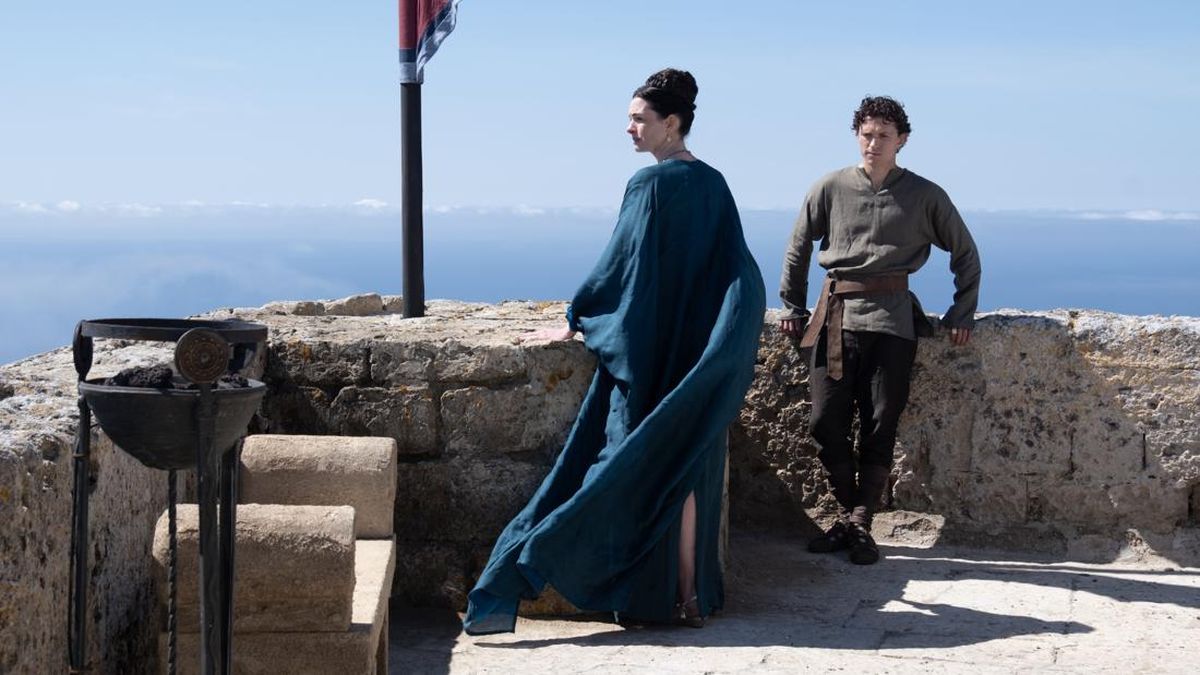
Back in Ithaca, Odysseus’s home, the law of xenia is similarly under siege. A horde of over a hundred suitors has invaded his palace, consuming his wealth, disrespecting his wife Penelope (Anne Hathaway), and plotting to murder his son Telemachus (Tom Holland). These suitors represent a profound and prolonged violation of xenia. They are guests who have overstayed their welcome, abused their host’s resources, and committed egregious acts of insolence and violence, all while Odysseus is presumed dead. Their actions create a state of moral decay in Ithaca, turning a once noble household into a den of gluttony and disrespect, thereby setting the stage for Odysseus’s ultimate, violent reclamation of his home and honor.
Christopher Nolan’s Vision: Reimagining the Moral Core
Christopher Nolan, renowned for his complex narratives and thematic depth, has reportedly chosen to expand upon this traditional understanding of xenia in his cinematic adaptation, framing the entire saga as a testament to the profound implications of violating Zeus’s Law. Nolan’s interpretation suggests that the collapse of trust, instigated by such breaches, can have far-reaching and devastating consequences, extending beyond individual acts to corrupt the very fabric of society. This approach aligns with Nolan’s signature style of embedding philosophical questions within grand, visually spectacular narratives.
The casting choices for the film underscore its dramatic weight. Matt Damon as the seasoned, weary Odysseus brings a gravitas to the role, likely portraying a hero haunted by his past actions and the moral compromises he made. Tom Holland’s Telemachus, often depicted as a young man struggling to assert himself amidst chaos, becomes a vocal advocate for Zeus’ Law, perhaps reflecting a desperate plea for order in a disintegrating world. Anne Hathaway’s Penelope, steadfast yet vulnerable, endures the relentless siege on her home, symbolizing the resilience of traditional values against mounting moral corruption. Samantha Morton’s portrayal of the sorceress Circe, who transforms Odysseus’s men into swine, further illustrates the dire repercussions when xenia is abused, both by hosts and by guests.
The Trojan Horse: A Profound Violation and Its Legacy
Nolan’s most radical reinterpretation of xenia, as suggested by early reports and analyses, centers on the Trojan Horse. While not traditionally viewed as a direct violation of xenia in the Homeric epics (as The Odyssey itself is set after the Trojan War and largely assumes its conclusion), Nolan frames this iconic stratagem as the ultimate breach of the sacred code. By presenting a weapon of war disguised as a gift—a token of supposed peace and tribute—Odysseus and the Achaeans perpetrated an act of deception that profoundly undermined the very notion of trust.
In ancient Greek culture, gifts were deeply imbued with symbolic meaning and were often exchanged as part of xenia to solidify bonds of friendship and respect. The Trojan Horse, therefore, becomes a perversion of this sacred exchange. It was not a genuine offering but a Trojan horse (pun intended) for violence, leading to the brutal sack of Troy. Nolan suggests that this single act of cunning and betrayal by Odysseus and his men did not merely win a war but laid the groundwork for a moral catastrophe. It introduced a profound cynicism into human interactions, eroding the fundamental trust and good faith that xenia sought to cultivate. This act, Nolan implies, set a precedent for a new world order where deceit and suspicion would increasingly supersede honesty and mutual respect, leaving humanity forever scarred by the consequences of such a fatal moral transgression.
Consequences of Greed: Circe and the Abused Hospitality
Conversely, Nolan’s film also explores the flip side of xenia violations through the infamous episode with Circe (Samantha Morton). When Odysseus’s men, driven by gluttony and a lack of respect, greedily devour the lavish feast prepared by the enchanting sorceress, they demonstrate their own profound disregard for the principles of respectful guest behavior. Their excessive indulgence and lack of gratitude are depicted not merely as rude but as an abuse of the hospitality offered.
In response to their hubris and lack of self-control, Circe transforms them into swine. This mythical punishment serves as a potent allegory for the consequences of misusing hospitality and succumbing to base desires. It illustrates that xenia is a two-way street, demanding ethical conduct from both host and guest. The sailors’ transformation is not just a magical curse but a symbolic degradation, reflecting their moral decline into animalistic behavior. Nolan uses this episode to reinforce the idea that breaches of xenia, whether by hosts or guests, lead to a loss of humanity and dignity, further contributing to the overarching theme of moral erosion.
Chronology of Production and Release
The journey to bring Nolan’s The Odyssey to the screen has been a multi-year endeavor, reflective of the director’s meticulous approach to filmmaking. Development on the project reportedly began shortly after his previous success, with whispers of a return to grand, classical storytelling. The casting announcements, particularly of Tom Holland, Matt Damon, and Anne Hathaway, generated significant buzz, promising a fresh take on beloved characters. Principal photography, which reportedly took place across various international locations chosen for their breathtaking and ancient-feeling landscapes, concluded in late 2025. Post-production, known for Nolan’s detailed visual and sound design, extended into mid-2026, leading to its highly anticipated global premiere. The film’s release on July 15, 2026, in Indonesian cinemas marks a significant moment, offering audiences a deep dive into an ancient epic through a contemporary directorial lens.
Statements and Interpretations: A Director’s Philosophy
While specific quotes from Nolan regarding the film’s central themes are still emerging following its release, it can be logically inferred that he would articulate his intention to highlight the timeless relevance of The Odyssey‘s moral quandaries. Nolan has historically shown a fascination with complex ethical dilemmas and the human condition, often challenging audiences to consider profound questions within his narratives. He would likely emphasize how the concept of xenia, though ancient, provides a powerful framework for understanding contemporary issues of trust, diplomacy, and the breakdown of social contracts in a globalized world.
Actors like Matt Damon and Tom Holland would also likely speak to the psychological weight of their characters, particularly in navigating a world where the rules of engagement are constantly being tested or outright broken. Damon, as Odysseus, would perhaps reflect on the moral ambiguities of his character’s journey, acknowledging the hero’s cunning and violence as both necessary for survival and potentially corrupting. Holland, as Telemachus, might discuss the challenge of portraying a young man striving to uphold traditional values in the face of overwhelming cynicism and chaos. Early critical discourse, while nascent, suggests that reviewers are already engaging with Nolan’s bold interpretation, debating whether his expansion of xenia into the Trojan Horse narrative enriches or deviates from the classical understanding. Many are likely to praise his ability to transform a mythological tale into a resonant commentary on modern societal anxieties.
Broader Implications: Trust in the Modern Age
Nolan’s The Odyssey positions itself not merely as a retelling of a classical myth but as a profound commentary on the collapse of trust in the modern era. By framing the entire narrative through the lens of xenia violations, the film transcends its ancient setting to address universal anxieties. In a world grappling with geopolitical instability, misinformation, and the erosion of civic discourse, the film’s exploration of what happens when fundamental codes of respect and hospitality are abandoned resonates deeply.
The implications are far-reaching. The film prompts audiences to consider the foundations of their own societal structures. What happens when leaders betray the trust of their people? What are the consequences when communities fail to extend compassion to strangers or refugees? How do acts of deceit, even those justified by perceived necessity, ripple through generations and corrupt future interactions? Nolan’s interpretation suggests that the ancient Greeks, through xenia, understood the delicate balance required for a functioning society. Its breakdown, whether through outright aggression or subtle deception, inevitably leads to chaos, suffering, and a profound sense of disillusionment.
Furthermore, the film’s success could reinvigorate interest in classical literature and philosophy, encouraging a new generation to explore the rich tapestry of ancient wisdom. By demonstrating the enduring power and contemporary relevance of Homer’s epic, Nolan could inspire a deeper appreciation for how foundational texts continue to offer insights into the human condition and the perennial challenges of morality, leadership, and community. The Odyssey, through Nolan’s vision, transforms from a distant myth into a urgent narrative for our times, reminding us of the fragility of trust and the timeless importance of hospitality and ethical conduct in a world that often seems to forget these fundamental virtues. The cinematic experience serves as a powerful reminder that while the gods may no longer walk among us in disguise, the imperative to treat every individual with dignity and respect remains a cornerstone of a humane and stable society.