Why the Human Brain Craves Terror: The Psychology Behind Recreational Fear and Haunted Attractions

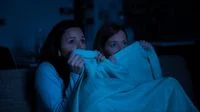
Jakarta — While many individuals instinctively cover their eyes, plug their ears, or flee from the room at the first eerie chord of a horror film, a contrasting demographic actively seeks out these exact moments of terror. These enthusiasts willingly step into pitch-black haunted houses, binge-watch supernatural thrillers on premiere nights, and often feel profoundly disappointed if a piece of entertainment fails to deliver a genuine adrenaline spike. For the uninitiated, fear is a primordial emotion designed to trigger self-preservation, avoidance, and escape. Yet, for millions of horror aficionados worldwide, the racing pulse, sudden gasps, and chilling atmosphere are not deterrents, but rather the primary source of recreation.
This complex psychological phenomenon transcends mere displays of bravery or bravado. Within behavioral science and modern psychology, the pursuit of frightening experiences for the sake of enjoyment is formally defined as recreational fear. Far from being a random quirk of personality, this paradoxical attraction to dread has become a subject of intense scientific scrutiny, yielding fascinating insights into how the human brain processes stress, safety, and pleasure.
Decoding the Psychology of Fright: Field Studies on Recreational Fear
To understand why humans willingly subject themselves to manufactured terror, researchers have moved beyond traditional laboratory surveys. A pivotal investigation published in the journal Psychological Science, titled "Playing With Fear: A Field Study in Recreational Horror," revolutionized how scientists study this behavior. Rather than relying solely on retrospective questionnaires where participants recalled past movie experiences, researchers conducted a real-time field study within a commercial haunted attraction.
During their navigation of the labyrinthine, scare-actor-filled haunted house, participants were outfitted with biometric heart-rate monitors. Researchers tracked real-time physiological changes while simultaneously evaluating the subjective fear and joy reported by the subjects upon encountering various terror-inducing triggers. The resulting data provided a tangible link between the physiological stress response and emotional gratification.
The findings revealed a precise mathematical and emotional correlation that researchers describe as an inverted U-shaped curve. According to this model, an individual’s enjoyment of a frightening scenario increases proportionally with the intensity of the fear experienced, but only up to a critical threshold. Once fear surpasses that optimal zone and enters the realm of true distress or trauma, the level of enjoyment plummets dramatically.
When fear remains at a manageable, recreational level—buffered by the underlying psychological knowledge that the environment is ultimately safe—sudden shocks and escalating suspense are perceived as thrilling and exhilarating. Conversely, if an experience evokes too little fear, it is dismissed as mundane and boring. If the fear is excessively high, the individual becomes overwhelmed, shifting the experience from entertaining to genuinely distressing. Furthermore, the study established a distinct correlation between autonomic nervous system fluctuations and emotional states: significant shifts in heart rate mapped directly to perceived fear, whereas smaller, oscillating physiological patterns tracked closely with the inverted U-shaped curve of pleasure.
Agency and Autonomy: The Power of Choosing to Be Scared
Beyond physiological thresholds, the psychological framework surrounding how one enters a terrifying situation plays a vital role in determining overall satisfaction. In the aforementioned field study, demographic data revealed a clear division in motivation: 56.5 percent of participants entered the haunted house entirely of their own volition, driven by intrinsic curiosity or a desire for a thrill. Meanwhile, the remaining 43.5 percent participated due to social pressure, having been persuaded or dragged along by friends, romantic partners, or family members.
When researchers analyzed the post-experience data, a stark contrast emerged. On a generalized enjoyment scale ranging from one to nine, the overall average pleasure rating sat high at 6.95, while the average perceived fear registered at 5.71. However, participants who had consciously chosen to enter the attraction reported significantly higher levels of enjoyment compared to those who participated under external social obligations.
This empirical divergence highlights the crucial role of personal autonomy in processing fear. There is a profound psychological gulf between voluntarily seeking out a simulated threat—where an individual retains ultimate control over their participation—and being thrust into a terrifying environment against one’s immediate preferences. Voluntary engagement allows the brain to maintain a cognitive shield of safety, whereas forced exposure can strip away that mental boundary, turning what should be fun into a stressful ordeal.
Sensation-Seeking Personalities and the Spectrum of Horrific Content
An individual’s baseline personality traits also dictate how they interact with terrifying media and attractions. Psychological literature summarized in the journal Frontiers in Psychology frequently highlights the concept of "sensation-seeking"—a recognized personality trait characterized by the continuous pursuit of novel, complex, and intense sensory experiences and feelings.
Individuals who score high on the sensation-seeking scale are naturally predisposed to enjoy the intense emotional rollercoasters provided by horror films, extreme sports, and immersive theatrical scares. For this subset of the population, the neurological rush of dopamine, adrenaline, and endorphins released during a high-stakes scare acts as a powerful reinforcement mechanism.
However, researchers caution that sensation-seeking alone cannot fully explain humanity’s diverse relationship with horror. An individual’s reaction is deeply nuanced, modulated by baseline anxiety levels, empathy, sensory sensitivities, and specific thematic preferences. For instance, a person might revel in psychological thrillers characterized by slow-burn dread and intricate mysteries, yet recoil violently from graphic violence, gore, or torture porn. Similarly, one viewer might relish sudden jump scares while finding realistic depictions of human cruelty deeply unsettling.
Consequently, enjoying horror is not a monolith. Liking one subgenre or specific attraction does not mean a consumer welcomes all forms of terror. The boundary of what is deemed "fun" is highly subjective, shifting based on narrative structures, character development, and narrative resolutions.
Broader Implications: Why Safe Danger Appeals to the Modern Mind
The enduring popularity of horror as a multi-billion-dollar global entertainment industry ultimately stems from the brain’s unique ability to contextualize danger within a framework of absolute safety. Anthropologists and psychologists suggest that recreational fear may serve an evolutionary purpose, acting as a safe simulator where humans can practice emotional regulation, threat assessment, and resilience in the face of the unknown.
By engaging with controlled doses of terror, individuals learn to navigate physiological arousal without real-world consequences. Whether through the calculated jump scares of a haunted attraction or the cinematic pacing of a psychological masterpiece, the appeal of recreational fear relies on a delicate balance: intense physical arousal paired with the psychological comfort of knowing that, when the credits roll or the exit door opens, the nightmare is entirely optional.