
Egypt Gaza Israel War
Egypt, Gaza, and Israel: A Complex and Enduring Conflict
The geopolitical landscape of the Middle East is irrevocably shaped by the intricate and often volatile relationship between Egypt, Gaza, and Israel. This dynamic is not a recent phenomenon but rather a deeply ingrained historical tapestry woven with threads of national aspirations, security concerns, humanitarian crises, and international intervention. Understanding this multifaceted conflict necessitates a granular examination of each nation’s role, the historical context, the impact on the Palestinian population in Gaza, and the persistent efforts, both successful and unsuccessful, towards achieving peace and stability.
Egypt’s position in this trilateral relationship is primarily defined by its geographical proximity to Gaza and its historical role as an Arab power. Following the 1948 Arab-Israeli War, Gaza came under Egyptian administration until the 1967 Six-Day War, when it was occupied by Israel. This period of Egyptian control, though ultimately ending with occupation, left a lasting imprint on the region. Post-1967, Egypt’s involvement shifted to one of mediation and managing the flow of people and goods across its border with Gaza, particularly after the 1979 Egypt-Israel Peace Treaty. This treaty, while bringing a measure of peace between Egypt and Israel, also cemented the separation of Gaza from Egypt and placed it under Israeli military control. Egypt’s border crossing at Rafah became a critical, and often contentious, gateway for Gazans, subject to Israeli security measures and Egyptian regulatory oversight. The rise of Hamas in Gaza, following the 2005 Israeli disengagement, further complicated Egypt’s relationship with the territory. Cairo has consistently expressed security concerns regarding the Sinai Peninsula’s proximity to Gaza, fearing the infiltration of militant groups and the flow of weapons. This has led to periods of strict border closures, impacting the humanitarian situation in Gaza, and also to Egypt playing a crucial role in brokering ceasefires between Israel and Hamas. Its capacity to influence Hamas, while limited, is greater than that of many other international actors, making Cairo an indispensable, albeit sometimes reluctant, participant in any peace or de-escalation efforts. Furthermore, Egypt’s own internal political dynamics and its alliance with Western powers, particularly the United States, have significantly influenced its approach to the Gaza-Israel conflict. Balancing its regional responsibilities, its security interests, and its international obligations has been a constant challenge for successive Egyptian governments.
Israel’s perspective is inherently rooted in its national security doctrine and its historical narrative. The Israeli occupation of Gaza, following the Six-Day War in 1967, was a direct consequence of regional conflicts. While Israel disengaged from Gaza in 2005, unilaterally withdrawing its troops and settlements, it has maintained significant control over the territory’s borders, airspace, and maritime access. This blockade, implemented in conjunction with Egypt following Hamas’s takeover of Gaza in 2007, is justified by Israel as a necessary measure to prevent the smuggling of weapons and to counter rocket attacks and other militant activities emanating from Gaza. The ongoing threat posed by Hamas and other militant factions, which have repeatedly launched rockets into Israel and engaged in armed confrontations, forms the core of Israel’s security calculus. For Israel, the conflict in Gaza is not merely a territorial dispute but a direct challenge to its existence and the safety of its citizens. The strategic objective has been to degrade the military capabilities of militant groups, prevent attacks, and ensure the security of its southern communities. However, this approach has led to repeated cycles of violence, immense human suffering in Gaza, and international condemnation regarding the proportionality of military actions and the impact of the blockade on the civilian population. Israel’s security concerns are often framed within the broader context of regional instability and the perceived threat from Iran and its proxies. The constant need to maintain a defensive posture, invest heavily in security infrastructure like the Iron Dome missile defense system, and respond to hostilities has placed a significant burden on the Israeli economy and society. The political discourse within Israel on Gaza is deeply polarized, with debates ranging from calls for a more aggressive military approach to the necessity of finding a political solution that addresses the root causes of the conflict.
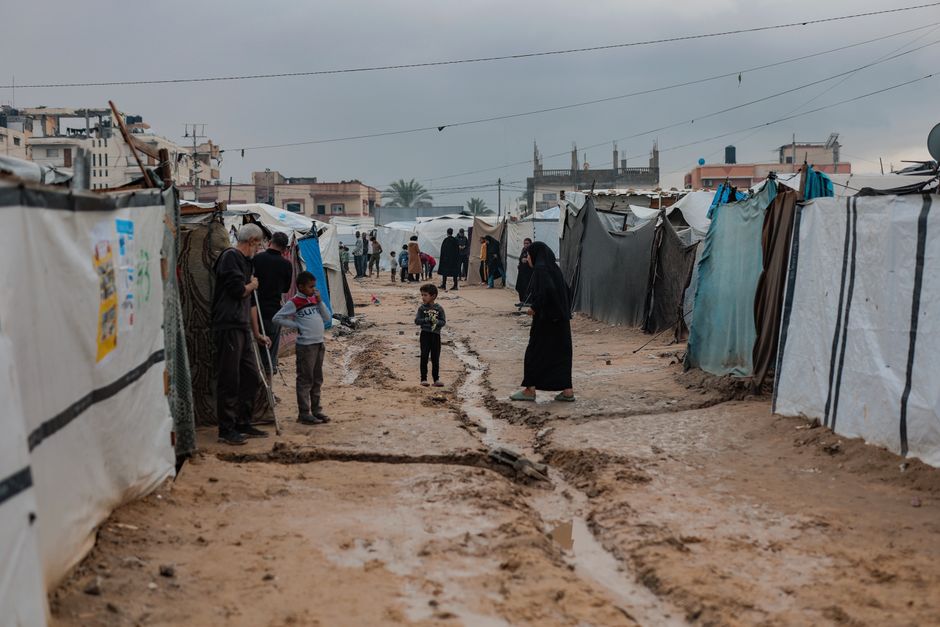
Gaza, a densely populated Palestinian territory, is the epicenter of this enduring conflict, characterized by a severe humanitarian crisis and a protracted struggle for self-determination. Since the Israeli disengagement in 2005 and the subsequent Hamas takeover, Gaza has been subjected to a crippling blockade imposed by Israel and Egypt. This blockade has severely restricted the movement of people and goods, leading to widespread unemployment, poverty, and a collapse of essential services. The Gazan economy is heavily reliant on foreign aid, which is often hampered by political instability and security concerns. The Palestinian population, numbering over two million, lives in what many international organizations describe as an open-air prison, facing dire conditions, limited access to clean water, electricity shortages, and a severely strained healthcare system. The recurring cycles of conflict between Israel and Hamas have resulted in significant loss of life and widespread destruction of infrastructure. For the people of Gaza, the conflict is a daily reality, impacting their fundamental human rights and their ability to live with dignity. The aspirations for statehood and an end to the occupation remain central to their struggle. However, the internal political divisions within Palestine, particularly the rift between Hamas in Gaza and the Palestinian Authority in the West Bank, have further complicated efforts to achieve a unified national strategy. The constant threat of renewed hostilities, coupled with the lack of tangible progress towards a political resolution, fosters a sense of despair and hopelessness among the population. Humanitarian aid organizations play a crucial role in mitigating the worst effects of the crisis, but their efforts are often insufficient to address the systemic issues created by the prolonged blockade and recurring violence.
The historical trajectory of the Egypt-Gaza-Israel relationship is marked by pivotal moments and evolving dynamics. The post-World War I mandate period, the 1948 Arab-Israeli War and its aftermath, the 1967 Six-Day War and the ensuing occupation, the First and Second Intifadas, and the Israeli disengagement from Gaza in 2005 have all left indelible marks. The Oslo Accords in the 1990s offered a glimmer of hope for a two-state solution, but their implementation faltered, particularly in relation to Gaza. The rise of Hamas as a political and military force in Gaza fundamentally altered the regional dynamics, leading to the aforementioned blockade and a shift in Israel’s security posture. The Sanafir and Tiran islands transfer from Egypt to Saudi Arabia, despite not directly involving Gaza, illustrates the complexities of regional sovereignty and agreements that can indirectly impact regional security calculations. The internal political shifts within Egypt, from the Mubarak era to the Sisi government, have also influenced Cairo’s approach, with a stronger emphasis on security and counter-terrorism. The ongoing instability in the region, including the Syrian civil war and the rise of various extremist groups, has created a more volatile environment that further exacerbates the tensions surrounding Gaza. The international community, including the United Nations, the United States, and European powers, has consistently been involved in attempts to mediate ceasefires, provide humanitarian aid, and pursue a lasting peace settlement. However, these efforts have often been hampered by the deep-seated mistrust between the parties, the conflicting narratives, and the lack of a unified international consensus on how to best resolve the conflict. The Arab Peace Initiative, first proposed in 2002, has offered a framework for regional normalization in exchange for Israeli withdrawal from occupied territories, but its progress has been slow and fraught with challenges.
The security dimensions of the conflict are paramount for all three actors. For Israel, the primary concern is preventing attacks from Gaza, including rocket fire, cross-border infiltrations, and the development of advanced weaponry by militant groups. This has led to a heavily fortified border, sophisticated surveillance systems, and a doctrine of pre-emptive strikes and defensive operations. Egypt, as mentioned, is deeply concerned about the spillover of militancy and weapons smuggling from Gaza into its Sinai Peninsula, which has been a hotbed of insurgent activity. This has resulted in Egypt implementing stringent security measures along its border with Gaza and conducting counter-terrorism operations in Sinai. Hamas, on the other hand, views its armed resistance as a legitimate response to the Israeli occupation and blockade, aiming to liberate Palestinian territories and establish an independent state. The constant state of conflict has fueled a militarization of Gazan society, with a focus on developing defensive and offensive capabilities. The international community also plays a role in security, often through monitoring ceasefires, providing security assistance to certain actors, and engaging in counter-terrorism dialogues. However, the lack of a comprehensive security architecture that addresses the root causes of violence remains a significant obstacle to long-term stability. The cycles of violence often result in unintended civilian casualties on all sides, further hardening positions and making reconciliation more difficult. The effectiveness of security measures is often debated, with critics arguing that a purely military approach cannot address the underlying political grievances that fuel the conflict.
The humanitarian impact of the Egypt-Gaza-Israel conflict is profound and devastating, particularly for the population of Gaza. The blockade, in place since 2007, has created an unprecedented humanitarian crisis. According to UN reports, Gaza suffers from extremely high rates of poverty, food insecurity, and unemployment. Access to clean water, electricity, and adequate healthcare are severely limited, exacerbating public health challenges. The recurrent cycles of violence result in civilian casualties, displacement, and the destruction of homes and critical infrastructure. Children are disproportionately affected, facing psychological trauma, malnutrition, and disruption to their education. The healthcare system is on the brink of collapse, with shortages of essential medicines and equipment. International aid organizations are on the front lines, providing vital assistance, but their efforts are often hampered by access restrictions and the sheer scale of the needs. The emotional and psychological toll on the Gazan population, living under constant threat and deprivation, is immense, contributing to intergenerational trauma. The blockade also restricts the movement of critically ill patients seeking medical treatment abroad, leading to preventable deaths. The international community has repeatedly called for an end to the blockade and for greater humanitarian access, recognizing the severe implications of the ongoing crisis on regional stability and human dignity. The interconnectedness of the humanitarian situation with the political and security dimensions of the conflict is undeniable; until these root causes are addressed, the suffering in Gaza is likely to persist.
The quest for peace and a resolution to the Egypt-Gaza-Israel conflict has been a long and arduous journey, marked by numerous diplomatic initiatives and intermittent periods of hope. The two-state solution, envisioned in the Oslo Accords and supported by the international community, remains the most widely accepted framework for resolving the Israeli-Palestinian conflict. This model proposes an independent Palestinian state alongside Israel, with mutually agreed-upon borders, security arrangements, and solutions for refugees and Jerusalem. However, significant obstacles remain, including the expansion of Israeli settlements in the West Bank, the division of Jerusalem, the right of return for Palestinian refugees, and security guarantees for Israel. Bilateral negotiations between Israel and the Palestinian Authority have repeatedly stalled, often due to a lack of trust and political will. Egypt has consistently played a mediating role, facilitating ceasefires and peace talks, but its leverage has limitations. Regional initiatives, such as the Arab Peace Initiative, have offered a broader framework for normalization, but progress has been slow. The role of international actors, including the UN, the Quartet (comprising the UN, US, EU, and Russia), and individual nations, has been crucial in providing platforms for dialogue and offering incentives for peace. However, divisions within the international community regarding the approach to be taken have often undermined collective efforts. The rise of Hamas in Gaza has further complicated peace prospects, as Israel views the organization as a terrorist group and refuses to negotiate directly with it. The internal Palestinian political divide between Hamas and the Palestinian Authority also hinders unified Palestinian representation in peace talks. Ultimately, achieving lasting peace requires addressing the core issues of occupation, security, self-determination, and mutual recognition, coupled with sustained political will and genuine commitment from all parties involved, supported by a unified and effective international community. The path forward remains challenging, but the pursuit of a just and lasting resolution continues to be a paramount objective for regional and global stability.
