
Nasa Jupiter Io Moon Pictures
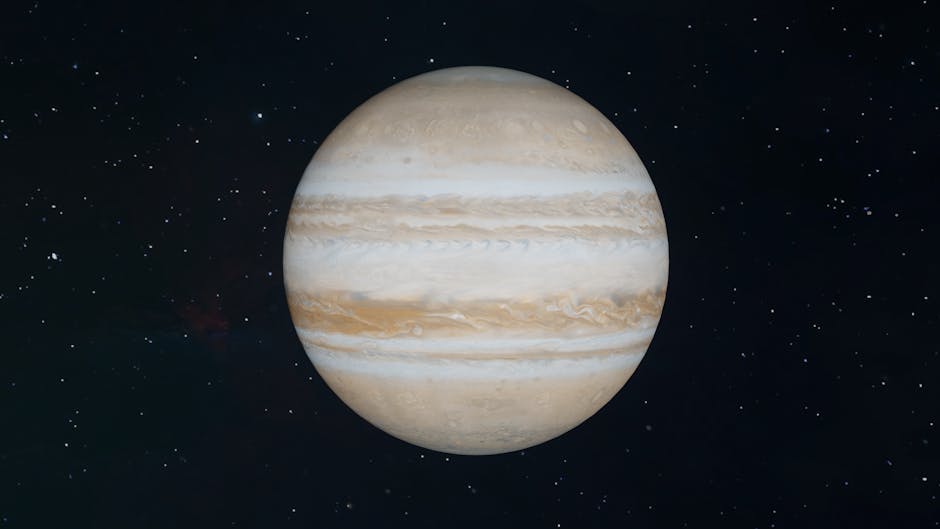
NASA Jupiter Io Moon Pictures: Unveiling a Volcanic Inferno
The tempestuous Jovian system, a celestial ballet of gas giants and their diverse moons, has long captivated the human imagination. Among its most enigmatic companions is Io, a world sculpted by volcanic fury, a literal inferno in orbit around Jupiter. NASA’s dedicated exploration of this innermost Galilean moon, primarily through missions like Voyager, Galileo, and more recently, Juno, has yielded an unparalleled gallery of images, each a testament to Io’s extreme geological activity and its profound impact on Jupiter itself. These NASA Jupiter Io moon pictures are not mere astronomical curiosities; they are crucial scientific data, offering insights into planetary evolution, the dynamics of magnetic fields, and the very nature of volcanic processes on a cosmic scale. The sheer volume and clarity of imagery have transformed our understanding of Io from a distant, blurry sphere into a dynamic, ever-changing landscape, painted with the vibrant hues of sulfur compounds and etched by the relentless forces of tidal heating.
The initial glimpses of Io provided by the Voyager probes in the late 1970s were revolutionary. Before Voyager, Io was understood as a moon, but its true nature remained largely theoretical. Voyager 1’s flyby in March 1979 sent back astonishing images revealing a world unlike any other known celestial body. Instead of the expected heavily cratered surface indicative of geological quiescence, Voyager revealed a shockingly bright, colorful, and surprisingly smooth sphere, marred by numerous volcanic plumes erupting into space. These plumes, some reaching hundreds of kilometers in altitude, were the first definitive evidence of active volcanism on a moon. NASA Jupiter Io moon pictures from this era were grainy by today’s standards but undeniably groundbreaking, showcasing vast lava flows, caldera-like depressions, and a striking palette of yellows, reds, oranges, and whites – the signature of sulfurous compounds ejected by volcanic activity. The sheer number and scale of these eruptions indicated that Io was the most geologically active body in the entire solar system, a title it continues to hold.
The Galileo mission, which orbited Jupiter from 1995 to 2003, provided an even more detailed and extensive visual record of Io. Equipped with advanced cameras, including the Near-Infrared Mapping Spectrometer (NIMS) and the Imaging Science Subsystem (ISS), Galileo spent years studying Io at close range, capturing thousands of images across various wavelengths. These NASA Jupiter Io moon pictures from Galileo allowed scientists to map Io’s surface with unprecedented resolution, track volcanic eruptions in real-time, and study the composition of its volcanic materials. The data revealed a dynamic surface that changed significantly even between orbital passes. New lava flows would appear, old ones would fade, and volcanic vents would shift their activity. Galileo’s images showcased the characteristic colorful "splotches" on Io’s surface, which were identified as deposits of sulfur dioxide frost, colored by other sulfur compounds. The mission also captured dramatic views of Io’s colossal volcanic plumes erupting against the backdrop of Jupiter’s vast disc, a powerful visual representation of the intense tidal forces at play. The insights gained from Galileo’s comprehensive imagery were foundational to understanding Io’s energetic environment.
One of the most striking features revealed in NASA Jupiter Io moon pictures is the sheer diversity and scale of its volcanic features. Io hosts over 400 active volcanoes, far more than Earth. These range from massive shield volcanoes, analogous to Earth’s Mauna Loa but on a far grander scale, to smaller, more explosive vents. The images highlight vast plains of solidified lava, some stretching for hundreds of kilometers. Calderas, vast depressions formed by the collapse of volcanoes after eruptions, are prominent. The unique colors of Io’s surface are directly linked to its volcanism. The bright yellows and whites are attributed to sulfur dioxide frost, which can be deposited at higher altitudes or in cooler regions. The reds and browns are likely due to various sulfur compounds, including pure sulfur and iron-sulfur compounds, which are heated and transformed by the volcanic activity. The ongoing barrage of volcanic eruptions constantly resurfaces Io, erasing older impact craters and geological features, giving it a remarkably youthful appearance compared to most other moons.
The driving force behind Io’s intense volcanism is immense tidal heating. As Io orbits Jupiter, it is also influenced by the gravitational tugs of the other large Galilean moons: Europa and Ganymede. These competing gravitational forces cause Io to flex and stretch as it orbits Jupiter. This constant deformation generates tremendous internal friction, which heats Io’s interior to such an extent that its crust is continuously fractured and magma is forced to the surface. NASA Jupiter Io moon pictures provide visual evidence of this relentless process. The images show recent lava flows that appear smooth and dark, indicating fresh, hot material. Areas affected by massive eruptions often display characteristic patterns of outflow channels and flood basalts. The energy released by Io’s volcanism is staggering, comparable to the energy output of all the volcanoes on Earth combined, but emanating from a much smaller body.
The interplay between Io and Jupiter’s powerful magnetosphere is another crucial aspect illuminated by NASA Jupiter Io moon pictures. Io is enveloped in a thin atmosphere composed primarily of sulfur dioxide, but its volcanic plumes inject a vast amount of material into Jupiter’s magnetosphere. This material, including ions and neutral gases, becomes ionized and is then swept around Jupiter by its rapid rotation. This process creates a torus of charged particles, known as the Io plasma torus, which surrounds Jupiter and is a significant component of its magnetospheric environment. Images from space telescopes and probes have captured the glow of this torus, a ghostly halo surrounding Jupiter that is directly fueled by Io’s volcanic outgassing. This interaction is a prime example of how moons can actively shape the environments of their parent planets.
The Juno mission, which arrived at Jupiter in 2016, has continued to provide valuable insights into the Jovian system, including observations of Io. While Juno’s primary mission is to study Jupiter’s atmosphere and interior, its close flybys of Io have yielded new NASA Jupiter Io moon pictures and crucial data. Juno’s instruments, such as the JunoCam imager and the Jovian Infrared Auroral Mapper (JIRAM), have allowed for detailed observations of Io’s volcanic activity and atmospheric composition. JunoCam has captured stunning high-resolution images of Io’s surface, revealing subtle details of volcanic features and the dynamics of its plumes. JIRAM, by observing in the infrared spectrum, has provided new information about the temperature distribution on Io’s surface, helping to pinpoint active volcanic hot spots and understand the thermal processes involved. These newer images complement the historical data from Voyager and Galileo, offering a more continuous and updated view of Io’s constantly evolving landscape.
Analyzing NASA Jupiter Io moon pictures involves a sophisticated understanding of remote sensing techniques. Different wavelengths of light reveal different aspects of Io’s surface and atmosphere. Visible light imagery, for example, highlights the colorful sulfur compounds and the extent of lava flows. Infrared imaging can detect heat signatures from active volcanoes and reveal temperature variations across the surface. Spectroscopic data, gathered by instruments like NIMS on Galileo and JIRAM on Juno, analyzes the light reflected or emitted by Io’s surface to determine the chemical composition of its materials. By combining data from these different instruments and wavelengths, scientists can create detailed maps of Io’s surface composition, temperature, and volcanic activity, translating the visual data into a wealth of scientific understanding.
The ongoing analysis of NASA Jupiter Io moon pictures continues to push the boundaries of planetary science. Researchers use these images to build sophisticated models of Io’s internal structure, its thermal evolution, and the processes that drive its volcanism. The comparison of images taken over time allows for the tracking of individual volcanic eruptions, the monitoring of changes in plume characteristics, and the identification of new volcanic centers. This temporal analysis is critical for understanding the long-term behavior of a highly dynamic geological body. Furthermore, the extreme conditions on Io, such as its intense volcanism and radiation environment, serve as a natural laboratory for studying processes that may be relevant to understanding early Earth or potentially exoplanets with similar geological activity.
The legacy of NASA Jupiter Io moon pictures is one of continuous discovery. From the initial shock of discovering an active volcanic world to the detailed mapping of its fiery surface, these images have fundamentally altered our perception of planetary habitability and the diversity of geological processes in the solar system. Io, a world of extremes, continues to be a focal point of scientific inquiry, and future missions will undoubtedly build upon the invaluable visual record provided by NASA. The ongoing fascination with Io, fueled by these breathtaking images, ensures its place as a crucial subject in the exploration of our solar system and the search for understanding the vastness of celestial phenomena. The continuous stream of data, both visual and instrumental, underscores the importance of ongoing exploration and the power of imagery to ignite scientific curiosity and drive our quest for knowledge.
