
Supreme Court Trump Ballot Takeaways
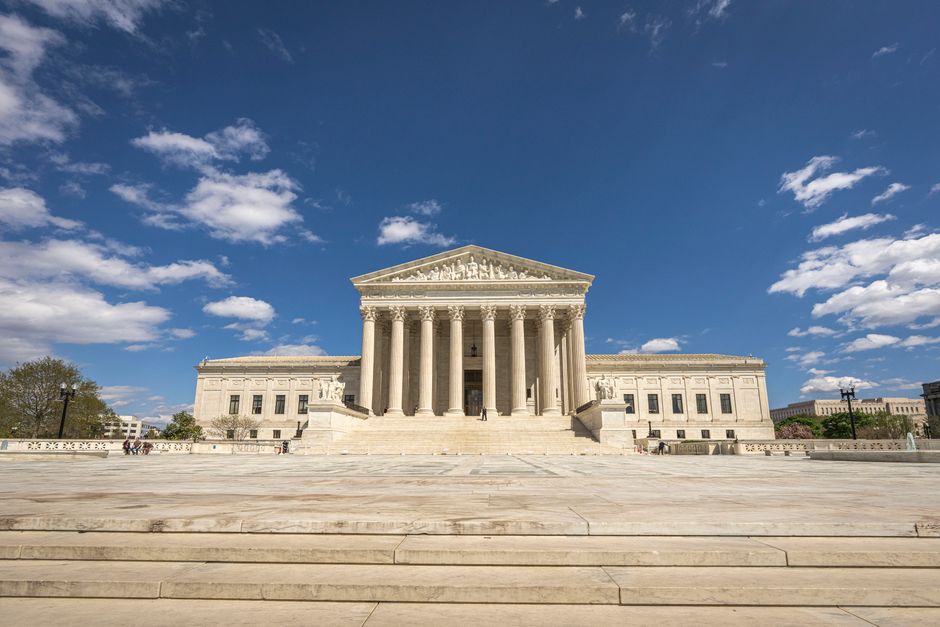
Supreme Court Trump Ballot Decision: Key Takeaways and Legal Ramifications
The Supreme Court’s decision in Donald J. Trump v. United States, a case stemming from Colorado’s attempt to remove him from the ballot under Section 3 of the Fourteenth Amendment, has profound implications for American democracy, electoral law, and the interpretation of constitutional provisions. The Court unanimously ruled that individual states do not have the authority to disqualify federal candidates, including the President, from appearing on their ballots using Section 3 of the Fourteenth Amendment. This ruling is a significant victory for former President Trump and a decisive blow to state-led efforts to enforce the insurrection clause against him. The core of the decision rests on the Court’s interpretation of the "officers of the United States" clause and the division of powers between federal and state governments.
The unanimous nature of the ruling, authored by Chief Justice John Roberts, underscores the Court’s commitment to establishing a clear and uniform standard for ballot access nationwide. By concluding that only Congress can enforce Section 3 of the Fourteenth Amendment against federal candidates, the Court effectively nullified similar challenges in other states, such as those in Colorado, Maine, and Illinois. This centralized approach to enforcing constitutional disqualifications for federal office is a critical takeaway. It means that any future attempts to apply Section 3 to presidential candidates will require congressional action, a significantly higher and more politically complex hurdle. The Court reasoned that allowing individual states to make such determinations would lead to a chaotic and inconsistent electoral landscape, where a candidate’s eligibility could vary from state to state, undermining the integrity of national elections.
A central tenet of the Court’s reasoning was the distinction between state and federal authority. The justices emphasized that while states have broad powers to regulate their own elections, those powers are not absolute, particularly when it comes to federal officeholders. The Fourteenth Amendment, they argued, creates a federal disqualification mechanism, and its enforcement against federal officers is reserved for federal authority. Chief Justice Roberts explicitly stated that Section 5 of the Fourteenth Amendment, which grants Congress the power to enforce the provisions of the amendment through "appropriate legislation," is the mechanism for implementing the disqualification clause. Without such congressional action, states are preempted from acting unilaterally. This interpretation limits the scope of state power and reinforces the federal government’s role in defining eligibility for federal office.
The Court’s interpretation of "officers of the United States" was also crucial. The justices concluded that the President is an "officer of the United States" within the meaning of Section 3. This seemingly straightforward conclusion is significant because it clarifies that the insurrection clause can, in theory, apply to the presidency. However, the Court then bifurcated the enforcement mechanism, stating that while the President is an officer, states cannot enforce his disqualification. This nuanced approach highlights the delicate balance the Court sought to strike between addressing concerns about insurrection and preventing state-level electoral chaos. It acknowledges the potential applicability of Section 3 while simultaneously closing the door on state-driven enforcement in this context.
The decision effectively sidesteps the complex factual question of whether Trump engaged in insurrection, which was a central issue in the Colorado Supreme Court’s ruling. By focusing on the procedural issue of enforcement authority, the Supreme Court avoided making a definitive judgment on Trump’s conduct. This abstention is a strategic move, allowing the Court to maintain its perceived neutrality and avoid entanglement in highly contentious political disputes. The takeaway here is that the legal battle over Trump’s alleged insurrection and its disqualification from office has been shifted from the courts to the political arena, specifically to Congress.
Furthermore, the ruling has significant implications for the future of Section 3 of the Fourteenth Amendment. While this specific case centered on Trump and the presidency, the principle established – that Congress must act to enforce Section 3 against federal candidates – will apply to all future presidential elections and potentially to other federal offices. This raises questions about the viability of Section 3 as a tool for disqualification in the absence of congressional will. It suggests that for this clause to be a potent weapon against future candidates deemed to have engaged in insurrection, a significant political consensus within Congress would be required, which is often difficult to achieve in a polarized environment.
The impact on the 2024 election is immediate and definitive. Donald Trump will remain on the ballot in all states. This removes a significant legal and political obstacle for his campaign. The decision allows the election to proceed with him as a major contender, subject to the verdict of the voters, rather than having his eligibility determined by individual state courts or election officials. This outcome reinforces the democratic principle that voters, not judges, should ultimately decide who represents them, at least in the absence of explicit, federally mandated disqualification.
However, the decision does not absolve Trump of the underlying allegations. The Court’s ruling on ballot access does not preclude other legal proceedings against him, including the various criminal and civil cases he is currently facing. These cases, if successful, could still have significant implications for his ability to serve, even if he is on the ballot. The takeaway is that the Supreme Court’s decision is narrowly focused on ballot access and constitutional enforcement mechanisms, not on the broader question of Trump’s legal culpability for past actions.
The legal reasoning regarding federalism and the division of powers is a core takeaway for understanding constitutional law. The Court’s decision emphasizes the federal government’s ultimate authority in defining the qualifications and eligibility of federal officers. This reinforces the principle that national elections should be governed by a consistent set of rules, rather than a patchwork of state-specific interpretations of federal law. The decision highlights the tension between state autonomy in election administration and the need for uniformity in federal electoral processes.
The practical consequence for future electoral challenges is a higher bar for success. Any group or individual seeking to disqualify a federal candidate under Section 3 will now need to lobby Congress for specific legislation. This is a more formidable task than pursuing legal action in individual states, particularly given the current partisan divisions in Washington. This shift in the enforcement landscape means that the effectiveness of Section 3 as a tool for political disqualification is significantly diminished unless there is broad bipartisan agreement to invoke it.
The decision also underscores the Supreme Court’s role as the ultimate arbiter of constitutional questions. By issuing a unanimous decision, the Court signaled its intent to provide clarity and avoid further division on this critical issue. This unanimous stance, while unusual in highly politicized cases, reinforces the Court’s authority and provides a stable legal foundation for the upcoming election. The takeaway is that despite political pressures, the Court sought to provide a definitive, albeit narrow, legal resolution.
In summary, the Supreme Court’s decision on the Trump ballot case offers several critical takeaways. It unequivocally states that individual states cannot remove federal candidates from the ballot under Section 3 of the Fourteenth Amendment. Enforcement of this clause for federal officers rests solely with Congress. The President is considered an "officer of the United States," but states lack the authority to enforce his disqualification. This ruling ensures Trump’s presence on the 2024 ballot and shifts the focus of any future Section 3 challenges to federal legislative action. The decision reinforces federal authority in defining federal office eligibility and avoids a fractured electoral landscape. While this legal battle on ballot access is resolved, other legal challenges against Trump remain active, and the future effectiveness of Section 3 as a disqualification tool hinges on congressional will.
