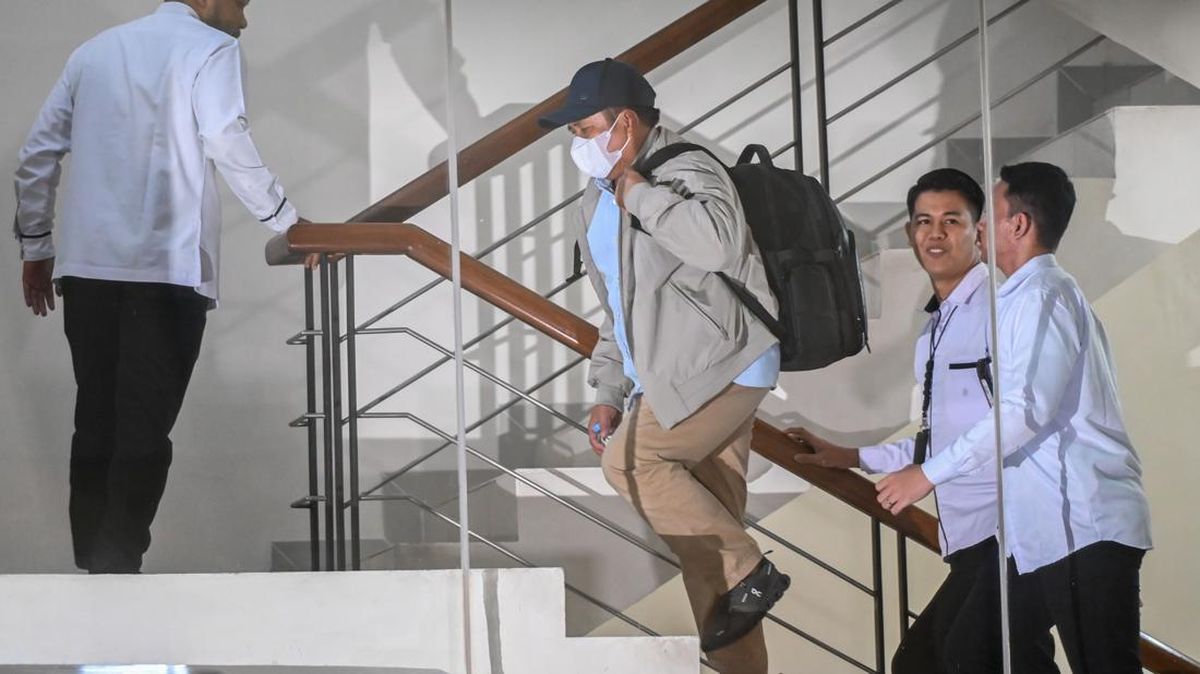
The three individuals now facing charges are Lalu Ahmad Zaini, identified as the Bupati-elect of West Lombok for the upcoming 2025-2030 term; Sudirman, the President Director of PT Air Minum Giri Menang, the regional water utility company; and Alvonsus Gani, the President Director of PT Meconel Sistim Instrument (MSI), a vendor. The charges stem from allegations of illicit financial gains, including benturan kepentingan (conflict of interest) in the procurement of goods and services, direct bribery, and various forms of gratification within the West Lombok Regency government. Achmad Taufik Husein, the Acting Director of Investigation for the KPK, confirmed these developments during a press conference held at the KPK’s Red and White Building in Jakarta on Tuesday, July 21st. He stated that based on valid preliminary evidence, the KPK had elevated the case to the investigation phase and designated the three individuals as suspects. The suspects were reportedly undergoing further examination at the time of the press conference and were subsequently detained for the first 20 days as part of the ongoing investigation.
The Role of KPK and the Significance of an OTT
This latest operation by the KPK underscores the agency’s unwavering commitment to eradicating corruption, particularly at the local government level, where accountability mechanisms can sometimes be weaker. The KPK, established in 2002, is an independent body with broad powers to investigate and prosecute corruption cases in Indonesia. Its Operasi Tangkap Tangan (OTT), or "Sting Operation," has become a hallmark of its anti-corruption efforts, allowing the agency to catch perpetrators red-handed, often involving direct cash transactions or immediate benefits. These operations are crucial for building strong cases, as they provide direct evidence of illicit activities, making it difficult for suspects to deny their involvement. The public often views OTTs as a potent symbol of the KPK’s effectiveness and its determination to hold corrupt officials accountable, regardless of their position or political influence.
Corruption at the regional level remains a significant challenge for Indonesia, often impeding local development, distorting resource allocation, and eroding public trust. Transparency International’s Corruption Perception Index has consistently highlighted the need for robust anti-corruption measures, especially in sectors prone to illicit dealings like public procurement and infrastructure projects. West Lombok, a region known for its natural beauty and burgeoning tourism sector, relies heavily on transparent and efficient governance to foster sustainable development and attract investment. The alleged actions of its top officials, if proven, could significantly undermine these efforts, impacting public services and the local economy.
The Accused: Profiles and Allegations
Lalu Ahmad Zaini, as the Bupati-elect, represents a critical figure in this case. His alleged involvement even before fully assuming office for the 2025-2030 term raises serious questions about the integrity of the electoral process and the deeply entrenched nature of corrupt practices in some regional administrations. The very prospect of a newly elected official being implicated in such a scandal underscores the urgent need for comprehensive reforms in governance and ethics.
Sudirman, as the President Director of PT Air Minum Giri Menang, holds a pivotal position in providing essential public services. His alleged role in facilitating the corrupt schemes, particularly by leveraging his company and creating a "pool bucket" for projects, demonstrates how state-owned enterprises can be exploited for personal gain and political patronage. PT Air Minum Giri Menang’s involvement suggests that even critical public utilities can become avenues for corruption, potentially affecting the quality and cost of services delivered to the citizens of West Lombok.
Alvonsus Gani, as the President Director of PT Meconel Sistim Instrument (MSI), represents the private sector’s complicity in corruption. The alleged payment of lavish bribes, including luxury vehicles and high-end personal items, illustrates the transactional nature of such illicit relationships, where companies secure lucrative contracts by offering kickbacks to influential officials. This behavior not only creates an uneven playing field for honest businesses but also drives up the cost of public projects, ultimately burdening taxpayers.
A Web of Corruption: Unraveling the Schemes
The KPK’s investigation has meticulously pieced together an intricate web of corrupt activities, categorizing them into three primary schemes: conflict of interest, bribery, and gratification.
1. Conflict of Interest in Procurement (Benturan Kepentingan):
The primary modus operandi involved Lalu Ahmad Zaini allegedly directing Lalu Ratnawi, the Head of the Public Works, Spatial Planning, and Residential Areas (PUPRPKP) Office of West Lombok, to assist Sudirman in securing various project packages within the PUPRPKP Office for the 2025-2026 fiscal years. To mask his direct involvement and avoid public scrutiny over potential conflicts of interest, Sudirman reportedly utilized CV Dyas Karya Konstruksi (DKK), a company he owned, as a "pool bucket" for these projects. This scheme involved "borrowing the flags" of other vendors, meaning CV DKK would nominally subcontract to other companies, but the actual control and benefit would remain with Sudirman. This elaborate method was designed to prevent CV DKK from being administratively recorded as the direct winner of the projects, thus obscuring the conflict.
Sudirman then allegedly provided a list of desired project packages within the PUPRPKP Office, along with the names of the "borrowed" vendors, to the Head of PUPR. To further solidify this illicit arrangement, the Procurement of Goods and Services (PBJ) committee allegedly introduced a requirement for "support letters" for prospective vendors. These letters, often pertaining to the ownership of specific equipment or supplier relationships, effectively created a barrier to entry for other legitimate bidders, ensuring that the pre-selected vendors would win.
Through this manipulated process, the favored vendors secured projects totaling Rp17.9 billion from the PUPRPKP Office, awarded through both tender processes and direct appointments. These projects included:
- Tender-based: Rehabilitation of Gerung City Park (Fiscal Year 2025: Rp2.3 billion; Fiscal Year 2026: Rp4.3 billion), Construction of an Office Building (Fiscal Year 2025: Rp2.4 billion), and Renovation of the West Lombok Bupati Office (Rp1.7 billion).
- Direct Appointments: Eight work packages at the PUPR Office (Fiscal Year 2025: Rp3.4 billion), four work packages in the General Affairs Section (Fiscal Year 2025: Rp2 billion), and 16 work packages at PT Air Minum Giri Menang (Fiscal Year 2025: Rp1.8 billion).
Despite the various winning entities, the actual execution and control of these projects were reportedly taken over by CV DKK, which then sub-contracted parts of the work to other companies, but maintained full oversight. From these projects totaling Rp17.9 billion, Sudirman allegedly distributed a 3% fee to the nominal vendors whose names were "borrowed," while personally pocketing approximately Rp10.6 billion through CV DKK.
Furthermore, CV DKK, under Sudirman’s control, allegedly received an additional Rp31.1 billion related to the Procurement of Goods and Services from the Regional Development Planning Agency (Bappeda) and the Youth and Sports Office (Dispora) of West Lombok. The total illicit funds received by Sudirman through CV DKK amounted to Rp41.7 billion, with a significant portion, Rp10.8 billion, allegedly channeled directly to Lalu Ahmad Zaini.
2. Bribery (Suap):
Beyond the conflict of interest in procurement, Lalu Ahmad Zaini is also accused of systematically receiving money, goods, and facilities from Alvonsus Gani, the President Director of PT MSI. PT MSI served as a vendor for PT Air Minum Giri Menang, the regional water utility, which was under the purview of Sudirman. Between 2024 and 2026, PT MSI, acting through Sudirman and allegedly on Lalu Ahmad’s direct orders, secured numerous projects related to water management in West Lombok, totaling Rp27.1 billion.
In exchange for these lucrative contracts, PT MSI, through Alvonsus Gani, allegedly provided a steady stream of goods, facilities, and cash to Lalu Ahmad Zaini, amounting to over Rp1.6 billion. The specific items of bribery highlight the lavish nature of these illicit payments:
- One Toyota Alphard luxury vehicle, valued at Rp1.2 billion.
- One pair of Hermes brand shoes, valued at Rp19 million.
- Accommodation for numerous round-trip flights between Lombok (LOP) and Jakarta (JKT).
- Cash payments totaling at least Rp380 million.
- One iPhone 17 Pro mobile phone, valued at Rp26 million.
- One sacrificial cow (sapi kurban), valued at Rp17 million.
These items exemplify the direct exchange of luxury goods and services for official favors, a classic form of bribery that not only enriches individuals but also compromises the integrity of public office.
3. Gratification (Gratifikasi):
The KPK’s investigation also uncovered evidence of other forms of illicit enrichment, classified as gratification, received by both Sudirman and Lalu Ahmad Zaini. Gratification, under Indonesian law, refers to any broad definition of receiving something of value, usually without direct quid pro quo, but which is often given due to one’s position and can influence decisions.
- In 2025, Lalu Ahmad Zaini allegedly requested "collection" of funds ranging from Rp500 million to Rp750 million, specifically for the Eid al-Fitr celebrations. This practice is a common form of illicit fundraising around major holidays, exploiting officials’ positions.
- Also in 2025, Sudirman reportedly solicited assistance from Lalu Ratnawi (Head of PUPRPKP) to collect money or "fees" from projects within the Public Works Office, explicitly for the Bupati’s benefit. Sudirman then allegedly delivered these funds in cash to Lalu Ahmad.
- In March 2026, Sudirman reportedly received an additional Rp250 million.
- In April 2026, again leading up to Eid al-Fitr, the Head of PUPRPKP, through his driver, allegedly delivered Rp100 million to Sudirman.
These recurring patterns of cash collection and receipt around specific periods or events strongly suggest a systemic approach to extracting illicit funds. Taufik stated that a significant portion of the money received by Lalu Ahmad Zaini was allegedly used for purchasing assets, particularly land. Furthermore, both Lalu Ahmad Zaini and Sudirman are suspected of placing Rp2.25 billion in RS SSM (Sisa Sentra Medika) using the guise of purchasing shares or as "bupati operational funds," an apparent attempt to launder or conceal the illicit proceeds.
Financial Ramifications and Legal Framework
The cumulative financial impact of these alleged schemes is substantial, with total project values amounting to tens of billions of rupiah. The diversion of Rp10.8 billion to Lalu Ahmad Zaini and Rp10.6 billion in illicit profits for Sudirman, alongside the Rp1.6 billion in bribes from Alvonsus Gani, represents a significant loss to the state and its citizens. These funds, intended for public infrastructure, water management, and other essential services, were allegedly siphoned off for personal gain, undermining development efforts in West Lombok.
The legal framework for combating such crimes in Indonesia is primarily governed by Law No. 31 of 1999 concerning the Eradication of Criminal Acts of Corruption, as amended by Law No. 20 of 2001. These laws provide the KPK with extensive powers to investigate, prosecute, and recover assets related to corruption. The charges against the suspects, if proven, carry severe penalties, including lengthy prison sentences and substantial fines, reflecting the gravity with which Indonesia views corruption.
KPK’s Stance and Broader Implications
Achmad Taufik Husein reiterated the KPK’s resolve to thoroughly investigate all aspects of this case. He emphasized that investigators would delve deeper into the flow and sources of funds, as well as identify any other parties involved in the alleged corruption. This commitment suggests that the current arrests may only be the initial phase of a broader investigation, potentially leading to more arrests and the recovery of stolen assets.
This case has significant implications for West Lombok and the broader landscape of governance in Indonesia. For West Lombok, the scandal could severely impact public trust in its administration and elected officials. It risks deterring potential investors who seek stable and corruption-free environments. Essential public services, particularly water management and infrastructure, could suffer from cost overruns, shoddy construction, or incomplete projects due to diverted funds. Citizens may also question the fairness of public procurement processes, leading to cynicism about government effectiveness.
From a national perspective, this case serves as a stark reminder of the persistent challenges in combating corruption, especially within regional administrations. It highlights the need for continuous vigilance, robust internal oversight mechanisms, and enhanced transparency in all government dealings. Anti-corruption civil society organizations (CSOs) are likely to commend the KPK’s proactive measures while simultaneously calling for systemic reforms to prevent such schemes from recurring. These reforms could include stricter asset declaration requirements for public officials, enhanced digital platforms for procurement transparency, and stronger whistleblower protection laws. The ongoing legal proceedings will be closely watched, not only by the public but also by other regional officials, serving as a powerful deterrent against similar corrupt practices. The KPK’s relentless pursuit of justice, even against high-ranking officials and those slated for future terms, reaffirms its crucial role in upholding the principles of good governance and accountability in Indonesia.