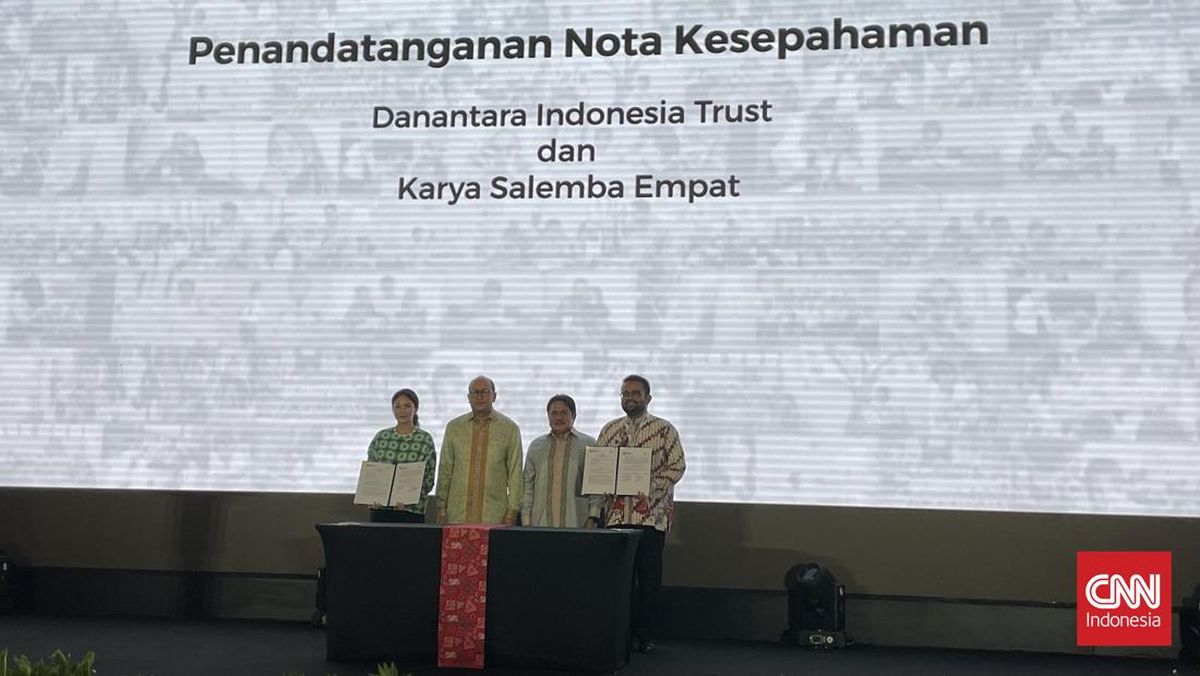
Jakarta, Indonesia – Danantara Indonesia Trust has officially launched its philanthropic endeavors through the establishment of key strategic partnerships, marking a significant step towards bolstering sustainable social development programs across Indonesia. The landmark occasion saw the signing of Memoranda of Understanding (MoU) with the Ministry of Health (Kemenkes), Yayasan Karya Salemba Empat (Karya Salemba Empat Foundation), and the Indonesia Heritage Agency (Museum dan Cagar Budaya) on Monday, May 25th.
As a dedicated philanthropic unit, Danantara Indonesia Trust is strategically focusing its resources and efforts on critical sectors including health, education, culture, and Water, Sanitation, and Hygiene (WASH). This focused approach aims to deliver tangible and lasting positive impacts on Indonesian society.
Rosan Roeslani, Chief Executive Officer of Danantara Indonesia and the driving force behind Danantara Indonesia Trust, has set an ambitious financial target for the philanthropic arm. He aims to secure a minimum of 1% of the total annual dividends received by Danantara from State-Owned Enterprises (BUMN) as philanthropic funding. This commitment underscores a dedication to consistent and substantial investment in social initiatives.
Foundational Funding and Vision
Adding significant momentum to its launch, Danantara Indonesia Trust has already secured an initial funding injection of USD 100 million, equivalent to approximately IDR 1.77 trillion, based on an assumed exchange rate of IDR 17,700 per US dollar. This substantial seed capital positions the Trust to commence its impactful work without delay.
"Our target is to contribute at least 1 percent of the total dividends we receive annually from all existing State-Owned Enterprises," stated Rosan Roeslani, following the Strategic Partnership Launch event held at Wisma Danantara in South Jakarta on Monday, May 25th. This statement highlights a clear and measurable commitment to channeling corporate dividends towards societal betterment.
Danantara Indonesia Trust was formally established in October 2025, operating as the philanthropic arm of Danantara Indonesia. Its creation was driven by a clear mandate to accelerate and deepen the impact of social development initiatives throughout the Indonesian archipelago. The organization’s inception represents a strategic move to consolidate and amplify philanthropic efforts, ensuring greater effectiveness and reach.
Initial Projects and Sectoral Focus
The Trust’s inaugural partnerships are already translating into concrete action, with significant initial allocations directed towards vital social programs.
Maternal and Child Health Initiative
In its first major philanthropic act, Danantara Indonesia Trust is channeling approximately IDR 250 billion to support maternal and child health programs. This substantial investment will be directed towards several key areas:
- Procurement of Hexavalent Vaccines: Ensuring access to essential vaccines that protect infants against six serious diseases is a critical component of this initiative. The availability of such comprehensive vaccination programs is crucial for reducing infant mortality and morbidity.
- Strengthening Vaccine Cold Chain: The effective delivery of vaccines relies heavily on an unbroken cold chain, which maintains vaccines at their optimal temperature from manufacturing to administration. Investments in strengthening this infrastructure are paramount for ensuring vaccine efficacy and safety.
- Micronutrient Supplements for Mothers: Providing vital micronutrient supplements to pregnant and postpartum mothers is essential for their health and the healthy development of their children. These supplements address common nutritional deficiencies that can have long-term consequences.
Educational Support and Cultural Enrichment
Beyond its health-focused initiatives, Danantara Indonesia Trust is also making significant inroads into the education and cultural sectors:
- Scholarship Program with Yayasan Karya Salemba Empat: In collaboration with the Karya Salemba Empat Foundation, the Trust will implement a three-year scholarship program designed to support approximately 500 underprivileged students. This initiative aims to break cycles of poverty by providing access to higher education for those who would otherwise be unable to afford it. This aligns with national goals to increase educational attainment and skill development among the youth.
- Cultural Preservation and Public Learning: A partnership with the Indonesia Heritage Agency (Museum dan Cagar Budaya) will focus on the enhancement of the National Museum’s facilities. Specifically, the collaboration will support the development of its library and the creation of public learning spaces. This initiative underscores the importance of preserving Indonesia’s rich cultural heritage and making it accessible and engaging for the public, fostering national identity and understanding.
Building Credibility and Global Collaboration
The establishment of Danantara Indonesia Trust is not merely about funding; it is also about building a robust and trustworthy philanthropic institution. Rosan Roeslani emphasized the Trust’s commitment to international best practices, highlighting ongoing collaborations with the Gates Foundation.
"We are working with the Gates Foundation on developing the institutional framework and governance of this philanthropy," Roeslani explained. "Our aim is to establish Danantara Trust as a credible, relevant, and transparent philanthropic organization with high standards of governance." This collaboration signifies a dedication to adopting proven models for effective philanthropic management, ensuring accountability and maximizing impact.
The emphasis on strong governance is crucial for any organization entrusted with significant funds and societal impact. Transparent financial management, clear ethical guidelines, and robust oversight mechanisms are essential for building public trust and ensuring the sustainable success of philanthropic endeavors.
Roeslani further articulated the vision for Danantara Indonesia Trust as more than just a funding body. He expressed a desire for the Trust to act as a "catalyst and ecosystem enabler" for strengthening cross-sectoral social collaborations. This forward-looking perspective suggests a strategy of fostering partnerships, facilitating knowledge sharing, and convening stakeholders to amplify the collective impact on social development challenges.
"We hope this is just the beginning," Roeslani added. "God willing, we will engage with many more partners in the future." This statement reflects an optimistic outlook and a commitment to continuous growth and expansion of its network and influence.
Robust Governance and Operational Framework
The operationalization of Danantara Indonesia Trust is being meticulously managed to ensure its effectiveness and sustainability. Nuraini Razak, Chairperson of Danantara Indonesia Trust, elaborated on the foundational work being undertaken.
"We are currently building our governance system, organizational structure, oversight mechanisms, and a comprehensive Monitoring, Evaluation, and Learning (MEL) framework," stated Razak. "We believe that this long-term mandate can only be executed credibly if it is built upon a strong foundation of good governance from the outset." This systematic approach to establishing operational and governance structures is critical for ensuring accountability, transparency, and the efficient deployment of resources.
The MEL framework, in particular, is vital for tracking the progress of programs, assessing their impact, and identifying areas for improvement. This data-driven approach allows for continuous learning and adaptation, ensuring that the Trust’s interventions remain relevant and effective in addressing evolving societal needs.
Furthermore, Danantara Indonesia Trust is actively engaged in learning from global best practices. Razak mentioned that the Trust is conducting discussions and engaging in learning processes with various sovereign wealth funds, philanthropic institutions, and development partners at both national and global levels. This proactive approach to knowledge acquisition and exchange is essential for staying at the forefront of philanthropic innovation and maximizing the potential for impactful collaborations.
"We believe that cross-sectoral collaboration is essential to strengthen broader and more sustainable social impact," Razak concluded. This sentiment reinforces the understanding that complex social issues require a multifaceted approach, bringing together diverse expertise, resources, and perspectives.
Broader Implications and Future Outlook
The launch of Danantara Indonesia Trust and its strategic partnerships signifies a promising development for Indonesia’s social sector. The commitment of significant funding, coupled with a focus on key development areas and a dedication to robust governance, positions the Trust to make a substantial contribution to national progress.
The channeling of dividends from State-Owned Enterprises into philanthropic activities offers a unique model for sustainable funding. This approach can help bridge the gap between corporate social responsibility and tangible social impact, ensuring that economic growth translates into improved well-being for citizens.
The emphasis on collaboration, both domestically and internationally, is also a critical factor. By working with government ministries, established foundations, cultural institutions, and global organizations, Danantara Indonesia Trust can leverage existing expertise, avoid duplication of efforts, and amplify the reach and effectiveness of its programs.
The initial focus on maternal and child health, education, and cultural preservation addresses fundamental aspects of human development and societal well-being. Success in these areas can have cascading positive effects, contributing to a healthier, more educated, and culturally vibrant nation.
Looking ahead, the success of Danantara Indonesia Trust will likely depend on its ability to effectively implement its programs, maintain transparency, and continuously adapt to the evolving needs of Indonesian society. The commitment to a strong governance framework and a learning-oriented approach provides a solid foundation for achieving these goals. As the Trust expands its network of partners and its portfolio of initiatives, it has the potential to become a pivotal player in driving sustainable social change across Indonesia. The organization’s journey will be closely watched as a barometer of progress in the nation’s philanthropic landscape.