
The assertion came as the Indonesian Rupiah (IDR) continued to experience a downward trend against the United States Dollar (USD). On Saturday, May 16th, the Rupiah was trading at approximately IDR 17,592 per USD, a slight depreciation from IDR 17,614 per USD recorded on Friday, May 15th. This sustained weakening has become a point of discussion, prompting various analyses and responses from political and economic stakeholders.
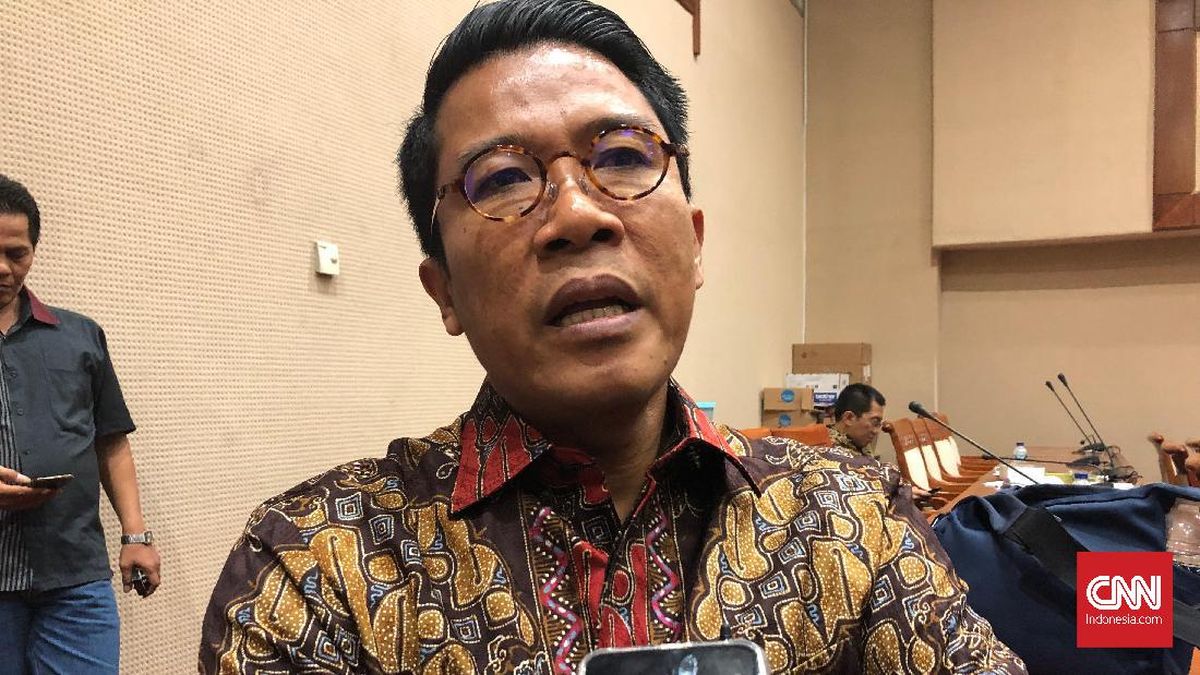
Misbakhun, Chairman of Commission XI, which oversees finance and banking, interpreted President Prabowo’s statement as a signal to the public and a reminder to Bank Indonesia (BI), the central bank, of the need to manage and control the Rupiah’s value. He emphasized that while the general public might not feel the immediate impact, businesses heavily reliant on imports, as well as affluent individuals engaged in international travel or investments, are more susceptible to the fluctuations of the Rupiah against the Dollar.
"He (Prabowo) is correct that the public is asked to remain calm, especially the rural communities, because they are not directly involved in transactions using dollars. Those affected are transactions involving imports, and the wealthy who travel abroad," Misbakhun was quoted as saying, referencing reports from Detik on Sunday, May 17th.
Misbakhun further elaborated that the President’s directive serves as a crucial reminder for Bank Indonesia to actively intervene and stabilize the Rupiah. He expressed the view that the Rupiah’s value needs to be managed and ideally restored to a more ideal level, considering its significant impact on various segments of the Indonesian economy and society.
The Impact of Imported Goods and Economic Fundamentals
Misbakhun highlighted the interconnectedness between the Rupiah’s value and the cost of imported goods, particularly raw materials. He pointed out that industries heavily dependent on imported components are directly affected by a weaker Rupiah, as the cost of these inputs increases. This, in turn, can lead to higher prices for consumers and potentially dampen economic activity.
"What are the people who use dollars in transactions? Those whose raw materials are imported. And one of the imports that we are concerned about is imports of commodities that have long been the backbone of economic growth," Misbakhun stated. This implies that a depreciating Rupiah could affect the competitiveness of Indonesian industries and potentially slow down economic growth, especially if key export-oriented sectors rely on imported inputs.
Despite the concerns raised by the Rupiah’s performance, Misbakhun also perceived an underlying message in President Prabowo’s remarks: to elevate the discussion about the Rupiah’s weakening as a matter of public discourse. This, he suggested, is intended to spur Bank Indonesia into taking more concrete and strategic actions to stabilize and strengthen the Rupiah.
Bank Indonesia’s Role and Economic Resilience
Misbakhun’s interpretation aligns with the expectation that Bank Indonesia should implement robust stabilization measures. He noted that the central bank itself has acknowledged that the Rupiah is currently undervalued. This creates an expectation for proactive intervention from BI to bring the Rupiah back to a more appropriate valuation.
The Chairman of Commission XI also referenced President Prabowo’s assertion regarding the strong fundamental economic condition of Indonesia. Misbakhun questioned the apparent disconnect between these strong fundamentals and the current depreciation of the Rupiah, especially considering that the Rupiah has experienced a significant weakening regionally.
"And the President also stated that Indonesia’s economic fundamentals are very strong. When the economic fundamentals are very strong, why is there a weakening of the Rupiah? And the Rupiah is among the currencies that have experienced very significant weakening regionally," he remarked.
This sentiment suggests a call for greater transparency and accountability from Bank Indonesia in explaining the factors contributing to the Rupiah’s decline and the specific strategies being employed to address it. Commission XI, as the legislative oversight body, is positioned to hold BI accountable and ensure that appropriate measures are taken.
"And of course, we in Commission XI give Bank Indonesia the opportunity to take strategic steps on how to strengthen the Rupiah back to a price or value that, in my opinion, is appropriate," Misbakhun added, underscoring the commission’s expectation of decisive action from the central bank.
President Prabowo’s Address and Public Reassurance
President Prabowo Subianto, in his speech during the inauguration of the Marsinah Museum in Nganjuk, East Java, on Saturday, May 16th, directly addressed the concern over the Rupiah’s depreciation. He articulated that the sharp decline in the Rupiah’s value does not have a direct impact on the daily lives of people in rural areas, whose primary focus remains on meeting basic needs.
He specifically countered narratives that suggest the Indonesian economy is in peril due to the weakening Rupiah. Prabowo urged the public not to be overly anxious about the Rupiah’s movement against the Dollar, emphasizing that the majority of Indonesians, particularly those in the countryside, do not engage with foreign currency in their daily transactions.
"So, I am sure now there are those who always, I don’t understand. Suddenly, Indonesia will collapse, will be chaotic, will be what, right?," Prabowo stated, addressing the alarmist rhetoric.
Simultaneously, President Prabowo asserted the resilience of Indonesia’s economy, claiming it remains well-protected and relatively stable, particularly in the food and energy sectors, even amidst global panic. This highlights his administration’s focus on essential sectors that provide a buffer against external economic shocks.
He also expressed disappointment with certain leaders who, he claimed, exploit nationalistic sentiments without taking concrete actions that benefit the common people after gaining power. This critique suggests a broader concern about political opportunism and the need for leaders to prioritize substantive policy implementation over rhetoric.
"The Rupiah is like this, the Rupiah is like this, what? Hey, the Dollar is like this. People in the villages don’t use dollars, right? Food is secure, energy is secure, yes. Many countries are panicking, Indonesia is still okay," he concluded.
Context and Broader Economic Landscape
The weakening of the Indonesian Rupiah is not an isolated event and occurs within a complex global economic environment. Several factors can contribute to currency depreciation, including global economic uncertainty, changes in investor sentiment, interest rate differentials between countries, and domestic economic performance.
In the period leading up to these statements, global markets have experienced volatility due to various geopolitical events and concerns about inflation and potential economic slowdowns in major economies. Emerging market currencies, in general, are often more susceptible to these global shifts due to capital flows and investor risk appetite.
The Indonesian economy, while possessing strong fundamentals as claimed by President Prabowo, is also subject to these external pressures. Factors such as the trade balance, foreign direct investment, and the level of foreign debt can influence the Rupiah’s stability. Indonesia’s reliance on commodity exports means that global commodity price fluctuations can also have a significant impact on its currency.
The specific data points mentioned, such as the Rupiah trading at over IDR 17,000 per USD, indicate a significant depreciation from historical levels. For instance, a few years prior, the Rupiah was trading in the range of IDR 13,000-14,000 per USD. This substantial shift can have a ripple effect on inflation, the cost of imported goods, and the overall purchasing power of the Indonesian population.
Analysis of Implications
For Consumers: A weaker Rupiah generally translates to higher prices for imported goods. This can include electronics, vehicles, certain food items, and raw materials used in manufacturing. Consumers may face reduced purchasing power, especially for non-essential imported items. However, for domestically produced goods and services, the impact might be less direct or even positive if they are competitive internationally.
For Businesses: Companies that rely heavily on imported raw materials or components will see their costs increase. This can squeeze profit margins or force them to pass on the higher costs to consumers, potentially leading to inflation. Conversely, businesses that export their products may find them more competitive in international markets, potentially boosting sales and revenue. However, the uncertainty surrounding currency fluctuations can make long-term planning more challenging.
For the Government: A weaker Rupiah can increase the cost of servicing foreign debt denominated in foreign currencies. However, it can also make Indonesian exports more attractive, potentially improving the trade balance over time. The government’s fiscal policy and its ability to manage debt will be crucial in navigating these challenges.
For Bank Indonesia: The central bank faces the delicate task of balancing currency stability with other monetary policy objectives, such as controlling inflation and supporting economic growth. Intervention in the foreign exchange market to support the Rupiah can deplete foreign exchange reserves. Therefore, BI must employ a range of tools and strategies, including interest rate adjustments and direct market intervention, to manage the currency effectively.
For Investors: Currency depreciation can affect foreign investors’ returns. While a weaker Rupiah might make Indonesian assets cheaper for foreign buyers, the potential for further depreciation could deter investment. Conversely, domestic investors might see the value of their foreign currency holdings increase.
Historical Context and Policy Responses
Indonesia has experienced periods of significant currency depreciation in its economic history, most notably during the Asian Financial Crisis of 1997-1998. The lessons learned from that period have shaped the country’s economic management and the role of Bank Indonesia. Since then, reforms have been implemented to strengthen the financial sector and improve the central bank’s independence and operational effectiveness.
Bank Indonesia typically responds to currency depreciation through a combination of:
- Interest Rate Hikes: Increasing interest rates can make holding Rupiah-denominated assets more attractive, thereby attracting foreign capital and supporting the currency. However, higher interest rates can also slow down domestic economic growth.
- Market Intervention: BI can sell its foreign exchange reserves to buy Rupiah in the open market, thereby increasing demand for the Rupiah and stabilizing its value. This is a direct but finite measure, as reserves can be depleted.
- Moral Suasion: Encouraging financial institutions and businesses to manage their foreign currency exposures prudently and to refrain from speculative activities.
- Macroprudential Policies: Implementing regulations aimed at curbing excessive foreign currency borrowing or lending that could exacerbate currency risks.
The current situation, as described by Misbakhun and President Prabowo, suggests a focus on reassuring the public and signaling to the central bank the urgency of implementing effective stabilization measures. The ongoing dialogue between the legislature and the executive, as well as the central bank, will be critical in shaping Indonesia’s response to currency market dynamics and ensuring continued economic stability. The coming weeks and months will likely see increased scrutiny of Bank Indonesia’s actions and their impact on the Rupiah and the broader economy.
Related posts: