Cek Khodam: Viral Social Media Phenomenon Transforms into a Major Indonesian Horror-Comedy Film


The much-anticipated Indonesian horror-comedy film, Cek Khodam, made its cinematic debut on July 16, 2026, bringing to the big screen a unique narrative directly inspired by the wildly popular "cek khodam" phenomenon that swept across social media platforms. Produced by Dee Company, known for its ventures into the horror genre, and directed by Jeropoint, a name synonymous with viral online horror narratives, the film promises a blend of supernatural scares and laugh-out-loud moments, featuring a star-studded cast of prominent content creators and seasoned comedic actors. Its release marks a significant moment in Indonesian cinema, demonstrating a keen responsiveness to contemporary digital culture and the increasing trend of adapting internet sensations into mainstream entertainment.
The Genesis of a Viral Phenomenon: Understanding "Cek Khodam"
To fully grasp the cultural impact and comedic potential of Cek Khodam, it is essential to delve into the origins and mechanics of the "cek khodam" phenomenon itself. In Indonesian traditional beliefs, a "khodam" is often understood as a spiritual entity or guardian spirit, frequently associated with a person, object, or even an ancestral lineage. These entities, believed to possess various powers or characteristics, can range from benevolent protectors to mischievous tricksters, and are deeply rooted in Javanese mysticism, Islamic folklore, and animistic traditions. Historically, seeking knowledge about one’s khodam involved complex rituals, meditation, or consultations with spiritual healers (paranormal or kyai).
However, in the mid-2020s, the concept of "cek khodam" underwent a dramatic transformation, evolving into a widespread internet meme and a viral trend, particularly on platforms like TikTok and Instagram Live. This digital iteration largely detached from its solemn, spiritual roots, becoming a form of lighthearted entertainment. Content creators, often employing comedic exaggeration, theatrical gestures, and sometimes intentionally vague or absurd pronouncements, would host live sessions where viewers could comment their names and request a "khodam check." The "khodam" revealed would invariably be something ridiculous or mundane, such as "khodam cicak" (gecko khodam), "khodam sendal jepit" (flip-flop khodam), or "khodam nasi goreng" (fried rice khodam), instead of the traditional powerful spirits like "macan putih" (white tiger) or "naga" (dragon).
The trend’s virality stemmed from several factors: its interactive nature, the unexpected and often hilarious "khodam" revelations, and its ability to blend traditional Indonesian mysticism with modern, self-deprecating humor. It became a way for people to playfully engage with supernatural concepts without the associated fear or reverence, turning something once sacred or awe-inspiring into a source of collective amusement. This cultural shift, where the mystical became trivialized and comedic through digital consumption, forms the very bedrock of the Cek Khodam film’s premise. The phenomenon garnered millions of views, trended for weeks, and became a common topic of conversation, demonstrating the profound influence of social media on contemporary Indonesian society and its cultural narratives.
Cek Khodam‘s Narrative: When Ghosts Face an Existential Crisis
The film Cek Khodam cleverly extrapolates this social media phenomenon into a fantastical horror-comedy plotline, exploring the hilarious and unexpected consequences when human perception of the supernatural drastically shifts. The story centers on three ambitious young friends: Sakti (portrayed by Thai dangdut sensation Jirayut), Wira (played by content creator Saputra Kori), and Bima (brought to life by comedian Benidictus Siregar). These three protagonists achieve overnight internet fame through their innovative social media content, which repackages the traditional "cek khodam" into an entertaining, comedic spectacle. Their live streams, replete with exaggerated rituals and absurd "khodam" revelations, turn the world of spirits and mystical entities into a source of endless amusement for their growing audience.
Their success, however, comes with an unforeseen and profound spiritual repercussion. As more and more humans consume their content, viewing ghosts and supernatural beings as mere fodder for jokes and entertainment, a critical metric known as the Angka Ketakutan Manusia (AKM), or Human Fear Index, begins to plummet. This fictional index represents humanity’s collective dread of the unseen, a vital energy source or perhaps a measure of respect that sustains the spiritual realm. With the AKM dropping to unprecedented lows, the film posits a dire scenario: the ghosts and khodam in the spirit world find themselves in an existential crisis, "starving" for fear, losing their power, and teetering on the brink of fading into oblivion. The irony is stark – humans are now more preoccupied with mundane, tangible fears like empty wallets, looming paylater installments, and the dreaded "tanggal tua" (end of the month financial struggles) than with spectral apparitions. The spectral beings, once objects of terror, are now perceived as harmless, even amusing.
This precarious situation compels the formidable Panglima Khodam (Commander of Khodam) to intervene. As the supreme leader of the spirit realm, he descends to the human world with a singular, urgent mission: to restore humanity’s innate fear of the supernatural, thereby reinstating the dignity and power of the ghostly domain and raising the plummeting AKM. However, his attempts to instill terror are far from successful. Instead of eliciting fear, the Panglima Khodam’s efforts lead to a series of escalating, side-splitting blunders and chaotic mishaps, further cementing the human perception of ghosts as more comical than menacing.
Witnessing the Panglima Khodam’s escalating frustration and the comedic chaos he inadvertently causes, the three content creator friends—Sakti, Wira, and Bima—recognize an unlikely opportunity. They propose an audacious partnership: they will collaborate with the distraught Panglima Khodam to devise new, more effective strategies to re-instill fear in humanity. This alliance between the digital entrepreneurs and the beleaguered spiritual commander sets the stage for the film’s climactic comedic and supernatural adventures, blending traditional folklore with contemporary internet culture in an unprecedented manner. The film promises a roller-coaster of laughs as these disparate worlds collide, all while subtly commenting on the evolving relationship between belief, fear, and the pervasive influence of social media in modern society.

A Stellar Ensemble: Digital Stars Meet Veteran Comedians
The casting of Cek Khodam is a deliberate and strategic move, reflecting the evolving landscape of entertainment where digital influence now rivals traditional stardom. The film features a vibrant mix of popular content creators who bring their established online personas and massive fanbases to the silver screen, alongside veteran comedic actors who lend gravitas and proven comedic timing to the ensemble.
Leading the charge are the content creators who embody the very essence of the film’s premise. Jirayut, the charismatic Thai dangdut singer who has carved out a significant career in Indonesian television and music, plays Sakti, one of the three central friends. His energetic stage presence and comedic flair make him a natural fit for the role. Saputra Kori and Benidictus Siregar, both well-known for their engaging online content and comedic performances, round out the trio as Wira and Bima, respectively. Their familiarity with the digital realm and their ability to connect with a younger, internet-savvy audience are crucial assets for the film. The inclusion of other popular digital personalities like Kak Gem, Tante Lala, and Adi Sudirja further enhances the film’s appeal, leveraging their existing popularity and comedic talents to draw in a broad audience base. These individuals represent the modern face of entertainment, blurring the lines between online celebrity and traditional acting.
Complementing this fresh influx of digital talent are seasoned stalwarts of Indonesian comedy, providing a grounding force and ensuring robust comedic performances. Actors like Ence Bagus and Fanny Fadillah, renowned for their extensive careers in film and television, bring a wealth of experience and nuanced comedic delivery. Their presence not only elevates the overall acting quality but also bridges the generational gap, appealing to a wider demographic beyond just the fans of the content creators. This strategic blend of new and old, digital and traditional, is a hallmark of modern Indonesian filmmaking, seeking to maximize both cultural relevance and artistic merit.
Behind the camera, the film is helmed by Jeropoint, a director whose reputation was forged in the digital fires of viral online horror stories. Jeropoint is widely recognized for crafting compelling and chilling narratives in the form of social media "threads," most notably the highly successful "Di Ambang Kematian," which was also adapted into a blockbuster film in 2024. His intimate understanding of suspense, horror tropes, and audience engagement, particularly within a digital context, positions him uniquely to direct Cek Khodam. He co-wrote the screenplay with Sandikagusti and Shintapuji, ensuring that the film’s narrative retains the sharp wit and cultural insights necessary to bring this specific phenomenon to life. This synergy between a director deeply rooted in online storytelling and a cast that spans both digital and traditional entertainment realms underscores the innovative approach taken by Dee Company in producing Cek Khodam.
Themes and Sociocultural Commentary: Beyond the Laughter
While primarily a horror-comedy designed for entertainment, Cek Khodam delves into several pertinent sociocultural themes, offering a subtle yet insightful commentary on contemporary Indonesian society. At its core, the film explores the dynamic interplay between modernity and tradition, particularly how ancient beliefs and folklore are reinterpreted and often trivialized in the digital age. The "cek khodam" phenomenon itself is a prime example of this, where a concept once steeped in spiritual reverence is transformed into lighthearted online content. The film dramatizes the consequences of this transformation, raising questions about the enduring power of tradition in a rapidly globalizing and digitizing world.
Another significant theme is the concept of desensitization. The narrative’s central premise—humanity losing its fear of the supernatural—can be seen as a metaphor for a broader desensitization occurring in society. Whether it’s due to the constant bombardment of information, the trivialization of serious issues through memes, or the sheer volume of content, Cek Khodam playfully suggests that modern humans are becoming increasingly numb to things that once commanded awe or respect. The film highlights how the "fear" economy has shifted, with financial anxieties and mundane daily struggles now eclipsing existential dread or spiritual concerns. This shift prompts audiences to reflect on what truly holds sway over their fears and anxieties in the 21st century.
The pervasive impact of social media is, arguably, the most overt theme. The film directly attributes the decline in humanity’s fear of ghosts to the viral online content created by the protagonists. This serves as a cautionary yet comedic exploration of social media’s power to shape perceptions, influence cultural narratives, and even inadvertently alter societal values. It underscores how online trends, no matter how fleeting or seemingly innocuous, can have far-reaching, albeit exaggerated for comedic effect, consequences. The film suggests that the digital realm is not merely a reflection of reality but an active agent in shaping it.
Furthermore, Cek Khodam cleverly uses comedy as a vehicle for cultural critique. By presenting the plight of "starving" ghosts and a disgruntled Panglima Khodam, the film employs humor to explore deeper anxieties about cultural heritage, the erosion of traditional belief systems, and the search for meaning in a world increasingly dominated by the ephemeral and the superficial. The film’s ability to blend genuinely funny situations with moments that prompt reflection on these larger themes showcases a sophisticated approach to the horror-comedy genre. It’s a film that resonates deeply with Indonesian audiences because it taps into a specific, recent cultural moment, while also touching upon universal questions about belief, fear, and societal change.
Production and Release: Capitalizing on a Cultural Moment
The journey of Cek Khodam from a viral internet sensation to a major cinematic release underscores a burgeoning trend in the Indonesian film industry: the swift and strategic adaptation of trending online content. Dee Company’s decision to greenlight Cek Khodam less than two years after the "cek khodam" trend peaked on social media demonstrates an agile production strategy, aiming to capitalize on the existing cultural zeitgeist and audience familiarity. Developing a full-length feature film from a fleeting meme presents unique challenges, primarily the need to expand a simple, comedic premise into a compelling, hour-and-a-half-long narrative without losing its original charm or overextending its humor. The involvement of Jeropoint, with his proven track record of translating online horror narratives to the big screen, was crucial in navigating this adaptation, ensuring the story remained engaging and well-paced.
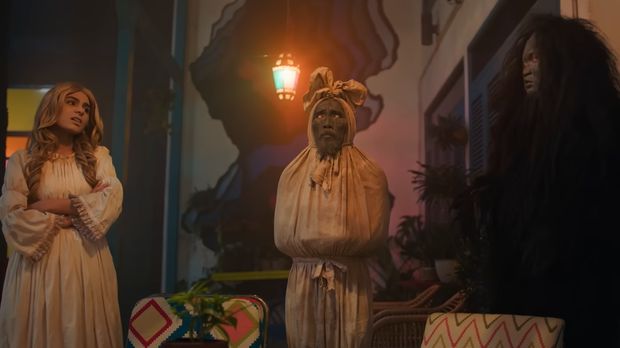
The film’s marketing campaign heavily leveraged its origins and star power. Promotional materials prominently featured the recognizable faces of its content creator cast, drawing upon their substantial online following and built-in fan engagement. Teasers and trailers were strategically released across social media platforms, mimicking the very environment where the "cek khodam" trend flourished, thereby creating a seamless bridge between the internet phenomenon and its cinematic manifestation. The release date of July 16, 2026, was likely chosen to coincide with a period that would maximize audience turnout, possibly during a school holiday or a time when the "cek khodam" trend, while no longer at its peak, would still evoke nostalgic recognition and amusement among the target demographic.
Anticipated reception for Cek Khodam was largely positive, fueled by the film’s unique premise and the popularity of its cast. The horror-comedy genre consistently performs well in Indonesia, with films like Pengabdi Setan (though pure horror) and Ghost Writer (horror-comedy) demonstrating strong box office potential. Analysts predicted that Cek Khodam would tap into both the younger, internet-savvy audience attracted by the content creators and a broader audience segment seeking lighthearted entertainment with a local flavor. The film’s ability to generate significant pre-release buzz, driven by its topical subject matter and a cast that is actively engaged with their online communities, positioned it as a strong contender for commercial success, potentially mirroring the triumphs of other films that successfully adapted viral internet stories or local legends.
Broader Implications: The Evolving Landscape of Indonesian Cinema
The release of Cek Khodam is more than just another film; it signifies several broader implications for the Indonesian cinematic landscape. Firstly, it solidifies the growing trend of adapting viral social media content and internet phenomena into feature films. This approach allows filmmakers to tap directly into contemporary youth culture, offering narratives that are immediately recognizable and relevant to a significant portion of the audience. It suggests a dynamic shift in source material, moving beyond traditional literature, history, or original screenplays to embrace the transient yet impactful narratives born on digital platforms.
Secondly, the film highlights the increasing integration of content creators into mainstream media. The casting of digital stars alongside veteran actors demonstrates a recognition of their immense influence and their ability to mobilize dedicated fanbases. This trend is likely to continue, blurring the lines between online celebrity and traditional acting, and opening new avenues for talent discovery and audience engagement. It reflects a media ecosystem where popularity on TikTok or YouTube can be a direct gateway to film roles, fundamentally reshaping the industry’s casting strategies.
Thirdly, Cek Khodam exemplifies the growing sophistication and popularity of genre blending in Indonesian cinema, particularly the horror-comedy subgenre. This fusion allows filmmakers to tackle sensitive or culturally significant themes with a lighter touch, making them more accessible to a wider audience. The ability to elicit both laughter and occasional chills demonstrates a maturity in storytelling and a willingness to experiment with narrative structures that resonate with modern sensibilities.
Finally, the film contributes to a larger discourse on cultural preservation and modernization. By taking a traditional concept like "khodam" and recontextualizing it within a contemporary, comedic framework, Cek Khodam performs a unique cultural service. It keeps traditional folklore alive and relevant for new generations, presenting it in a format that is both entertaining and thought-provoking. This approach ensures that while traditions evolve, they are not forgotten, but rather reimagined and integrated into the ever-changing fabric of modern Indonesian identity.
In conclusion, Cek Khodam stands as a compelling example of Indonesian cinema’s agility and innovation. By transforming a fleeting social media trend into a full-fledged cinematic experience, the film not only entertains but also offers a mirror to contemporary society, reflecting on the power of digital culture, the shifting nature of fear, and the enduring allure of the mystical in an increasingly modern world. Its blend of popular digital stars and seasoned talent, coupled with a unique narrative, positions Cek Khodam as a significant cultural and commercial milestone, further solidifying the vibrant and evolving trajectory of Indonesian filmmaking.