Iran’s Dual Currency System: Rial Under Pressure, Toman Dominates Daily Transactions Amidst Geopolitical Tensions

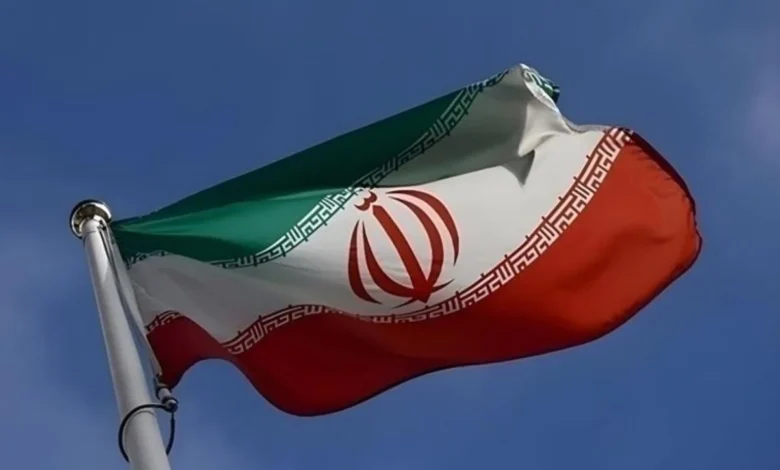
The Iranian currency has recently been thrust into the global spotlight, a consequence of escalating geopolitical tensions and shifting global economic policies. The United States, under President Donald Trump’s administration, has implemented a decisive economic strategy, imposing tariffs of up to 25 percent on nations continuing to engage in business collaborations with Iran. This move has sent ripples through the international economic landscape, with significant repercussions for Iran’s domestic economy, most notably the weakening of its national currency, the rial. Recent reports have indicated that the Iranian rial has reached historic lows against the Euro, a stark illustration of the profound economic pressures the nation faces due to prolonged sanctions and persistent inflation.
However, a curious phenomenon unfolds for those who visit Iran’s bustling traditional bazaars or its modern shopping centers. The term "rial" is conspicuously absent from everyday transaction conversations. Instead, locals fluidly use the term "toman" when discussing prices for goods and services. This linguistic shift is a direct response to the country’s extremely high inflation rate. To simplify price communication and avoid cumbersome, lengthy numerical expressions, Iran has adopted an alternative counting system: the toman. This article delves into the intricacies of Iran’s official currency, the distinctions between the rial and the toman, and the underlying reasons for this peculiar, yet practical, dual-currency reality that often perplexes tourists and international economic observers alike.
The Official Currency: Iran’s Rial
Legally and administratively, the rial (IRR) stands as Iran’s official currency. All banking activities, government documentation, and pricing in modern commercial establishments are officially denominated in rials. The Central Bank of Iran (CBI) is the issuing authority for the rial, and its value is formally pegged to international exchange rates, albeit subject to significant volatility. Historically, the rial has been the bedrock of Iran’s monetary system, with its denominations reflecting the nation’s economic trajectory. However, the persistent economic challenges have rendered the official currency’s nominal value increasingly detached from its practical purchasing power in daily life.
The Practical Currency: The Toman’s Reign
Despite the rial’s official status, the reality on the ground is a testament to the adaptive nature of commerce. In everyday transactions, the toman has become the de facto unit of exchange. This shift is not merely a colloquialism; it is a necessity born out of severe inflation. When a shopkeeper in Tehran quotes a price, they will invariably refer to tomans, not rials. This practice simplifies negotiations and avoids the need to state prices with numerous zeros, a consequence of the rial’s diminished value.
The fundamental relationship between the toman and the rial is straightforward yet crucial to understanding the Iranian monetary landscape. One toman is equivalent to 10 rials. This means that the toman essentially represents the rial with one zero removed. For instance, if a price is stated as 50,000 tomans, the actual value in rials is 500,000. This simplification is a direct mechanism to combat the psychological and practical difficulties of dealing with extremely high nominal values in daily transactions.
Historical Context and the Erosion of the Rial’s Value
The widespread adoption of the toman in everyday discourse is a direct consequence of Iran’s struggle with hyperinflation. The nation has grappled with escalating price increases for decades, a situation exacerbated by external factors such as international sanctions and internal economic mismanagement.
A Timeline of Pressure:
- Pre-2010s: While inflation was a concern, the rial maintained a more stable, albeit gradually depreciating, value. Transactions were primarily conducted in rials, with the concept of tomans being more of a historical or less common informal simplification.
- Early 2010s: The intensification of international sanctions, particularly those targeting Iran’s oil exports and financial institutions, began to exert significant pressure on the rial. The currency experienced a notable devaluation.
- Mid-2010s: The Joint Comprehensive Plan of Action (JCPOA) in 2015 brought a temporary respite, leading to a brief appreciation of the rial. However, underlying economic vulnerabilities persisted.
- 2018 Onwards: The withdrawal of the United States from the JCPOA and the re-imposition of stringent sanctions led to a dramatic and sustained depreciation of the rial. Inflation surged, making the rial’s nominal values unwieldy for daily use. This period saw the toman solidify its position as the preferred unit of currency in everyday transactions.
- 2020-Present: The Iranian government recognized the practical challenges posed by the rial’s hyperinflation and initiated a long-term plan for currency redenomination. This process, aimed at simplifying the monetary system, has been underway with a view to officially transitioning to the toman.
The persistent economic challenges, including the impact of sanctions and internal fiscal policies, have severely eroded the purchasing power of the rial. This devaluation has made it impractical to conduct transactions using nominal rial values, prompting the widespread informal adoption of the toman.
Understanding the Redenomination Plan
Recognizing the long-standing confusion and the practical difficulties arising from the rial’s diminished value, the Iranian government, through the Central Bank of Iran (CBI), embarked on a significant currency reform initiative. This ambitious plan aims to formally address the dual-currency phenomenon and simplify the national financial system.
The redenomination process, officially initiated in 2020, involves a substantial change in the country’s monetary base. The core of this reform is to eliminate four zeros from the rial, effectively replacing it with a new toman. This means that 10,000 old rials will be equivalent to 1 new toman. This strategic move is designed to:
- Simplify Transactions: Reduce the number of zeros in everyday price listings, making transactions smoother and less prone to errors.
- Boost Confidence: Potentially instill greater confidence in the currency by presenting more manageable nominal values.
- Align with Public Practice: Officially acknowledge and formalize the public’s existing practice of using tomans.
The new toman is further subdivided into 100 smaller units called "qiran." This structure provides a more granular monetary system, ensuring that even with the redenomination, smaller denominations remain available for transactions.
Phased Implementation:
The redenomination is not an overnight process. It is being implemented in phases to allow for a gradual adjustment by the public and the financial system.
- Initial Phase (2020 onwards): The CBI began introducing new banknotes and coins denominated in the new toman. These new denominations are clearly marked, often with a visual cue indicating the removal of zeros. For instance, a banknote might display the nominal value in both old rials and the new toman, with the rial value showing a significantly larger number.
- Transition Period (2025-2026): This period is designated for a more widespread and comprehensive rollout of the new currency. During this time, both the old rial and the new toman will coexist and be legal tender. This transitional phase is critical for public education and adaptation.
- Full Transition: Following the transition period, the new toman is expected to be the sole official currency, with the old rial gradually being phased out of circulation.
During this transition, the CBI has been issuing currency that reflects this change. Newer banknotes often feature a smaller nominal value alongside a "ghost" or fainter representation of the full number of zeros, serving as a visual reminder of the ongoing redenomination. This phased approach is crucial to prevent disruption and to allow the population to become accustomed to the new monetary values.
Factors Contributing to the Rial’s Weakness
The precarious state of the Iranian rial is not attributable to a single cause but rather a confluence of interconnected economic and geopolitical factors. Understanding these drivers is key to grasping the context behind the currency’s decline and the subsequent rise of the toman in everyday use.
1. International Sanctions: The Primary Economic Weapon
The most significant external factor impacting the rial has been the imposition of international sanctions, particularly those levied by the United States. These sanctions have targeted various sectors of the Iranian economy, including:
- Oil Exports: Iran’s primary source of foreign currency revenue. Restrictions on oil sales drastically reduce the inflow of dollars, weakening the central bank’s ability to manage the exchange rate and fund imports.
- Financial Institutions: Sanctions on Iranian banks limit their access to the global financial system, making international trade and remittances exceedingly difficult and costly. This isolation hinders foreign investment and capital flows.
- Trade Restrictions: Broader limitations on trade with Iran stifle economic activity, reduce demand for imports, and limit export opportunities, all of which negatively affect currency stability.
The re-imposition of sanctions following the US withdrawal from the JCPOA in 2018 triggered a sharp and sustained depreciation of the rial. The uncertainty and fear associated with these sanctions have also led to capital flight, as both domestic and international investors seek to move their assets out of Iran.
2. Persistent Inflation and Economic Instability
Beyond external pressures, Iran has historically struggled with high inflation rates. This domestic issue is often exacerbated by:
- Fiscal Deficits: Government spending that outpaces revenue can lead to the printing of more money, fueling inflation.
- Monetary Policy: Inconsistent or expansionary monetary policies can contribute to price instability.
- Supply Chain Disruptions: Both internal and external factors can disrupt supply chains, leading to shortages and price hikes for essential goods.
- Currency Speculation: The volatility of the rial has also made it a target for speculators, who can further drive down its value through aggressive trading.
The combination of sanctions and internal inflationary pressures has created a vicious cycle where the weakening rial further fuels inflation, and high inflation further erodes the rial’s value.
3. Geopolitical Tensions and Regional Instability
The broader geopolitical landscape in the Middle East significantly influences investor confidence and economic stability in Iran. Escalating tensions with regional adversaries, such as the recent incidents involving attacks on shipping and oil facilities, create uncertainty and deter foreign investment. This perceived risk further weakens the rial as investors become more risk-averse towards assets in the region.
4. Impact on Trade and Foreign Investment
The economic ramifications of these factors are profound. The weakened rial makes imports significantly more expensive, contributing to higher inflation for consumers. Conversely, it makes Iranian exports cheaper for foreign buyers, which could theoretically boost exports. However, the effectiveness of this is often hampered by the sanctions regime, which limits Iran’s ability to engage in international trade. Furthermore, the pervasive economic uncertainty and the risk of further sanctions make foreign direct investment highly unattractive, stifling long-term economic growth and currency recovery.
The Broader Implications of the Dual Currency System and Redenomination
The existence of a de facto dual currency system, with the rial as the official unit and the toman as the practical medium of exchange, has several implications. For the Iranian populace, it represents an adaptation to economic hardship, a pragmatic solution to navigate a complex and volatile financial environment. However, for international observers, it highlights the severe economic challenges facing the nation.
The redenomination plan, while a necessary step towards simplifying the monetary system, is not a panacea. The success of the new toman will ultimately depend on Iran’s ability to address the underlying causes of inflation and currency depreciation. Sustainable economic reforms, a stable geopolitical environment, and a predictable sanctions regime are crucial for the long-term stability of any currency, whether it be the rial or the toman.
Potential Impacts of Redenomination:
- Improved Transparency: A unified and simplified currency system can lead to greater transparency in pricing and financial reporting.
- Reduced Transaction Costs: Eliminating the need to constantly adjust for large numbers of zeros can reduce errors and speed up transactions.
- Psychological Boost: A currency with more manageable nominal values can, to some extent, improve public perception and confidence.
- Challenges in Transition: The transition period itself can present logistical challenges, including the need for widespread public education, updating accounting systems, and managing the circulation of old and new currency.
The ongoing redenomination process underscores Iran’s commitment to modernizing its financial infrastructure and adapting to the realities of its economic situation. The journey from the historically significant rial to the practically dominant toman, and now towards a new toman, is a narrative of resilience and adaptation in the face of formidable economic headwinds. As the global economic and geopolitical landscape continues to evolve, the stability and future trajectory of Iran’s currency will remain a closely watched indicator of the nation’s economic health and its ability to navigate international pressures.
Related posts: