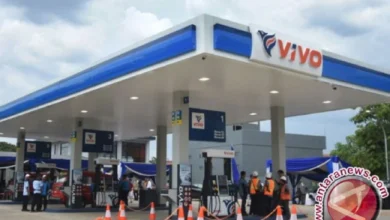
Pertamina Patra Niaga Clarifies No National Ban on Suzuki Thunder Refueling at SPBUs Amidst Localized Restrictions

Pertamina Patra Niaga has clarified that there is no national policy prohibiting motorcycles, including the Suzuki Thunder, from refueling at public fuel stations (SPBUs). The company stated that any such restrictions observed at individual SPBUs are local decisions made by the respective station operators.
Roberth M.V. Dumatubun, Corporate Secretary of Pertamina Patra Niaga, emphasized that Pertamina’s core principle is to ensure the equitable distribution of subsidized fuel to those who genuinely need it. Consequently, all vehicle users, whether operating two-wheeled or four-wheeled vehicles, are encouraged to use subsidized fuel reasonably and in accordance with their normal daily requirements.
"Regarding specific brands, this does not serve as a limitation or exclusion. In fact, according to statements from the Chairman of the Suzuki Thunder Club, there have been no issues with refueling at SPBUs, as these motorcycles are used for daily activities in a reasonable manner," Roberth stated in a written release on Monday, July 20.
Despite this clarification, Roberth acknowledged that instances have been observed in the field where individuals have exploited Suzuki Thunder motorcycles, particularly those with modified fuel tanks exceeding standard manufacturer capacity, to repeatedly refuel. He indicated that these recurring incidents have served as the impetus for the localized restrictions implemented at some SPBUs.
"This is what has led to the emergence of these policies with the positive intention of ensuring equitable supply and without any intent to discredit any particular brand," he added.
Prior to Pertamina’s statement, several SPBUs in Jakarta and Bekasi were seen posting notices prohibiting Suzuki Thunder motorcycles from refueling. These prohibitions were displayed through leaflets placed near fuel dispensers and banners within the SPBU premises. The restrictions were not limited to the Suzuki Thunder; some SPBUs also prohibited refueling for motorcycles with modified fuel tanks and restricted bulk purchases using jerrycans.
Reports from local media outlet Detik on Friday, July 17, indicated that these measures were implemented to prevent alleged misuse of subsidized fuel, anticipate repeated purchases likely intended for resale, and ensure that fuel distribution remained targeted and efficient.
However, observations on the ground suggested that the implementation of these bans was not uniform. Many SPBUs in Jakarta and Bekasi continued to serve Suzuki Thunder motorcycles, provided there were no clear indications of violation or misuse.
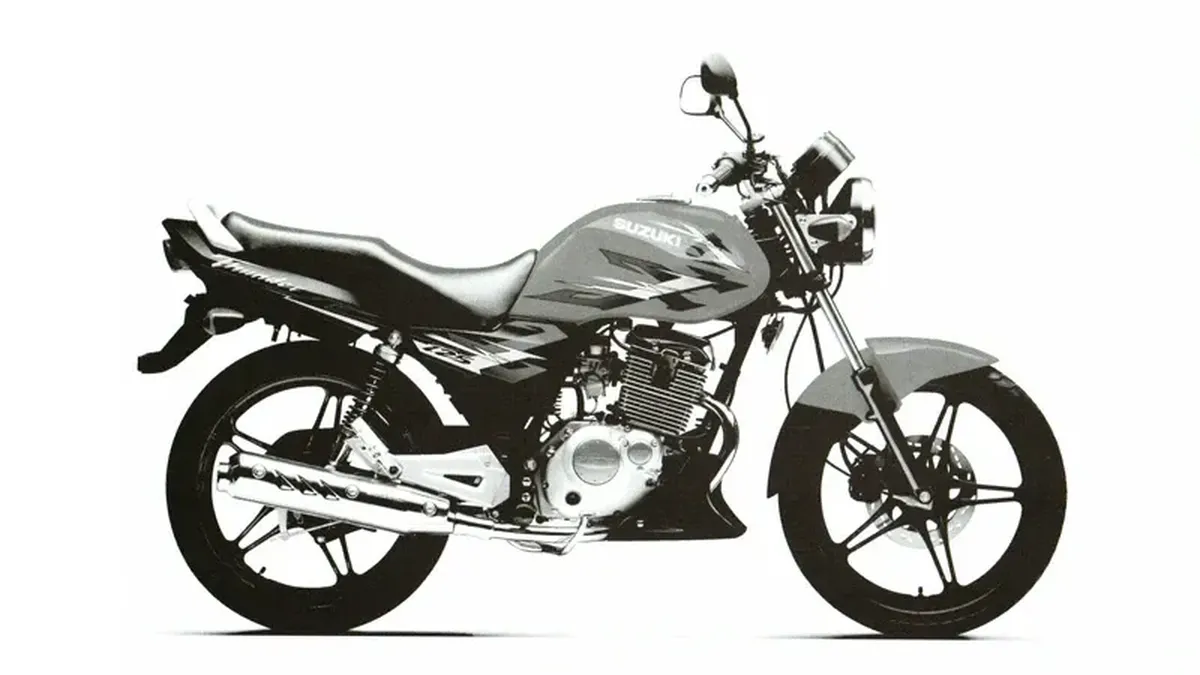
The Suzuki Thunder has gained a reputation for having a larger fuel tank capacity compared to many motorcycles in its class. This characteristic has made it a preferred choice for some retailers of subsidized gasoline who use it to store and transport larger quantities of fuel. It is also worth noting that many units have been modified to further increase their fuel-holding capacity.
In Indonesia, the Suzuki Thunder was available in two models: the Thunder 250, launched in 1999 and discontinued in 2005, and the Thunder 125, which was marketed from 2004 until its production ceased in 2015. Both models were equipped with a 15-liter fuel tank, reflecting their design as touring motorcycles intended for longer journeys.
Background and Context of Subsidized Fuel Distribution
The issue of subsidized fuel distribution in Indonesia has been a recurring challenge for the government and state-owned enterprises like Pertamina. Subsidized fuel, primarily gasoline (BBM bersubsidi), is provided at a significantly lower price than market rates to alleviate the financial burden on low-income households and to stimulate economic activity. However, the price differential often creates incentives for misuse, including hoarding, illegal resale, and smuggling.
Pertamina, as the sole distributor of subsidized fuel, is tasked with ensuring that these resources reach the intended beneficiaries. The company employs various strategies to monitor and control distribution, including the implementation of quotas, real-time tracking systems, and public awareness campaigns. However, the vastness of the Indonesian archipelago and the sheer volume of fuel consumed present significant logistical and enforcement challenges.
The Suzuki Thunder’s Role in the Controversy
The Suzuki Thunder, with its larger fuel tank capacity, has become a focal point in discussions about fuel misuse due to its perceived suitability for bulk fuel acquisition. While the motorcycle’s design for touring inherently means a larger tank, this feature, when combined with potential modifications, can be exploited to carry more fuel than a typical commuter motorcycle. This has led to its disproportionate visibility in situations where fuel is being collected for purposes beyond personal daily use.
The statements from the Suzuki Thunder Club, as cited by Pertamina, suggest that the majority of owners use the motorcycles responsibly for their intended purposes. This highlights the distinction between the motorcycle model itself and the actions of a minority who may be misusing it.
Chronology of Events and Pertamina’s Response
The recent localized restrictions at SPBUs in Jakarta and Bekasi appear to have escalated in early July. Reports of these bans began to surface around July 17, leading to public inquiry and concern.
- Early July: Anecdotal evidence and reports emerge of specific SPBUs implementing informal bans on Suzuki Thunder motorcycles.
- July 17: Local media outlets, such as Detik, report on these localized bans, citing reasons such as preventing misuse, curbing resale, and ensuring equitable distribution.
- July 20: Pertamina Patra Niaga, through its Corporate Secretary Roberth M.V. Dumatubun, issues a clarification stating that no national policy prohibits Suzuki Thunder motorcycles from refueling. The company attributes the restrictions to individual SPBU operators and reiterates its commitment to fair subsidized fuel distribution. Pertamina also acknowledges the issue of modified tanks being used for excessive refueling.
Supporting Data and Analysis of Implications
While specific data on the exact number of Suzuki Thunder motorcycles involved in fuel misuse is not readily available, the incidents highlight a broader issue of fuel subsidy leakage. Indonesia’s fuel subsidy budget is substantial, and any diversion of these funds represents a significant economic loss that could otherwise be allocated to public services such as education, healthcare, or infrastructure development.
The average fuel subsidy in Indonesia has historically been a significant portion of the state budget. For instance, in 2022, the government allocated Rp152.5 trillion (approximately USD 10 billion) for fuel and LPG subsidies. While this figure encompasses all subsidized fuels, the efficient allocation of such a large sum is critical.
The implications of these localized bans, even if not nationally mandated, are multifaceted:
- Enforcement Challenges: It underscores the difficulty Pertamina faces in uniformly enforcing national policies across thousands of SPBUs nationwide, especially in densely populated urban areas.
- Public Perception: Such bans, even if localized, can create confusion and distrust among the public, leading to perceptions of arbitrary enforcement or discrimination.
- Market Distortion: While intended to prevent misuse, localized bans might inadvertently create black markets for fuel or push individuals towards less regulated channels, potentially increasing safety risks.
- Focus on Solutions: The situation prompts a re-evaluation of existing fuel distribution control mechanisms. It suggests a need for more robust, technology-driven solutions for monitoring fuel sales and identifying patterns of abuse, rather than relying on blanket restrictions on specific vehicle types.
Broader Impact and Future Outlook
Pertamina’s stance reinforces the principle of non-discrimination based on vehicle brands. The company’s focus remains on the behavior of individuals and the effective use of fuel, rather than singling out specific motorcycle models. The underlying problem, as identified by Pertamina, is the modification of fuel tanks and repeated refueling by individuals aiming to profit from the price disparity of subsidized fuel.
Moving forward, it is likely that Pertamina will continue to emphasize the importance of responsible fuel consumption and work with SPBU operators to enhance their monitoring capabilities. Potential long-term solutions could involve stricter regulations on fuel tank modifications, enhanced data analytics to detect suspicious refueling patterns, and more targeted public education campaigns. The objective is to ensure that subsidized fuel serves its intended purpose of supporting the public, while effectively mitigating opportunities for abuse and ensuring the sustainability of the subsidy program. The current situation serves as a microcosm of the ongoing efforts to balance accessibility with accountability in Indonesia’s fuel subsidy system.