Indonesia Accelerates Clean Energy Transition as Ministry Approves PLN Geothermal Project at Mount Ungaran

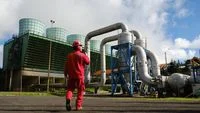
The transition toward renewable energy in Indonesia has taken a significant step forward following the official authorization granted to state-owned electricity company PT PLN (Persero) to develop a Geothermal Power Plant (PLTP) at the Mount Ungaran Geothermal Working Area (WKP) in Central Java. The landmark decision, which forms part of the national strategy to maximize the archipelago’s vast green energy potential, has drawn strong backing from academic experts who emphasize the project’s dual capacity to drive environmental conservation and stimulate local economic growth.
The endorsement of the Mount Ungaran initiative highlights a critical phase in Indonesia’s broader climate commitments. As Southeast Asia’s largest economy grapples with rising energy demands and the urgent imperative to phase out fossil fuels, geothermal energy has emerged as a cornerstone of the nation’s long-term decarbonization roadmap. With the Ministry of Energy and Mineral Resources (ESDM) actively clearing regulatory hurdles, the development of the Mount Ungaran facility is expected to serve as a blueprint for sustainable resource extraction and regional economic empowerment.
Academic Backing and Environmental Advantages
Yoga Aribowo, an academic and geological engineering expert from Diponegoro University (UNDIP), has underscored the profound environmental and economic advantages that the Mount Ungaran PLTP project stands to deliver. According to Aribowo, expanding the share of geothermal energy within the national energy mix yields direct, measurable improvements in environmental quality—ranging from atmospheric preservation to the protection of vital water and marine ecosystems.
"If we continue to increase the proportion of geothermal power plants, it will undoubtedly contribute positively to overall environmental quality, encompassing air, water, and marine ecosystems," Aribowo stated in Jakarta. He noted that geothermal energy stands out as one of the most reliable and environmentally sound clean energy solutions for the future, particularly when contrasted with traditional fossil-fuel-based power generation.
From an emissions standpoint, geothermal power facilities exhibit a remarkably low carbon footprint. Estimates indicate that carbon dioxide emissions associated with geothermal generation hover around 100 grams per kilowatt-hour (kWh), while hydrogen sulfide emissions remain below 1 gram per kWh. These metrics highlight a stark reduction in greenhouse gases compared to coal-fired or gas-fired power plants, aligning seamlessly with Indonesia’s enhanced Nationally Determined Contributions (NDC) under the Paris Agreement.
Addressing common public misconceptions regarding subterranean water usage, Aribowo clarified the technical mechanics of geothermal extraction. The water and steam utilized in geothermal operations are sourced from deep underground reservoirs located thousands of meters beneath the earth’s surface—far deeper than the shallow aquifers accessed by local community water wells. Furthermore, once the thermal energy has been extracted to drive turbine generators, the geothermal fluid is safely returned to the subterranean reservoir via a closed-loop reinjection process. This mandatory engineering protocol ensures that reservoir pressure is maintained and underground resources are sustainably preserved over multi-decadal operational lifespans.
Socio-Economic Uplift for Local Communities
Beyond its ecological benefits, the development of the Mount Ungaran PLTP is poised to catalyze regional economic activity. Large-scale infrastructure projects of this nature inherently generate a surge in both direct and indirect employment opportunities, fostering a vibrant ecosystem of supporting micro-enterprises and local businesses in surrounding communities.
The influx of construction crews, engineering specialists, and operational staff naturally stimulates demand for local commercial goods and services. Aribowo pointed out that local residents stand to benefit directly through the expansion of small businesses, including food stalls, retail shops, transportation services, and residential boarding houses established to accommodate project personnel.
Moreover, these commercial catalysts can be systematically integrated into formal corporate social responsibility (CSR) initiatives managed by the project developers. By aligning community development programs with local entrepreneurial needs, the project can foster sustainable socio-economic resilience, ensuring that the surrounding population shares equitably in the prosperity generated by the green energy transition.
Chronology and Regulatory Milestone
The official green light for the Mount Ungaran project represents the culmination of targeted policy frameworks designed to unlock Indonesia’s untapped renewable potential. The definitive regulatory milestone was achieved when the Ministry of Energy and Mineral Resources formally issued the Geothermal License (SK) for the Mount Ungaran Working Area, designating PT PLN (Persero) as the primary developer.
The announcement was officially made public by Eniya Listiani Dewi, the Director General of New, Renewable Energy, and Energy Conservation (EBTKE) at the Ministry of ESDM. Speaking during the high-profile Indonesia International Geothermal Convention & Exhibition held in Jakarta, Dewi detailed the allocation of key geothermal concessions authorized by Minister of Energy and Mineral Resources Bahlil Lahadalia.
"We extend our gratitude to the Minister for issuing the decree regarding the Geothermal License, which will be assigned to the Mount Ungaran geothermal working area and granted to PLN, while the Telaga Ranu geothermal working area will be allocated to PT Telaga Ranu Geothermal," Dewi announced during the event.
This ministerial decree marks a decisive shift from administrative planning to actionable development, enabling PLN to initiate preliminary site surveys, environmental impact assessments, and infrastructural engineering designs necessary for the construction phase of the Mount Ungaran plant.
Untapped Potential in the National Landscape
The launch of the Mount Ungaran project assumes heightened strategic significance when viewed against the backdrop of Indonesia’s national energy statistics. According to official data compiled by the Ministry of ESDM, Indonesia boasts an estimated total geothermal potential of 23,202.77 megawatts (MW), positioning the nation as one of the richest repositories of geothermal resources globally due to its strategic location along the Pacific Ring of Fire.
Despite this immense natural endowment, the country’s installed geothermal capacity currently stands at only 2,776.39 MW. This figure indicates that approximately 88.4 percent of Indonesia’s national geothermal potential remains completely unexploited. The stark disparity between available resources and operational capacity underscores both the immense challenge and the extraordinary growth trajectory awaiting the domestic renewable energy sector.
Energy analysts note that unlocking this dormant potential is vital if Indonesia is to achieve its target of achieving net-zero emissions by 2060 or sooner. Geothermal energy possesses a distinct advantage over intermittent renewables such as solar and wind power, as it provides reliable baseload electricity unaffected by weather variability or seasonal fluctuations. Consequently, accelerating projects like the Mount Ungaran PLTP is indispensable for maintaining grid stability while simultaneously aggressively greening the national electricity matrix.
Broader Implications for Indonesia’s Energy Transition
The advancement of the Mount Ungaran Geothermal Power Plant carries far-reaching implications for national energy security, regional development, and Indonesia’s standing within the global climate community. As international scrutiny intensifies regarding the phase-out of coal-fired power plants, decisive administrative actions by the Ministry of ESDM—coupled with execution by state enterprises like PLN—demonstrate a tangible commitment to sustainable development goals.
Successfully scaling up geothermal infrastructure requires navigating complex technical challenges, securing substantial capital investments, and maintaining transparent, collaborative engagement with local communities. By integrating robust environmental safeguards, adhering to sustainable reinjection practices, and channeling economic dividends directly into local enterprises, projects such as Mount Ungaran offer a viable model for reconciling industrial-scale energy production with ecological stewardship.
Ultimately, as drilling rigs and engineering teams mobilize at Mount Ungaran, the initiative transcends a localized infrastructure project. It serves as a microcosm of Indonesia’s broader national ambitions: harnessing the earth’s natural thermal power to fuel a cleaner, more resilient, and economically prosperous future for generations to come.
Related posts: