Queen Máxima Concludes Transformative Fifth Visit to Indonesia, Championing Financial Health and Inclusive Development

Jakarta, Indonesia – Her Majesty Queen Máxima of the Netherlands recently concluded a highly impactful working visit to Indonesia, spanning from Monday, November 24, to Thursday, November 27, 2025. Her presence in the archipelago was not in her capacity as the Dutch monarch, but rather as the United Nations Secretary-General’s Special Advocate (UNSGSA) for Inclusive Finance for Development, a role she has held with distinction since 2009. This strategic engagement underscored a sustained commitment to advancing financial health and economic resilience among diverse communities, reinforcing Indonesia’s position as a crucial partner in global financial inclusion efforts. The extensive itinerary encompassed high-level policy discussions, direct community engagement, and explorations of innovative financial solutions across Java, highlighting the multifaceted approach required to foster sustainable development.
The Mandate of the UNSGSA: A Global Imperative
Queen Máxima’s role as UNSGSA is pivotal in advocating for universal access to affordable, useful, and safe financial services. This encompasses a broad spectrum of services, including credit, savings, insurance, and payments, which are essential tools for individuals and small businesses to manage their finances, invest in their futures, and mitigate economic shocks. The UNSGSA’s mission directly contributes to the achievement of several United Nations Sustainable Development Goals (SDGs), particularly SDG 1 (No Poverty), SDG 5 (Gender Equality), SDG 8 (Decent Work and Economic Growth), and SDG 10 (Reduced Inequalities). By championing financial inclusion, Queen Máxima seeks to empower the unbanked and underbanked populations worldwide, fostering greater economic stability and opportunities for upward mobility. Her advocacy involves working with governments, central banks, regulators, financial service providers, and development organizations to create an enabling environment for inclusive finance, sharing best practices, and catalyzing innovation.
Indonesia, with its vast population of over 270 million people distributed across thousands of islands, presents both immense opportunities and significant challenges in achieving comprehensive financial inclusion. Despite notable progress in recent years, particularly with the proliferation of digital payment systems and mobile banking, a substantial portion of the population, especially in rural areas and among micro, small, and medium enterprises (MSMEs), still lacks adequate access to formal financial services. This makes Indonesia a highly relevant and strategic focus country for the UNSGSA’s work, serving as a vital case study and a platform for showcasing scalable solutions.
This latest visit marked Queen Máxima’s fifth trip to Indonesia in her capacity as UNSGSA, demonstrating a consistent and long-term engagement with the nation’s financial development journey. Her previous visits in 2012, 2016, and 2018 were instrumental in fostering dialogues and advancing policies. Additionally, she accompanied King Willem-Alexander during a state visit in 2020, solidifying the strong bilateral ties between the Netherlands and Indonesia. Born on May 17, 1971, Queen Máxima married King Willem-Alexander in 2002 in Amsterdam, Netherlands, bringing a distinguished background in international finance to her royal duties and advocacy work. Her deep understanding of economic principles and financial markets lends significant credibility and strategic insight to her role as UNSGSA.
A Deep Dive into the Itinerary: Promoting Financial Health Across the Archipelago
The three-day working visit was meticulously planned to offer a comprehensive view of Indonesia’s financial landscape, from grassroots initiatives to high-level policy discussions. The itinerary showcased a blend of direct engagement with beneficiaries and strategic consultations with key stakeholders, emphasizing the practical application and systemic impact of financial inclusion.
Tuesday, November 25: Grassroots Engagement in Central Java
Queen Máxima commenced her intensive schedule by traveling to Central Java, a region known for its vibrant industrial and cultural sectors. Her first stop was a garment factory in Sragen Regency. This visit provided a crucial opportunity to observe firsthand the financial realities of industrial workers. Discussions focused on enhancing financial literacy among factory employees, many of whom are low-wage earners. The emphasis was on facilitating access to basic financial services such as secure savings accounts, micro-credit for personal or small entrepreneurial ventures, and affordable insurance products. Such access is vital for workers to build economic resilience, manage unexpected expenses, and plan for their future, thereby contributing to overall household financial health. The visit highlighted the potential for employers to play a significant role in promoting employee financial wellness, an often-overlooked aspect of corporate social responsibility.
Following her engagement in Sragen, Queen Máxima proceeded to Solo, a city renowned for its rich cultural heritage. Here, she visited Kampung Batik Laweyan, a historic batik village that serves as a hub for traditional craftspeople and MSMEs. The focus of this visit was to explore the unique financial challenges faced by these small businesses, including access to affordable capital, market linkages, and the adoption of digital payment solutions. Queen Máxima engaged directly with batik artisans and entrepreneurs, understanding their experiences with financial products and services and identifying opportunities for tailored solutions that could enhance their business sustainability and financial health. The resilience and entrepreneurial spirit of these artisans underscored the critical need for inclusive financial ecosystems that support traditional industries.
The day culminated with Queen Máxima attending an event hosted by Women’s World Banking at Pura Mangkunegaran, a historical palace in Solo. This high-profile gathering brought together young people, university students, and women entrepreneurs. The discussions revolved around their experiences with various financial products and services, highlighting the critical role of women’s economic empowerment through financial inclusion. Queen Máxima engaged in candid conversations, listening to their success stories and the obstacles they encountered in accessing and utilizing financial tools. Women’s World Banking, a global non-profit dedicated to women’s economic empowerment, facilitated a dynamic exchange on how tailored financial solutions, digital literacy, and supportive networks can unlock women’s entrepreneurial potential and drive broader economic development. The event reinforced the understanding that investing in women’s financial health yields significant dividends for families, communities, and national economies.
Wednesday, November 26: Policy Dialogue and Innovative Solutions in Jakarta and West Java
The second day of the visit shifted its focus towards strategic partnerships and innovative solutions, beginning in Jakarta. Queen Máxima started her day at the local United Nations office, where she participated in a roundtable discussion with various development organizations. This session provided a platform for reviewing ongoing initiatives, identifying gaps in financial inclusion efforts, and coordinating strategies to maximize impact. Discussions likely centered on leveraging digital technologies, addressing regulatory challenges, and fostering multi-stakeholder collaborations to reach underserved populations more effectively. The dialogue aimed to streamline efforts and ensure that financial inclusion initiatives are aligned with broader development goals.
Later, Queen Máxima visited the International Finance Corporation (IFC), a member of the World Bank Group. The discussions with IFC representatives delved into the critical role of the private sector in driving financial inclusion and sustainable economic growth. Topics included the development of innovative lending models, promoting responsible finance, and catalyzing investments in sectors that contribute to both economic expansion and the financial health of individuals and businesses. The IFC’s expertise in mobilizing private capital for development projects makes it a crucial partner in scaling up inclusive financial solutions across Indonesia.
In the afternoon, Queen Máxima traveled to Kabupaten Bekasi, West Java, to visit the Gran Harmoni Cibitung subsidized housing complex. This visit was particularly significant as it showcased an innovative approach to addressing Indonesia’s affordable housing deficit, especially for low and middle-income communities. The complex provides low-emission homes, aligning with global sustainability goals. Queen Máxima had the opportunity to visit a resident’s home, gaining direct insight into the impact of affordable housing on family well-being and financial stability. She also interacted with representatives of first-time homebuyers, understanding their journey and the support mechanisms in place.
A highlight of the Bekasi visit was the inspection of a waste bank located within the housing complex. This innovative initiative allows residents to pay a portion of their mortgage installments by converting recyclable waste into monetary value, an ingenious solution that addresses both financial constraints and environmental sustainability. This model, often supported by local banks like BTN (Bank Tabungan Negara), demonstrates how creative financial mechanisms can empower communities while promoting eco-friendly practices. Queen Máxima observed the process of waste collection and valuation, and later witnessed the signing of home sale and purchase agreements for dozens of prospective homeowners, symbolizing the tangible realization of homeownership dreams through inclusive finance.
The day concluded back in Jakarta with a visit to Deloitte Indonesia. Here, Queen Máxima engaged with corporate employers to discuss their role in fostering the financial health of their employees and clients. The conversation focused on how companies can implement employee financial wellness programs, provide access to financial literacy resources, and design products and services that genuinely contribute to the financial well-being of their customer base. This engagement underscored the private sector’s potential to drive systemic change in financial health beyond traditional banking services.
Thursday, November 27: High-Level Engagements and Future Roadmaps
The final day of Queen Máxima’s visit was dedicated to high-level policy discussions and strategic dialogues that would shape future directions for financial inclusion in Indonesia. She participated in a crucial agenda on financial literacy alongside key regulatory bodies: Otoritas Jasa Keuangan (OJK – Financial Services Authority), Bank Indonesia (BI – Central Bank), and the Ministry of Finance (Kemenkeu) of the Republic of Indonesia. This meeting highlighted the imperative of robust regulatory frameworks, supportive monetary policies, and effective fiscal strategies in promoting financial inclusion and literacy nationwide. Discussions likely covered strategies to enhance public awareness of financial products, protect consumers, and leverage digital platforms for broader outreach, reinforcing Indonesia’s commitment to creating a well-informed and financially resilient populace.
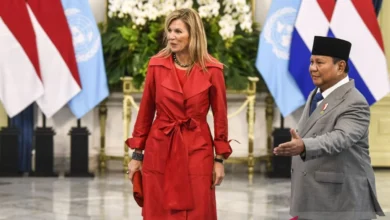
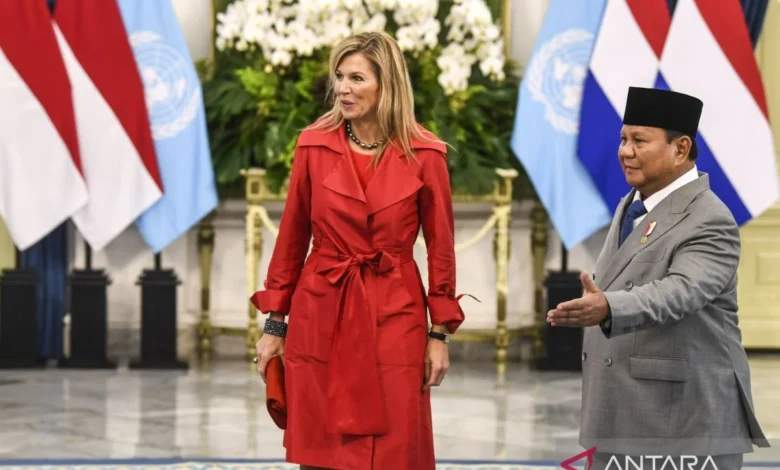
The culmination of her visit was a highly anticipated meeting with the President of Indonesia, Prabowo Subianto, at the Merdeka Palace in Jakarta. This strategic engagement provided Queen Máxima with the opportunity to convey her findings, impressions, and recommendations gathered throughout her extensive tour. The meeting, which included a private session and a luncheon, served as a platform to discuss areas of ongoing cooperation, explore new avenues for collaboration, and reinforce the shared commitment to advancing Indonesia’s financial inclusion agenda. President Subianto likely expressed Indonesia’s appreciation for Queen Máxima’s consistent advocacy and underscored the government’s resolve to continue its efforts in empowering its citizens through improved financial access and literacy. Such high-level endorsements are critical for garnering political will and mobilizing resources towards national financial inclusion goals.
Indonesia’s Progress and the Path Forward
Indonesia has made significant strides in financial inclusion over the past decade. According to various reports, the percentage of adults with access to financial accounts has steadily increased, driven largely by the expansion of digital banking and mobile money services. The National Financial Inclusion Strategy, spearheaded by the OJK and supported by BI and Kemenkeu, has been instrumental in coordinating efforts across various sectors. Initiatives like agent banking, microfinance programs, and digital payment platforms have brought financial services closer to millions previously excluded.
Despite this progress, challenges persist. Geographic disparities remain, with rural and remote areas still lagging behind urban centers in financial access. The gender gap in financial inclusion, though narrowing, still requires targeted interventions. MSMEs, which form the backbone of the Indonesian economy, often struggle with access to appropriate financing and business development support. Furthermore, financial literacy levels, while improving, need continuous enhancement to ensure that increased access translates into responsible and effective utilization of financial services. The rapid pace of technological change also presents both opportunities and regulatory challenges, requiring agile policy responses to foster innovation while safeguarding consumer interests.
The visit by Queen Máxima, in her capacity as UNSGSA, serves as a powerful catalyst for addressing these remaining challenges. By spotlighting innovative models like the waste bank for mortgage payments and emphasizing the importance of women’s economic empowerment, her visit encourages the replication and scaling of successful initiatives. It also reinforces the global community’s commitment to supporting Indonesia’s development aspirations.
Broader Implications of the Visit
Queen Máxima’s fifth visit to Indonesia as UNSGSA carries significant broader implications. Firstly, it strengthens the already robust bilateral relationship between the Netherlands and Indonesia, extending cooperation beyond traditional diplomatic and economic ties into the critical domain of sustainable development and social welfare. Secondly, it casts a global spotlight on Indonesia’s financial inclusion efforts, showcasing the country’s innovations and challenges on an international stage. This visibility can attract further international investment, technical assistance, and partnerships that are crucial for accelerating progress.
Moreover, the visit provides renewed momentum for domestic stakeholders, from government agencies and financial institutions to civil society organizations and local communities. The direct engagement and high-level discussions serve as a powerful endorsement of their work, encouraging continued dedication and innovation. The focus on specific sectors like garment manufacturing, traditional crafts, affordable housing, and corporate responsibility highlights a holistic understanding of financial health that transcends mere access to accounts. Ultimately, Queen Máxima’s enduring advocacy contributes directly to the realization of the UN Sustainable Development Goals, fostering a more equitable, resilient, and prosperous future for Indonesia and beyond. Her commitment exemplifies the profound impact that dedicated international advocacy can have on national development agendas, driving tangible improvements in the lives of millions.