Jakarta Integrates Transport Network as Pramono Anung Launches Manggarai LRT Connection and Transjakarta Shelters

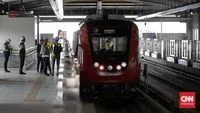
The transportation landscape of Indonesia’s capital city underwent a significant milestone on Wednesday, September 16, as Jakarta Governor Pramono Anung officially announced the immediate operation of all Transjakarta bus rapid transit shelters connected to the newly inaugurated Light Rail Transit (LRT) Jakarta route, specifically highlighting the critical hub at Manggarai Station. This development marks a decisive step forward in the municipal administration’s ongoing efforts to streamline urban mobility, reduce private vehicle dependency, and forge a cohesive, multi-modal public transportation network across the sprawling Greater Jakarta metropolitan area.
The inauguration of the Kelapa Gading to Manggarai LRT corridor serves as a backbone for the administration’s broader integration strategy. According to Governor Pramono, the alignment of schedules and physical infrastructure is designed to minimize friction points for daily commuters who rely on seamless transfers between different modes of transit to navigate the city.
Immediate Integration of Feeder Services
Speaking to reporters in South Jakarta shortly after the official launch ceremony, Governor Pramono confirmed that the rollout of the connected infrastructure would happen practically in real time. The integration strategy dictates that every Transjakarta shelter intersecting with the newly established LRT path will open its doors to the public almost immediately.
"So all Transjakarta shelters that intersect with the LRT will be operated immediately, including at this location. They will be operational perhaps one or two hours after this event," Pramono stated.
This rapid deployment is intended to prevent transit bottlenecks and ensure that passengers alighting from the newly operational LRT trains have immediate access to onward bus connections without enduring unnecessary delays or navigating confusing detours. The synchronized opening underscores a shift toward more responsive public service delivery within the city’s transport sector.
Fare Policies and Promotional Structures
While the operational timeline for the physical infrastructure is immediate, transit authorities have maintained distinct fare structures for the respective modes during the initial transitional phase. To encourage ridership adoption on the newly extended LRT route, the provincial government has implemented a heavily discounted promotional tariff. For the first eight days following the inauguration, passengers utilizing the LRT Jakarta system will benefit from a nominal promotional fare.
Conversely, the pricing structure for the accompanying feeder and trunk services operated by Transjakarta will remain entirely unaffected by the LRT launch. Regular commuters will continue to pay the standard fare to which they are accustomed.
"Because the only difference is the LRT is eight rupiahs—what… Transjakarta still pays Rp3,500," Pramono clarified, highlighting the continuation of the affordable flat-rate system that underpins Jakarta’s municipal bus network. This pricing continuity ensures that lower-income commuters who rely heavily on bus networks are not subjected to sudden financial adjustments while new rail lines are being integrated into the broader civic grid.
The Manggarai Hub: A Tri-Modal Convergence
At the epicenter of this infrastructural expansion is the Manggarai Station complex, one of the busiest and most critical transportation nodes in the entire Jabodetabek (Jakarta, Bogor, Depok, Tangerang, and Bekasi) region. With the integration of the new LRT line, Manggarai is positioned to function as a vital convergence point for three major public transportation modes: the LRT Jakarta, the KRL Commuterline, and the Transjakarta bus rapid transit system.
The unification of these three systems at a single geographic location is expected to drastically alter commuter flows, redirecting thousands of daily travelers who move between the southern, eastern, and central corridors of the capital. By consolidating heavy rail, light rail, and road-based mass transit into a unified ecosystem, city planners aim to alleviate severe road congestion along arterial thoroughfares that have historically choked under the weight of private vehicular traffic.
Infrastructure Completion Timeline and Engineering Challenges
Despite the triumphant launch of the transit shelters and the LRT service itself, complete physical integration across all participating modes remains an ongoing engineering undertaking. Iwan Takwin, the President Director of PT Jakarta Propertindo (Jakpro)—the municipal developer spearheading the LRT project—provided technical clarification regarding the current state of construction at the Manggarai complex.
According to Takwin, while the LRT and the immediate Transjakarta interfaces are ready for public deployment, the physical pedestrian connectivity linking the LRT station directly to the KRL Commuterline platforms at Manggarai is still undergoing final construction and finishing phases. Jakpro has established a firm target to conclude these remaining structural linkages by the end of September.
"So we are currently finishing the connections now. Later, the connection will not only connect the LRT with the KRL, but also Transjakarta. So these three modes will be connected through this corridor. We are finalizing it, and hopefully, it will be completed by the end of this month," Iwan explained.
The complexity of retrofitting an active, high-volume railway station like Manggarai while maintaining uninterrupted service for hundreds of thousands of daily KRL commuters has presented notable logistical hurdles for engineering teams. The upcoming completion of these elevated walkways and transfer concourses is anticipated to eliminate street-level pedestrian crossings, thereby enhancing commuter safety and significantly reducing transfer times.
Broader Economic and Urban Implications
The operationalization of the Kelapa Gading-Manggarai LRT corridor and its associated intermodal touchpoints carries profound implications for Jakarta’s socio-economic landscape. Urban mobility experts have long argued that the city’s economic productivity is severely hampered by transit inefficiencies and the high costs associated with private vehicle ownership and operation.
By expanding the reach of the rail-based transit network deeper into central and northern residential and commercial zones, the city is fostering transit-oriented development (TOD). Properties located within proximity of the newly established stations are expected to see shifts in land-use value, encouraging vertical residential growth and commercial investments that prioritize pedestrian access over vehicular parking infrastructure.
Furthermore, the environmental impact of this multi-modal integration aligns with national and municipal carbon reduction targets. As Jakarta continues to grapple with severe air quality challenges, providing reliable, interconnected, and economically accessible alternatives to private cars and motorcycles is viewed as an indispensable policy mechanism.
Looking Ahead: The Next Phase of Jakarta’s Transit Vision
As Jakpro races to finalize the remaining pedestrian bridges and physical integration points by the end of September, the focus of the Jakarta Transportation Department (Dishub) will shift toward monitoring passenger volume distributions and optimizing feeder bus frequencies. The immediate opening of the Transjakarta shelters serves as a crucial stress test for the newly minted corridor, allowing transit administrators to identify potential bottlenecks before the full complement of transfer pathways comes online.
The success of the Manggarai integration project will likely serve as a blueprint for future expansions of Jakarta’s integrated public transit master plan. With political leadership emphasizing immediate operational readiness alongside long-term infrastructural completion, the city is signaling a departure from protracted delays that have historically plagued large-scale urban development projects. For millions of daily commuters, the realization of a truly interconnected transit network is moving steadily from conceptual planning into daily reality.
Related posts: