Hari Olahraga Nasional: Reflecting on the Historical Legacy and Future Aspirations of Indonesian Athletics

The Hari Olahraga Nasional (Haornas), or National Sports Day, is commemorated annually on September 9th, serving as a significant touchstone for the evolution of Indonesian sports. While it functions as a calendar date for celebration, its roots are deeply embedded in the struggle for national identity and sovereignty. The history of this observance traces back to the inaugural Pekan Olahraga Nasional (PON) held in Solo, Central Java, in 1948. This event was not merely a gathering of athletes; it was a profound political statement of a nascent nation determined to demonstrate its viability and unity to the international community.
The Origin: A Catalyst for National Sovereignty
To understand the weight of Haornas, one must revisit the turbulent landscape of 1948. Following the proclamation of independence in 1945, the young Republic of Indonesia was still navigating the complexities of international recognition. When the opportunity arose to participate in the XIV Olympic Games in London, the Indonesian government sought to send a delegation. However, the mission faced insurmountable administrative hurdles, primarily because the international community had not yet fully recognized Indonesia’s independence, which complicated the ability of its athletes to compete under the national flag.
Faced with this roadblock, Indonesian leaders, including the legendary figures of the era, chose a bold path: they would host their own national-scale sporting competition. Thus, the first PON was organized in Solo from September 9 to 12, 1948. By holding this event, Indonesia successfully asserted its existence as an organized, sovereign state capable of managing complex national infrastructure and fostering public spirit. The opening date of this inaugural PON—September 9—was eventually enshrined as the official date for National Sports Day, cementing the link between the country’s athletic journey and its struggle for autonomy.
Chronology of National Sporting Development
The evolution of Haornas from a local historical milestone to a national day of observance did not happen overnight. For decades, the spirit of the 1948 PON served as an inspiration, but it was not until the early 1980s that the government moved to formalize the celebration.
The pivotal moment occurred on September 9, 1983. During a ceremony to inaugurate the renovation of the historic Stadion Sriwedari in Surakarta, President Soeharto officially proclaimed the establishment of Hari Olahraga Nasional. This move was intended to ignite a nationwide movement toward physical fitness and to institutionalize the role of sports in the nation’s social development.
The mandate was later codified in the Presidential Decree (Keppres) Number 67 of 1985. This legal instrument finalized the designation of September 9 as the official Hari Olahraga Nasional, providing a legal framework for ministries and regional governments to prioritize sports programs. Since that declaration, Indonesia has observed the day annually, with 2026 marking the 43rd anniversary of the formal establishment of the holiday.
Beyond the Podium: The Multifaceted Impact of Sports
In the modern context, the Ministry of Youth and Sports (Kemenpora) emphasizes that the significance of Haornas has expanded beyond the celebration of medals and podium finishes. Today, the day serves as a catalyst for "sport culture." The Kemenpora’s 2025 and 2026 guidelines highlight that the event is designed to weave physical activity into the daily lives of citizens, viewing it as a cornerstone of national character building, health, and social cohesion.
The implications of a robust sports culture are multi-dimensional. Economically, the sports industry has become a significant driver of innovation. Recent initiatives, such as the push to transform regions like Sumba Timur into "sport tourism" destinations, demonstrate how sporting events can stimulate local economies, improve infrastructure, and promote domestic travel. This trend aligns with broader global shifts where the intersection of tourism and sports creates sustainable revenue streams for regional administrations.
Furthermore, the government’s recent focus on infrastructure—including the proposal for a Rp1.5 trillion investment in national academies and training centers—reflects a strategic pivot toward professionalism. By investing in specialized facilities, the state aims to nurture talent systematically rather than relying on sporadic, individual achievements.
The Socio-Economic Dimension of Health
The emphasis on "sport as a lifestyle" is not merely rhetorical. Public health data suggests that sedentary lifestyles are a growing concern in rapidly urbanizing nations like Indonesia. Haornas acts as a yearly call to action, encouraging the public to engage in regular physical activity to mitigate the prevalence of non-communicable diseases.
The Ministry of Youth and Sports has frequently underscored that sports contribute to the national economy in ways that go beyond direct participation. From the manufacturing of athletic apparel and equipment to the staging of major events like the upcoming beach-based PON in Ancol, the sports sector is increasingly viewed as a viable pillar for national productivity. When citizens are healthy and disciplined, the long-term impact on the national healthcare burden is substantial, making the promotion of sports an indirect form of economic management.
Strategic Implications: Challenges and Future Outlook
While the legacy of Haornas is rich, the path forward is not without challenges. The professionalization of sports requires sustained funding, administrative transparency, and the integration of modern sports science. The recent discourse surrounding the need for massive capital investment in training academies suggests that the government is aware of the current gaps. To compete on the global stage, Indonesia must transition from a model of reactive talent scouting to one of proactive talent cultivation.
Moreover, the role of local governments is critical. Decentralizing the sports infrastructure—moving beyond the traditional hubs of Jakarta and Bandung—is essential for discovering talent in underserved regions. The strategy to utilize PON as a vehicle for regional development is a step in this direction, as it forces the host regions to upgrade their venues and hospitality sectors.
The "Sport Tourism" Model: A Case Study in Growth
The push to designate regions like Sumba Timur as a focal point for sport tourism is an innovative approach to economic development. By leveraging the natural landscape for specialized sports, the government aims to create year-round demand for infrastructure. This model does more than just serve athletes; it necessitates improvements in roads, telecommunications, and accommodation, which benefit the local population long after the athletes have left.
This evolution from the basic competition of 1948 to the complex industry of 2026 shows a maturation of the Indonesian sports landscape. The focus is no longer solely on "being seen" by the international community; it is now about building a sustainable, internal system that benefits the health of the citizens and the strength of the economy.
Commemorating Haornas in 2026: A Collective Responsibility
As Indonesia commemorates the 43rd anniversary of the official Haornas in 2026, the call to action remains clear. The observance is an invitation for every citizen to evaluate their physical well-being and for the state to renew its commitment to providing the necessary support systems.
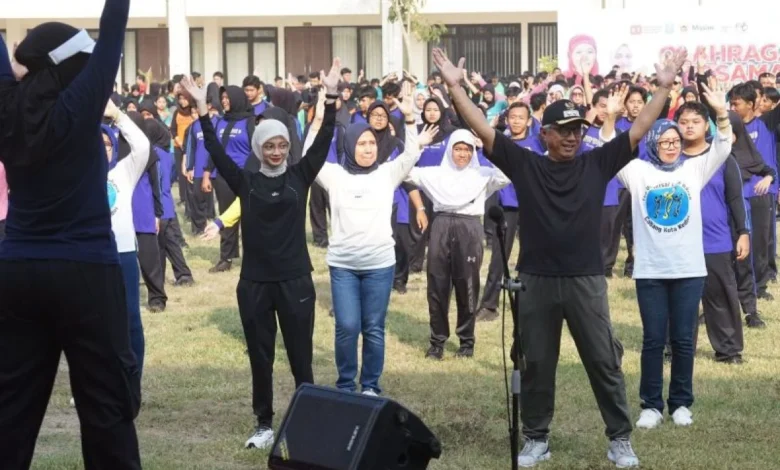
Public participation is encouraged through community-led activities, from local fun runs to school-based sporting competitions. For the average citizen, the spirit of Haornas is found in the simple act of prioritizing movement, fostering a culture of health that will resonate through generations. For the policymakers, it is a reminder that sports are a vital component of the national fabric—an instrument for unity in a diverse country and a tool for projecting national strength.
The historical trajectory from the fields of Solo in 1948 to the modern stadiums of 2026 is a testament to the resilience of the Indonesian spirit. While the challenges of the modern era—ranging from global competition to public health crises—are vastly different from the obstacles of the post-independence period, the core principle remains unchanged: sports remain a mirror of the nation’s vitality.
Conclusion: A Legacy for the Future
Hari Olahraga Nasional is more than a commemorative date; it is an annual diagnostic of where Indonesia stands in its journey toward becoming a healthier, more competitive, and more unified nation. By anchoring the celebration in the historic triumph of the 1948 PON, the country pays homage to its founders while looking toward a future where sports are accessible, professionalized, and integral to the national identity.
As stakeholders continue to debate the funding of academies and the expansion of sport tourism, the ultimate measure of success for Haornas will not be the grandeur of its ceremonies, but the measurable increase in the physical well-being of the population and the consistent success of its athletes on the global stage. The legacy of the pioneers of 1948 serves as both a foundation and a challenge: to keep the flame of competitive spirit and national pride alive for another century to come. Through continued investment, grassroots engagement, and a clear vision for the industry, Indonesia is well-positioned to transform its rich sporting history into a robust, sustainable, and inclusive future.