Navigating Through the Haze: Essential Safety Protocols for Motorists Amidst Forest Fire Smoke

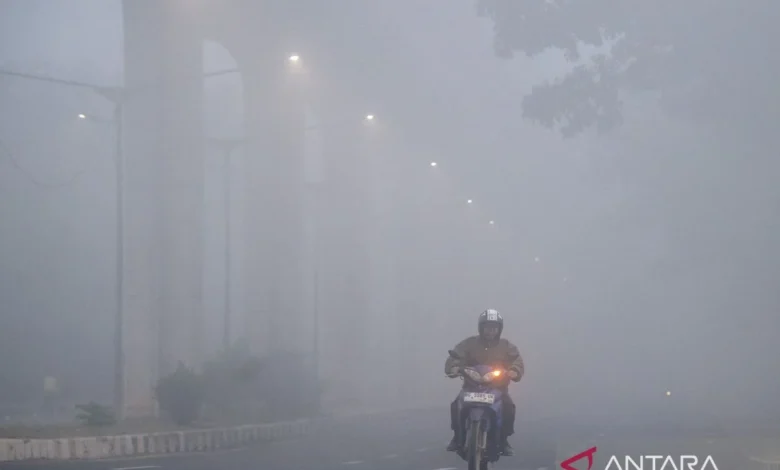
The increasing prevalence of forest and land fires (karhutla) across Indonesia has created a dangerous environmental challenge for motorists, as thick plumes of smoke significantly degrade visibility and compromise road safety. With visibility often dropping to critical levels, the risk of multi-vehicle collisions and high-speed accidents has surged, prompting law enforcement agencies and meteorological authorities to issue stringent guidelines for commuters. As of October 2026, the Directorate of Traffic of the North Maluku Regional Police has intensified efforts to educate the public on defensive driving techniques, emphasizing that visibility-related hazards require immediate behavioral adjustments to prevent fatalities on the road.
A Growing Crisis: The Correlation Between Smoke and Road Safety
The phenomenon of haze is not merely an air quality issue; it is a profound threat to transport infrastructure. The particles suspended in the atmosphere—often categorized as PM2.5—do more than irritate the respiratory system; they scatter light, creating a diffusion effect that blinds drivers and obscures critical infrastructure, including traffic signals, road markings, and emergency warnings.
The gravity of this situation was highlighted on September 5, 2026, when a significant accident occurred on the Palembang-Indralaya Toll Road. Two passenger buses were involved in a collision directly attributed to reduced visibility caused by heavy smoke. The incident resulted in 14 reported injuries, serving as a stark reminder that even on controlled-access highways, the environment can shift from safe to hazardous in a matter of minutes. This event prompted a national review of traffic safety protocols during periods of high fire activity, highlighting the necessity for a unified response from transport authorities and road operators.
Chronology and Meteorological Context
The recent surge in haze-related traffic concerns follows a period of volatile weather conditions. Throughout October 2026, various regions across the archipelago faced localized spikes in smoke density. On October 13, the North Maluku Regional Police officially mandated that motorists activate their headlights, decrease speed, and maintain a strict distance from the vehicle ahead.
Following this, on October 17, 2026, the Meteorology, Climatology, and Geophysics Agency (BMKG) released a comprehensive analysis of atmospheric conditions. Data from satellite imagery indicated that while the bulk of the smoke originating from forest fires had shifted away from the western parts of Java, residual particles remained suspended at altitudes of 3 to 5.4 kilometers over the western coast of Banten. This persistent layer of smoke, while at high altitudes, continues to affect light transmission and can descend under specific pressure and wind conditions, keeping authorities on high alert.
Defensive Driving Strategies: A Technical Guide for Motorists
The transition to safe driving in smoke-affected areas requires a departure from standard habits. Experts suggest a multi-layered approach to managing vehicle dynamics and operator behavior.
1. Adaptive Speed Control and Braking
The most critical error a driver can make in low-visibility conditions is maintaining a "normal" speed. Because human reaction time is inherently limited, the reduction of visual cues—such as the brake lights of a car ahead—means a driver must compensate by slowing down. It is vital to avoid sudden braking, as this may not be perceived in time by trailing vehicles. Instead, drivers should decelerate gradually. If a driver finds themselves struggling to see beyond the hood of their vehicle, they are traveling too fast for the prevailing conditions.
2. Strategic Lighting Utilization
There is a common misconception regarding the use of vehicle lights during the day. In hazy conditions, headlights are not just for the driver to see; they are to ensure the vehicle is seen by others. Low-beam headlights are the standard recommendation, as high-beam lights can exacerbate the problem by reflecting off airborne particles, creating a "white-out" effect that further obscures the driver’s vision. Additionally, hazard lights should be reserved strictly for emergencies or when a vehicle is completely stationary, as using them while moving can confuse other motorists regarding the driver’s intentions.
3. Spatial Awareness and Gap Maintenance
Following distance must be significantly increased during periods of smoke. Under clear conditions, a three-second gap is usually sufficient. In heavy smoke, this should be extended to at least six or eight seconds. This provides the necessary buffer to navigate unexpected obstacles or sudden stops without relying on the driver ahead as a primary navigation beacon. Relying solely on the taillights of the car in front—a practice known as "tailing"—is a dangerous habit that often leads to chain-reaction collisions if the lead vehicle brakes abruptly.
Vehicle Maintenance and Visibility Enhancement
The mechanical integrity of a vehicle is a primary defense against environmental hazards. Before embarking on any trip during the dry season, drivers must ensure that their vehicle is optimized for visibility.
- Glass Clarity: The windshield, rear window, and side mirrors must be free of dust, grime, and oily residues, which can worsen the scattering of light caused by smoke.
- Defogging Systems: For motorists, the use of internal defoggers is essential. Smoke often brings a change in humidity levels, and internal condensation on the windshield can compound visibility issues.
- Wiper Functionality: Wipers should be checked for wear. Even if it is not raining, wipers are necessary to clear the buildup of ash and particulate matter that can settle on the glass during long drives.
Health Implications: Beyond the Driver’s Seat
The Ministry of Health has consistently warned that the health risks posed by haze extend to the interior of the vehicle. PM2.5 particles are small enough to penetrate deep into the alveolar regions of the lungs. The 2026 Circular on Dry Season Preparedness explicitly identifies the elderly, children, and pregnant women as high-risk groups.
For those behind the wheel, the interior of the car should be treated as a controlled environment. Keeping windows tightly sealed and ensuring the air conditioning system is set to "recirculation" mode is vital. If a high-quality cabin air filter is available, it should be utilized. However, if air quality reaches hazardous levels, masks such as the N95 respirator are recommended. It must be noted that while masks provide respiratory protection, they do not mitigate the risks associated with the physical act of driving; if the air is so thick that breathing becomes difficult, the only safe course of action is to suspend the journey entirely.
Official Responses and Future Outlook
The Indonesian government, through inter-agency coordination, continues to monitor the situation. The Ministry of Transportation and the National Traffic Police (Korlantas Polri) have emphasized that local authorities have the mandate to restrict travel on specific routes if visibility drops below a predetermined threshold.
In regional areas, such as the Mahakam river basin, port authorities (KSOP) have already implemented heightened navigational surveillance, which parallels the road safety measures urged by police. This suggests a systemic approach to the haze crisis, acknowledging that the transport sector—whether by road, river, or air—is collectively vulnerable to the environmental consequences of fire activity.
Strategic Recommendations for Commuters
For the general public, the primary recommendation remains the same: monitor the situation before departure. The integration of technology, such as the BMKG mobile application, into the pre-trip routine is now as important as checking the fuel gauge.
If a driver finds themselves trapped in a sudden, dense plume of smoke, the protocol is clear:
- Reduce speed immediately and exit the flow of traffic at the first available safe location, such as a designated rest area or a parking facility.
- Avoid stopping on the shoulder of the road unless absolutely necessary, as other drivers may mistake the shoulder for a driving lane in their disorientation, leading to side-swipe collisions.
- Stay inside the vehicle until the smoke density dissipates, as exiting the vehicle on a high-speed road poses a significant risk of being struck by other motorists.
The ongoing battle against the effects of forest fires is a complex one, involving environmental management and public policy. However, in the short term, the responsibility rests with the individual driver. Through heightened awareness, disciplined driving, and the prioritization of safety over punctuality, the public can significantly reduce the impact of these environmental events on their own well-being and the safety of the wider community. As the 2026 dry season persists, the vigilance of the motoring public remains the most effective tool in preventing further accidents on the nation’s roads.
Related posts: