Head of Indonesia’s National Nutrition Agency Resigns for Health Reasons, Pledges Continued Oversight Amidst Critical Program Implementation

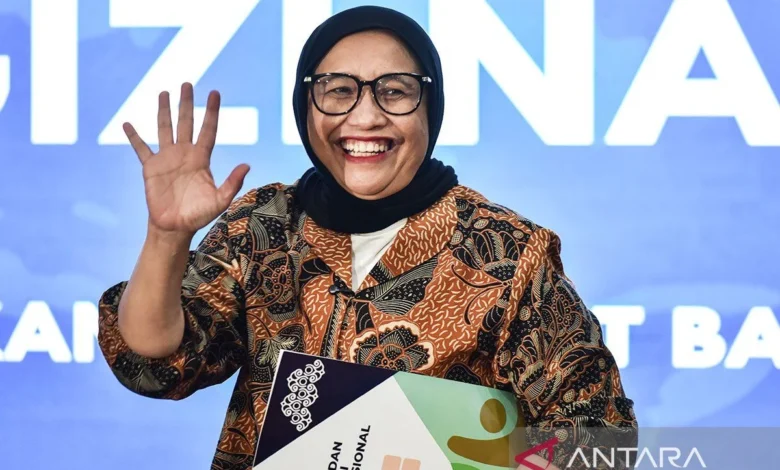
Jakarta, Indonesia – Nanik Sudaryati Deyang has tendered her resignation as the Head of the National Nutrition Agency (BGN), a pivotal institution responsible for the implementation of national nutritional programs, including the flagship Free Nutritious Meals (MBG) initiative. The decision, conveyed directly to President Prabowo Subianto, comes as Ms. Deyang prepares to undergo crucial heart treatment, necessitating her departure from the demanding role. President Subianto, expressing understanding and concern for her health, accepted the resignation while reportedly requesting her continued involvement in an oversight capacity.
The announcement of Ms. Deyang’s departure sends ripples through the nascent administration, particularly given the BGN’s central role in addressing Indonesia’s persistent nutritional challenges. The agency is tasked with safeguarding public health through robust nutritional policies and programs, with the MBG initiative standing as a cornerstone of President Subianto’s campaign promises and early policy agenda.
The Crucial Role of the National Nutrition Agency (BGN)
Established to consolidate and streamline efforts in improving public nutrition, the National Nutrition Agency (BGN) holds a critical mandate within the Indonesian government. Its responsibilities span a wide spectrum, from formulating national nutrition policies and standards to coordinating their implementation across various ministries, local governments, and community organizations. The agency is on the front lines of tackling pervasive issues such as stunting, child malnutrition, and micronutrient deficiencies, which continue to pose significant public health challenges across the archipelago.
Indonesia, a nation with a vast and diverse population, faces a complex nutritional landscape. According to the Indonesian Health Survey (Survei Kesehatan Indonesia/SKI) 2023, the national prevalence of stunting, while showing a declining trend, remains a concern, with figures indicating that a substantial percentage of children under five still suffer from chronic malnutrition. The World Health Organization (WHO) and other global health bodies consistently highlight the long-term detrimental effects of stunting on cognitive development, educational attainment, and future economic productivity, underscoring the urgency of the BGN’s mission. Beyond stunting, the agency also grapples with issues of obesity and non-communicable diseases linked to poor dietary habits, necessitating comprehensive and adaptive nutritional strategies.
The BGN’s mandate extends to monitoring the nutritional status of the population, conducting research, developing educational programs, and ensuring the availability and accessibility of nutritious food. Its effectiveness is paramount to achieving national health goals and fostering a productive, healthy citizenry. The leadership of such an agency, therefore, requires not only administrative acumen but also a deep understanding of public health, policy implementation, and stakeholder coordination.
The Flagship Free Nutritious Meals (MBG) Program
At the heart of the BGN’s current agenda is the ambitious Free Nutritious Meals (MBG) program, a key promise from President Prabowo Subianto’s electoral campaign. This program aims to provide regular, nutritious meals to school children and potentially other vulnerable groups, with the dual objectives of improving nutritional intake and enhancing learning outcomes. The initiative is envisioned as a powerful tool in the fight against stunting and malnutrition, directly impacting millions of young Indonesians.
The scale of the MBG program is immense, requiring extensive logistical planning, robust supply chains, quality control mechanisms, and substantial budgetary allocations. Initial estimates suggest the program could cost tens of trillions of rupiah annually, making it one of the largest social welfare programs ever undertaken in Indonesia. Its successful implementation is seen as a crucial test for the new administration, symbolizing its commitment to human capital development and social equity.
The program’s design involves establishing thousands of community kitchens and distribution networks to ensure the delivery of balanced meals that meet specific nutritional standards. This necessitates close collaboration with local governments, food producers, and community organizations, highlighting the complex coordination challenges that the BGN, under its leader, must navigate. Public and expert scrutiny of the MBG program remains high, with discussions focusing on its sustainability, effectiveness, and potential impact on local economies and food systems. The integrity of its implementation is crucial to garnering public trust and achieving its intended health benefits.
Chronology of Resignation and Nanik Deyang’s Brief Tenure
The formal announcement of Ms. Nanik Sudaryati Deyang’s resignation was made on Wednesday, June 12, 2024. Asisten Khusus Presiden Bidang Komunikasi dan Kebijakan, Dirgayuza Setiawan, confirmed that Ms. Deyang had a farewell meeting with President Prabowo Subianto, during which she conveyed her decision to step down from her role as Head of BGN. The primary reason cited was the urgent need to undergo heart treatment, specifically abroad, to ensure optimal recovery and the possibility of obtaining additional medical opinions.
Ms. Deyang’s tenure as Head of the BGN was notably brief, spanning approximately one and a half months. Despite the short period, she embarked on an intensive agenda focused on internal improvements and critical evaluations of the MBG program’s foundational aspects. Her leadership saw immediate efforts to establish robust frameworks for the nascent program, recognizing the colossal task ahead.
During her brief but impactful time, Ms. Deyang initiated a comprehensive review of the thousands of Satuan Pelayanan Pemenuhan Gizi (SPPG), or Nutrition Fulfillment Service Units, which are essentially the operational hubs for delivering nutritious meals. BGN records indicate that she oversaw the evaluation of nearly 28,000 SPPGs. This extensive assessment aimed to ascertain the adherence to service standards and quality protocols essential for the MBG program’s efficacy.
Key actions undertaken during her leadership included:
- Categorization of Kitchens: Grouping thousands of kitchens based on their quality standards and operational capacity, a crucial step for ensuring consistent delivery of nutritious meals.
- Halting Expansion: Temporarily stopping the expansion of new kitchens in certain regions to allow for a thorough assessment of existing infrastructure and to prevent the proliferation of underperforming units.
- Identification of Problematic Units: Uncovering hundreds of SPPGs that were deemed problematic, likely due to issues ranging from hygiene standards to logistical inefficiencies or non-compliance with nutritional guidelines. This proactive identification of shortcomings demonstrated a commitment to program integrity from the outset.
These initial steps underscored a leadership philosophy focused on quality assurance and accountability, laying a groundwork for what she hoped would be a robust and effective national nutrition program. Her efforts were geared towards ensuring that the MBG program, once fully operational, would be built on a solid, well-evaluated foundation.
Official Statements and President Prabowo’s Response
Dirgayuza Setiawan, Asisten Khusus Presiden Bidang Komunikasi dan Analis Kebijakan, publicly confirmed Ms. Deyang’s resignation, stating, "Today Ibu Nanik Deyang bid farewell to President Prabowo to undergo heart treatment and simultaneously resigned as Head of the National Nutrition Agency." This statement, issued from Jakarta on Wednesday, clarified the circumstances surrounding the high-profile departure.
In her personal statement, Ms. Deyang elaborated on her decision, explaining that the need for medical treatment abroad, coupled with the desire for a "second opinion," was the sole driver behind her resignation. She emphasized that her decision was purely health-related and not influenced by any other issues or disagreements within the government. "I conveyed to the President with a thousand apologies that it seems I must step down as Head of BGN, for the sake of my health," Ms. Deyang stated, highlighting the personal sacrifice involved.
President Prabowo Subianto reportedly received Ms. Deyang’s resignation with understanding and compassion. According to Ms. Deyang, the President expressed concern and sympathy for her health condition. This empathetic response led to the acceptance of her resignation. However, in a significant development, President Prabowo requested that Ms. Deyang remain involved in an oversight capacity for the BGN. "The President understood and sympathized with me, and he approved [my resignation], but he asked me to continue overseeing BGN," she revealed. This request signifies the President’s trust in her expertise and her commitment to the agency’s mission, despite her health challenges.
This arrangement suggests the possibility of forming a Supervisory Board for BGN, where Ms. Deyang could play a crucial role. Her continued involvement, even without the day-to-day administrative responsibilities, would provide continuity and leverage her institutional knowledge and recent evaluation efforts, particularly for the MBG program. Such an arrangement could help mitigate potential disruptions caused by a change in leadership during a critical phase of program implementation.
Broader Implications and Succession Considerations
Ms. Deyang’s resignation, while prompted by personal health, carries several broader implications for the BGN, the MBG program, and the new administration. The departure of a leader, especially one who had just begun to implement significant reforms, inevitably creates a temporary vacuum and raises questions about continuity.
Impact on BGN and MBG Program: The immediate challenge for the BGN is to maintain momentum on the ambitious MBG program. Ms. Deyang’s rapid evaluation of SPPGs and identification of problematic units were crucial initial steps. A new leader will need to quickly grasp the intricacies of these findings and continue the work without significant delays. Her continued involvement in an oversight role, if formalized, could provide invaluable institutional memory and strategic guidance, helping to bridge the transition and ensure the quality control measures she initiated are sustained. This arrangement could signal the administration’s commitment to the program’s integrity and its strategic importance.
Leadership Transition: The search for a successor for such a critical agency will be a significant task for President Prabowo’s administration. The chosen individual must possess a strong background in public health, nutrition, and large-scale program management. They must also be adept at navigating complex bureaucratic landscapes and fostering collaboration across various governmental and non-governmental entities. The urgency of the MBG program demands a leader who can hit the ground running, building upon the foundations laid by Ms. Deyang.
Reports from government circles and news outlets have already begun to circulate regarding potential candidates for the Head of BGN. One name that has emerged is Sudaryono, who has served as Deputy Minister of Agriculture. Such a move would underscore the inter-ministerial nature of nutrition initiatives, linking agricultural production directly to food security and nutritional outcomes. Sudaryono’s reported good performance in his previous role would be a key consideration, emphasizing the need for proven administrative capability in this high-stakes position. The selection of a successor will be closely watched as an indicator of the administration’s priorities and its approach to critical social programs.
Governmental Priorities and Public Health: The situation also underscores the immense pressure and demanding nature of high-level government positions, particularly in a new administration focused on delivering on key electoral promises. The emphasis on health and human capital development, as exemplified by the MBG program, remains a central pillar of President Prabowo’s agenda. Ensuring the effective functioning of BGN and the smooth implementation of its programs is therefore paramount to the administration’s overall success.
Ms. Deyang’s commitment to supporting President Prabowo’s government and her hope for the continued successful execution of government programs, especially those related to improving public nutrition, resonates with the broader national agenda. Her resignation serves as a poignant reminder of the personal sacrifices often made in public service and highlights the critical need for robust institutional frameworks that can withstand leadership transitions without compromising essential public welfare initiatives. The coming weeks will be crucial in defining the next chapter for the National Nutrition Agency and the future trajectory of Indonesia’s fight against malnutrition.